Day #8 New Guinea Adventure

Tami Islands

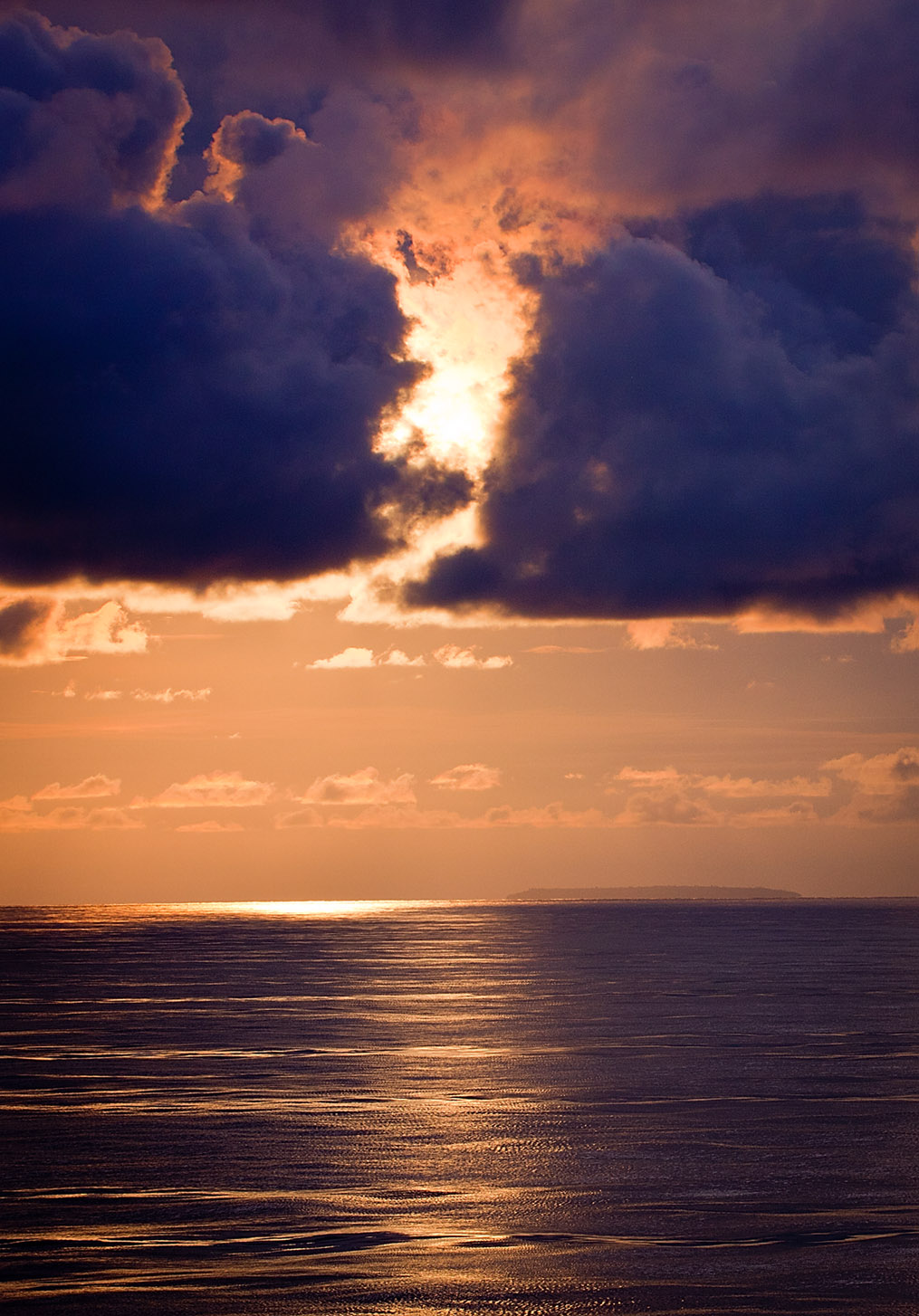
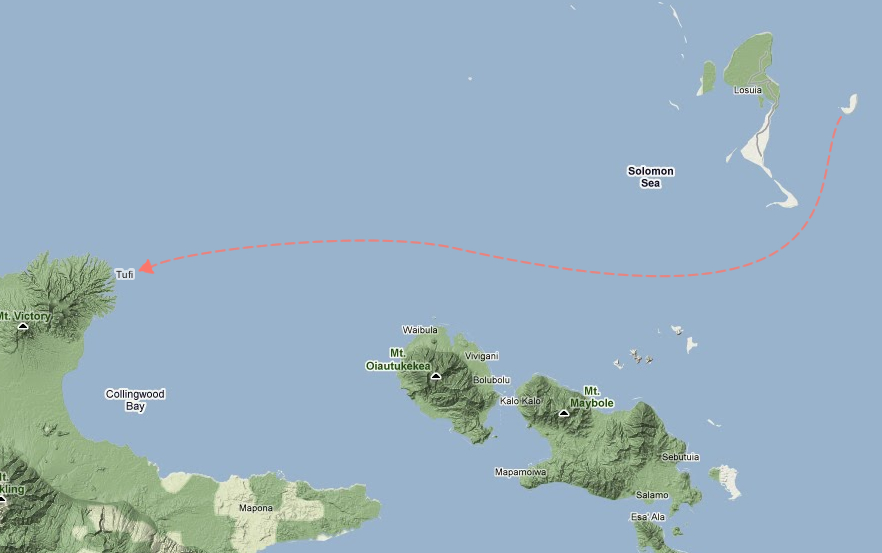
Overnight we have travelled north from Tufi and have have arrived quite early, 07:30, at the Tami Islands.
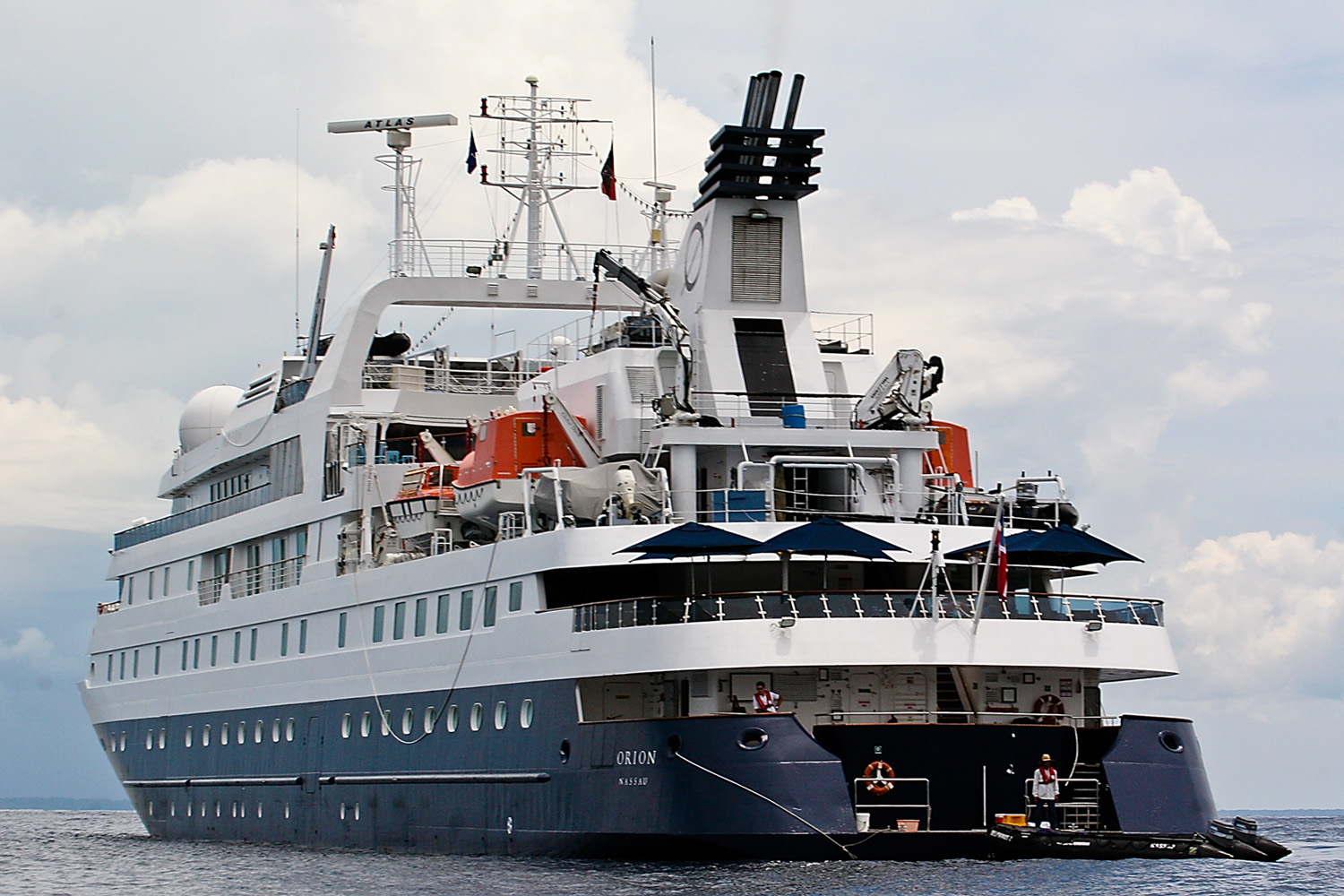
The Orion anchored off Tami

The Tami Islands are a small group of islands, located about seven nautical miles off the Huon Peninsula, in the Solomon Sea. The islands include four atolls,  two very small and one not much larger than a strip of sand.

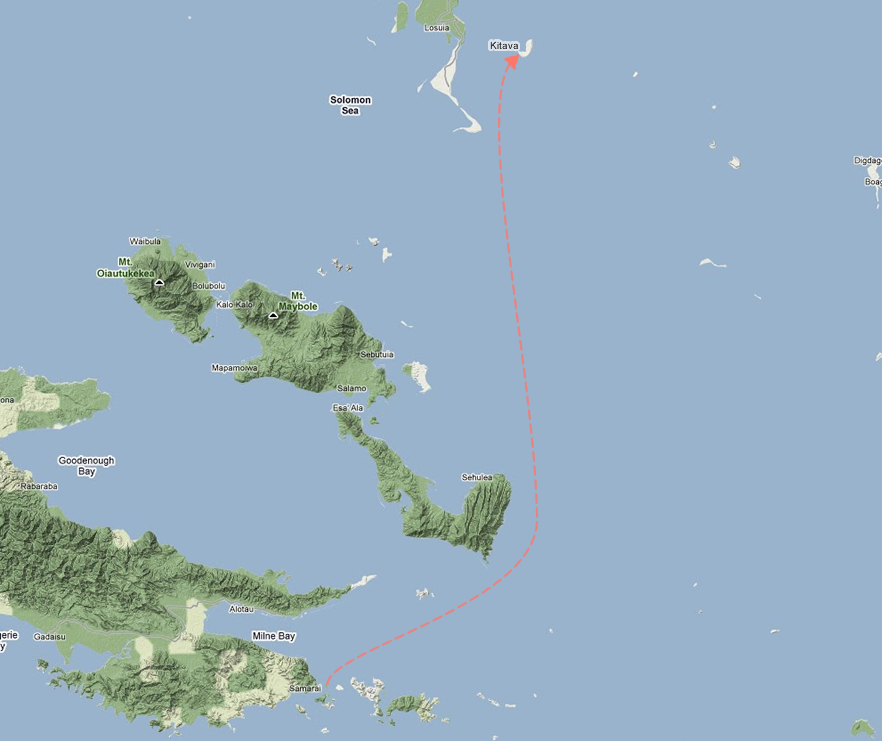
Map of the region showing our headingGoogle map link

Today we will be doing a wet landing at one of the islands for a welcoming ceremony, a chance to meet the villagers and the opportunity to take a walk through the village.
After breakfast, at around 09:00 ,we assemble in the Delphinus Café for our zodiac ride ashore. As in other landings like this we must all arrive at the same time, or within a few minutes of each other.
We make our way to the shore and then walk from the beach about 500 metres into a large clearing in the village. There is a shaded area with bench seating and an esky or two full of bottles of cold water. It’s only early but the sun is high and it’s already very hot.

From the bush we can hear the sound of drums and into the clearing come a large group of men and women dancing and singing.
Welcome Ceremony

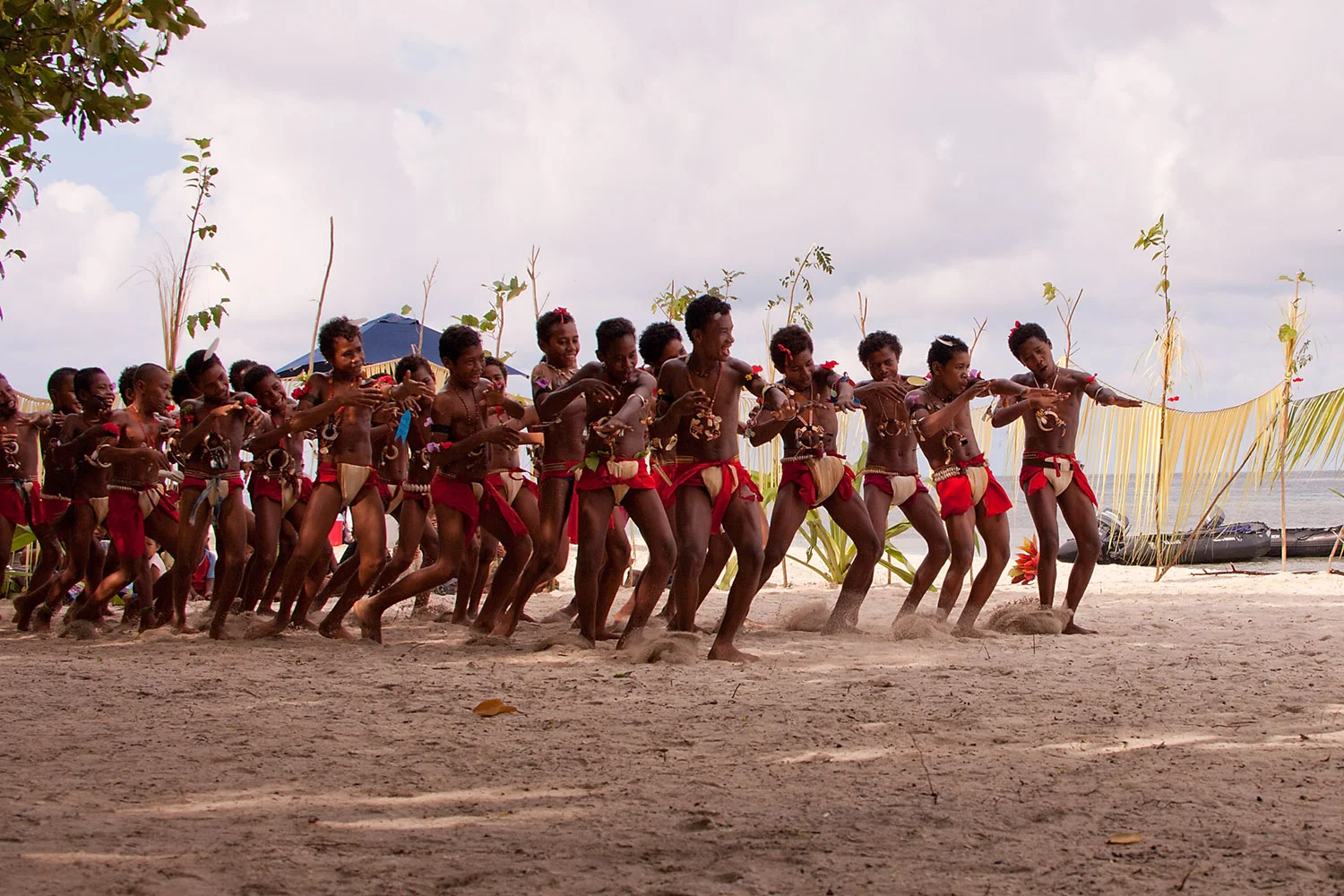
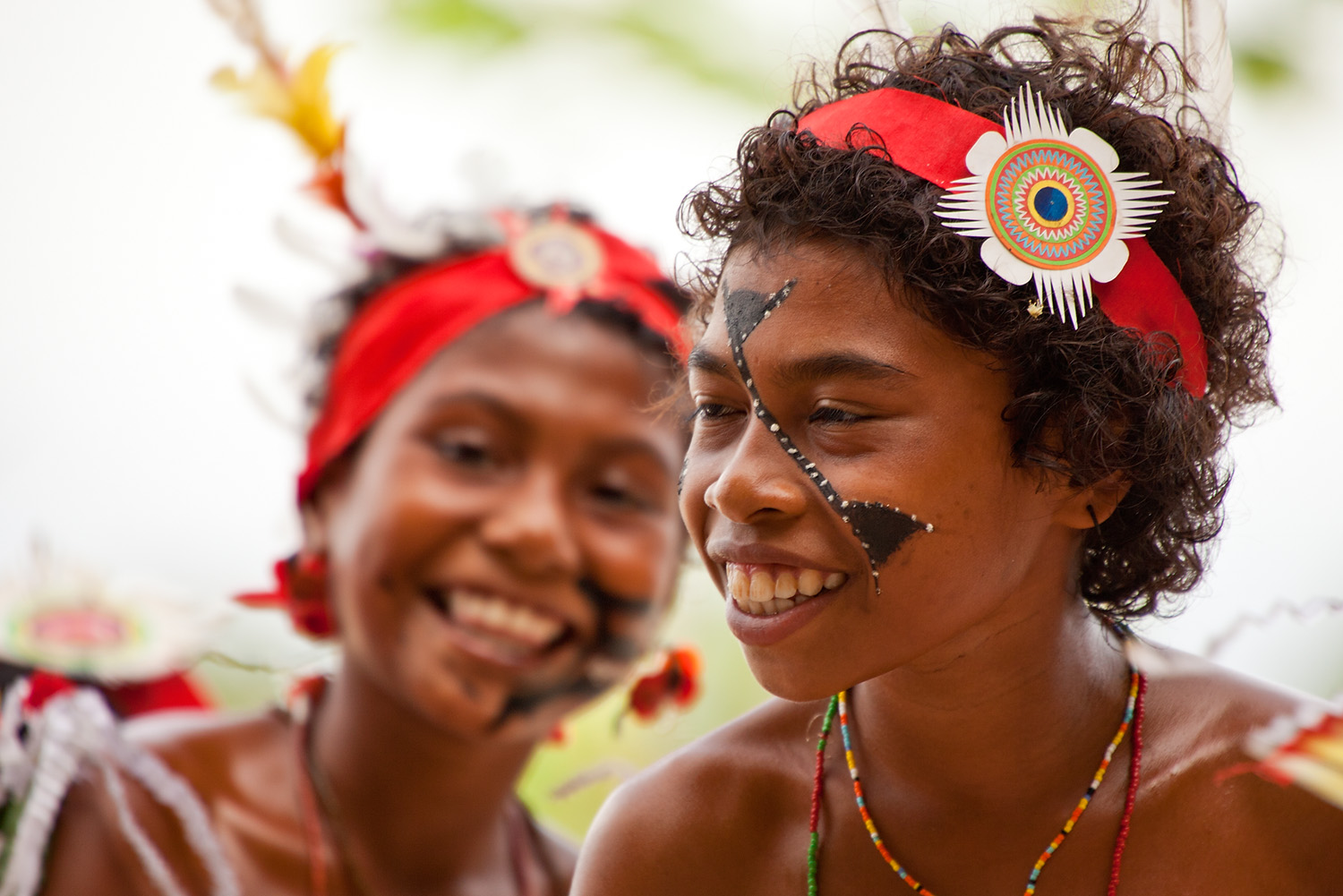
As in other welcomes the performance is fantastic, with rhythmic drumming and the movement of headdress, grass skirts and feathers combining to create a visually rich experience for all of us.
The performers make their way from the jungle further into the clearing. Peter and Nick take full advantage of the welcome to film and photograph the performers.

Peter and Nick

After the initial welcome one of the young women, beautiful in her traditional costume, comes forward from the group to address us and formally welcome us to the island.
Welcome speech

After the speech, the drummers were back and the performance really began.

Drummer Man

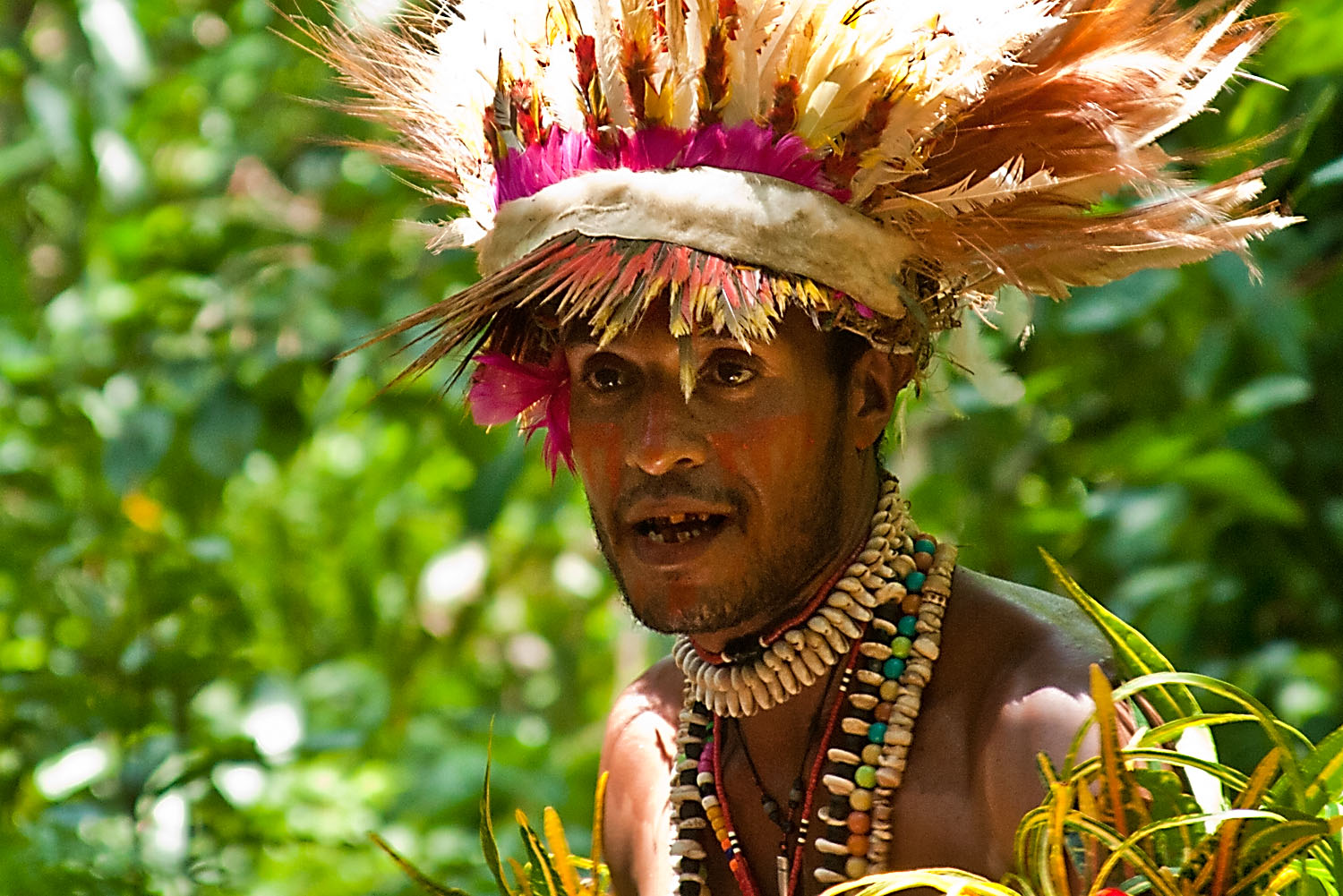
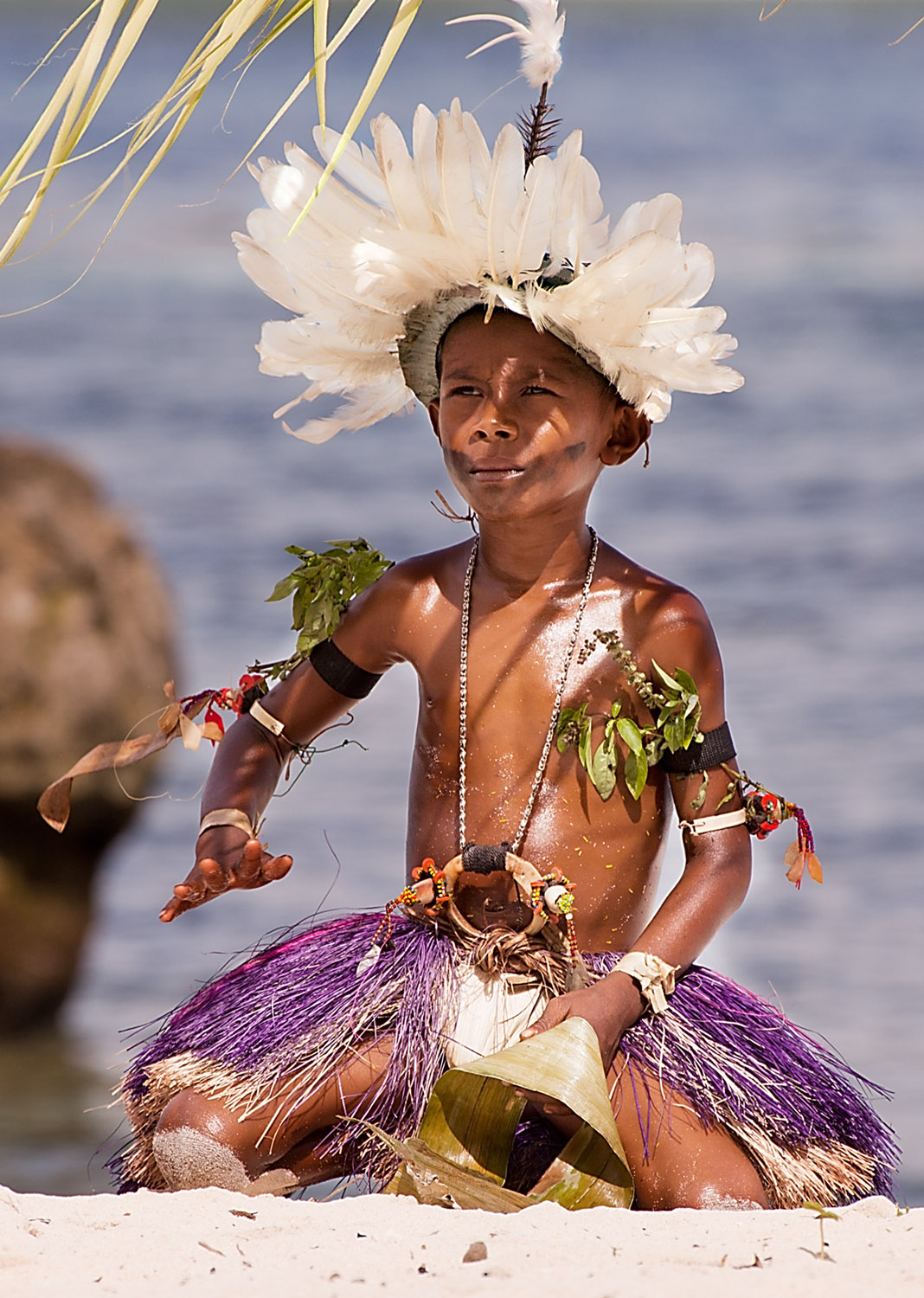
One of the most fascinating features of their costumes were the large and distinctive headgear they wore.  I was interested in the symbolism of it and found out that they represented the Eagle. Once I knew that it was easy to see the shape of the eagle’s tail, wings and head.
Eagles symbolised in the Headdress

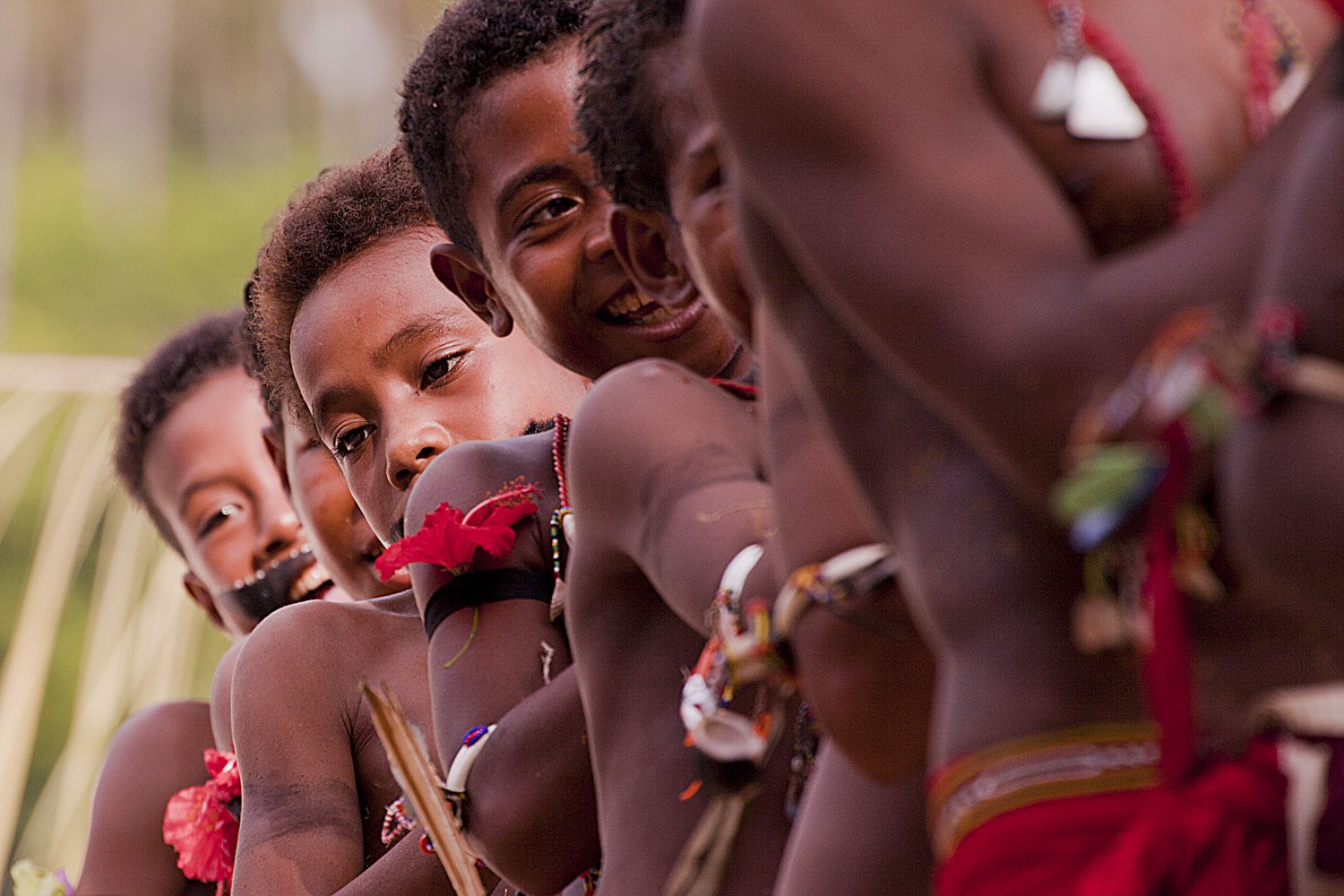
It’s been amazing to see the different ornaments and adornments the dancers and singers wear and the colors of the skirts and flowers make the opportunity to experience these welcomes unique.
Intense colours of the costumes

A number of young girls also took part in the welcome carrying their small woven baskets.
Young dancer

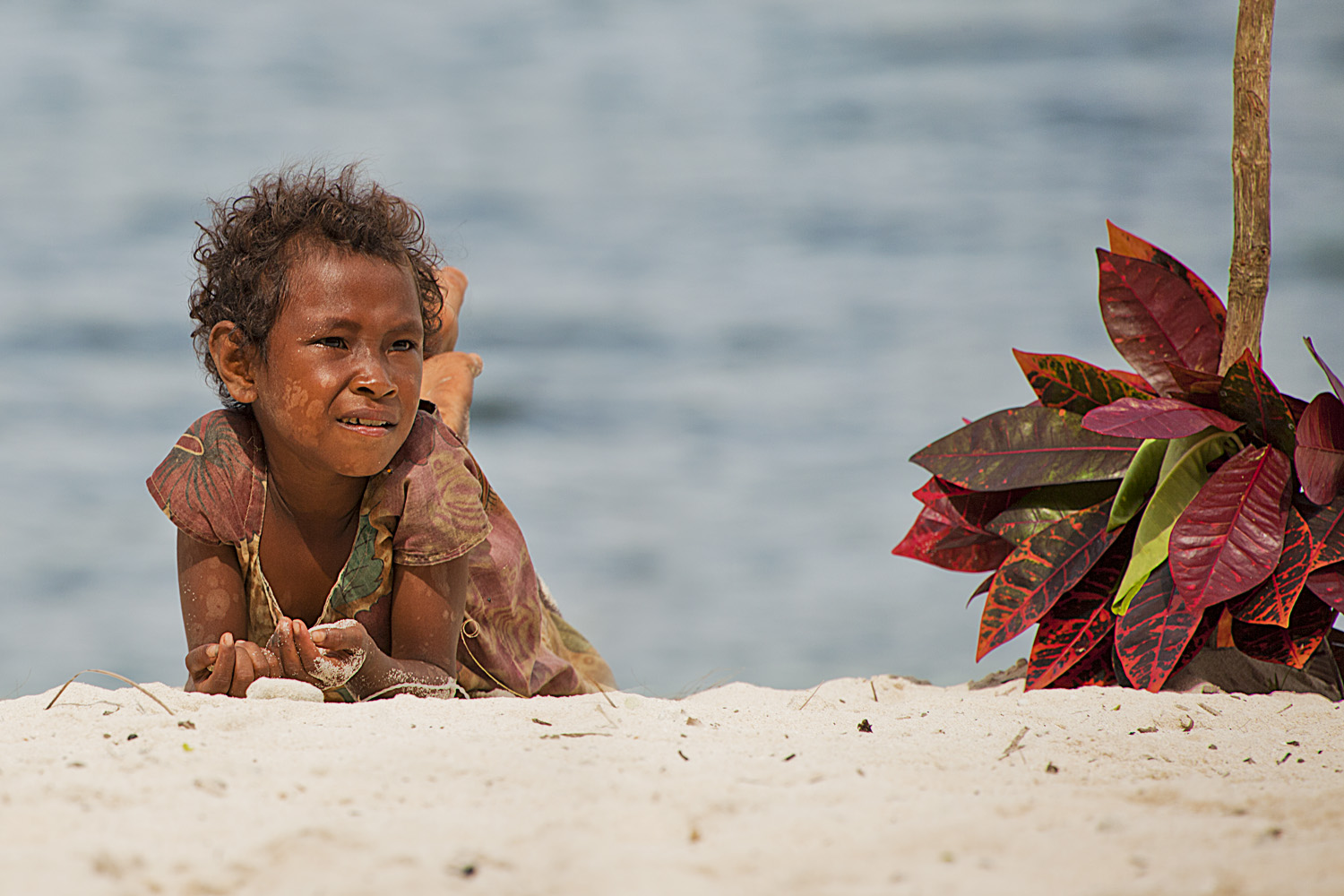
We weren’t the only ones interested in the dancing and there were a lot of villagers watching from the wings including this young one.
Young villager watching the performance

After the performance we had about an hour before we were due to leave so we left the performance area and headed back into the village. The village seemed to be built out of every imaginable type of material salvaged by the villagers. This results in a textural landscape of rusting metal, netting and palm fronds.
Building textures

We were fortunate to be taken in hand by an elderly woman of the village who took it upon herself to be our guide. She took us on a private tour of the village, down past her house, showing us where she cooked, and through to the cemetery where her sister and brother were buried.
Our guide
The Kitchen

What we saw when walking into the cemetery was quite unexpected. There were quite a few graves and most of them were defined by simple wooden grave markers but what was unusual was that most of the graves were defined by upturned bottles pushed almost flat to the ground. She told me that the bottles had been left on the island after the war by the Australians and Americans.
Island graves
I found this lone grave marker and bottle in the roots of a large tree not far from the cemetery.

Isolated grave marker
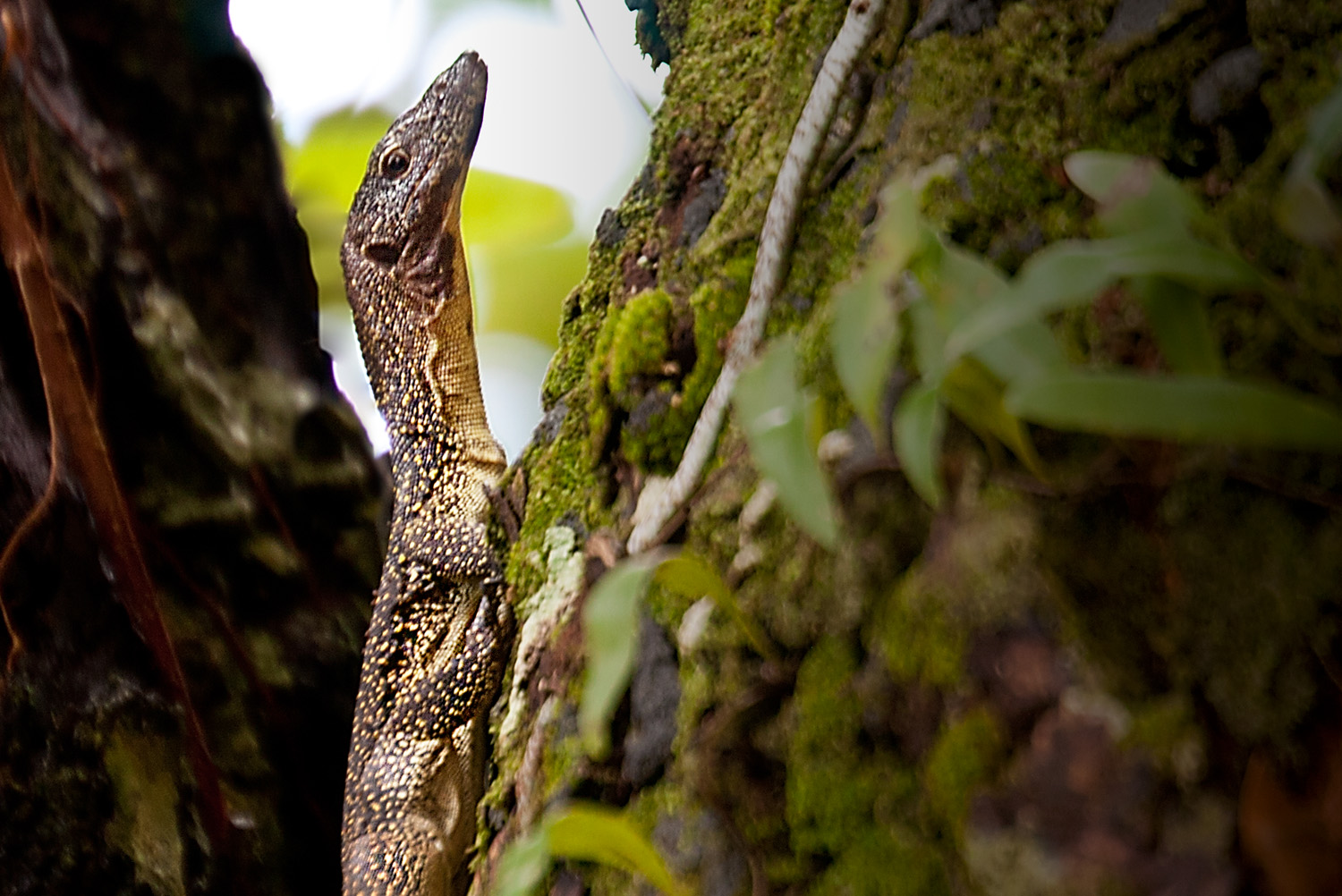
On the way back to the beach I spotted a lizard scrambling up the trunk of one of the large trees planted throughout the village.
Lizard (type unknown)

Just before we went down to the beach, we talked to some of the kids that were interested in us and gave them some of the bubble blowers we’d brought with us. For the life of me I couldn't get it to work but this young girl managed it first time.
Young girl blowing bubbles

The Orion team has arranged a special treat a “sumptuous” beach BBQ lunch at the small coral cay not far from the island we are on. Before we head over there I want to head back to the Orion so we can pick up my Panorama gear so I can shoot a pano on the island and our snorkelling gear.

We hop into a zodiac and push off from the island for the trip to Orion. Just as we turn who should we see but Justin, in all his New Guinea finery, driving his own zodiac!
Justin (the new zodiac driver)

We arrive back at Orion, collect all our gear, slap on some sunscreen and are back on the Marina platform ready to board a zodiac for the beach bbq in under 15 minutes. We head out for the short trip to the island and we haven’t gone more than a few metres from Orion when all around the zodiac we can see dolphins tracking alongside just under the water. Suddenly they are leaping out of the water and zipping back and forward in front of the zodiac. What a sight. They swim along with us for quite a while until the water becomes too shallow for them.

The ride into the cay is beautiful, the sky an iridescent blue and the water crystal clear. Because the reef is so high in the water we have to navigate through some buoys set up by the scouting team so our prop doesn’t hit the reef.

Riding the zodiac to the Coral Cay

The beach itself is tiny and leads you up to a rock wall that frames the whole beach.  Just in front of the wall the guys from the restaurant have set up their beach bbq. They were right in calling it sumptuous,  there are two canopies set up, one with a bbq and the other with salads and accompaniments. Strung along the wall there are strands of flowers and everyone is having a great time.
Orion Restaurant Team

After lunch we head for the water to do a bit of snorkelling, we also try a bit of kayaking but the current between the islands is really strong and basically we end up going around in circles.
It’s almost 13:00 and the last zodiac is set to leave at 13:30 so Kelly and I head for the water to cool off. It’s quite shallow so we walk out quite a way into the channel. There’s a young boy in a dugout hanging out just around from the beach area where the bbq is set up and the view down the channel is beautiful. There is a lovely overhang at the end of the island with a palm tree perched right on the end.
Island Silhouette

We spend the last few minutes just enjoying the beauty of the scene around us before heading back and catching, once again, the last zodiac back to Orion.
Kelly loving the moment

Back on board we headed up to deck 6 to wash out our gear and spend a bit of time in the Jacuzzi. Once again it’s just the perfect thing to relax before our next event at 17:00 a lecture by Peter Eastway entitled on ‘Rock Hopper – Islands of the Southern Ocean”.

Wow! what a fantastic presentation. Peter showed incredible images that reinforce the beauty of the Islands of the Southern Ocean. He showed us images of snow capped peaks, deep blue glaciers and minke whales. These images definitely show why Peter is one of Australia's leading landscape photographers. View all of the images on Peter’s website and if you are in Sydney between the 19th and 30th May make sure you head down to Gaffa Gallery to see his exhibition.

I walk out of Peter’s presentation really inspired to lift the values of my images, I’m so thrilled that both Peter and Nick are on this trip.

Kelly and I finish off the day with a bit of room service and another episode of Breaking Bad.
Day #7 New Guinea Adventure

Tufi, Papua New Guinea

Ooops, missed the sunrise this morning, now I’m going to have to be ostracised by all those who’s alarms went off. But never mind it’s a beautiful morning and we are out on deck having Eggs Benedict, thoughtfully provided by Donny and a Latte courtesy of Emil and we can see the coastline of Tufi and once again the sky is filled with towering clouds.
Approaching Tufi Coast

Apparently the Tufi area on the south east coast of Oro Province is one of PNG’s best kept secrets and is a spectacular place to visit. Cape Nelson, jutting out into the Solomon Sea, was formed by the eruption of three volcanoes, whose fast flowing lava created the rias, or fjords. Unlike the fjords of Scandinavia, the water is always warm and the bays are home to stunning coral formations and tropical marine life. The fjords are over 90 metres deep and rise vertically out of the water to over 150 metres. The vertical cliff faces of the gorges are covered in moss and orchids and waterfalls cascade directly into the sea.

Map of the region showing our heading -  Google map link

 It’s a pretty busy day today with a number of expeditions taking place. There’s snorkelling at the outer reef, a Tufi Village Tour and a Suicide Point Walk.
We had initially put our names down for scuba diving but unfortunately there were only three of us and they had to cancel it. In hindsight, if we had been smart we would have just paid the extra and done the diving as we realised at the end of the day what an experience it would have been.

However we are scheduled on the Tufi Village Tour in the morning and snorkelling at the outer reef in the afternoon. I’m hoping we will have time for a quick bite of lunch between expeditions.

At 09:30 we are assembled for the departure to the village and there are about 4 zodiacs leaving at the same time. To get to the zodiacs you descend a stairway from the Delphinus Café to a small loading platform, there they have a large board with hooks and a plastic counter with all of the cabin numbers. There’s one for each of us, one side is blue the other white. As you head down to the marina deck you turn over your counter so it’s displaying white. When you come back you turn it back to show blue. That way they can quickly see who’s back and who’s not. Low tech, love it.
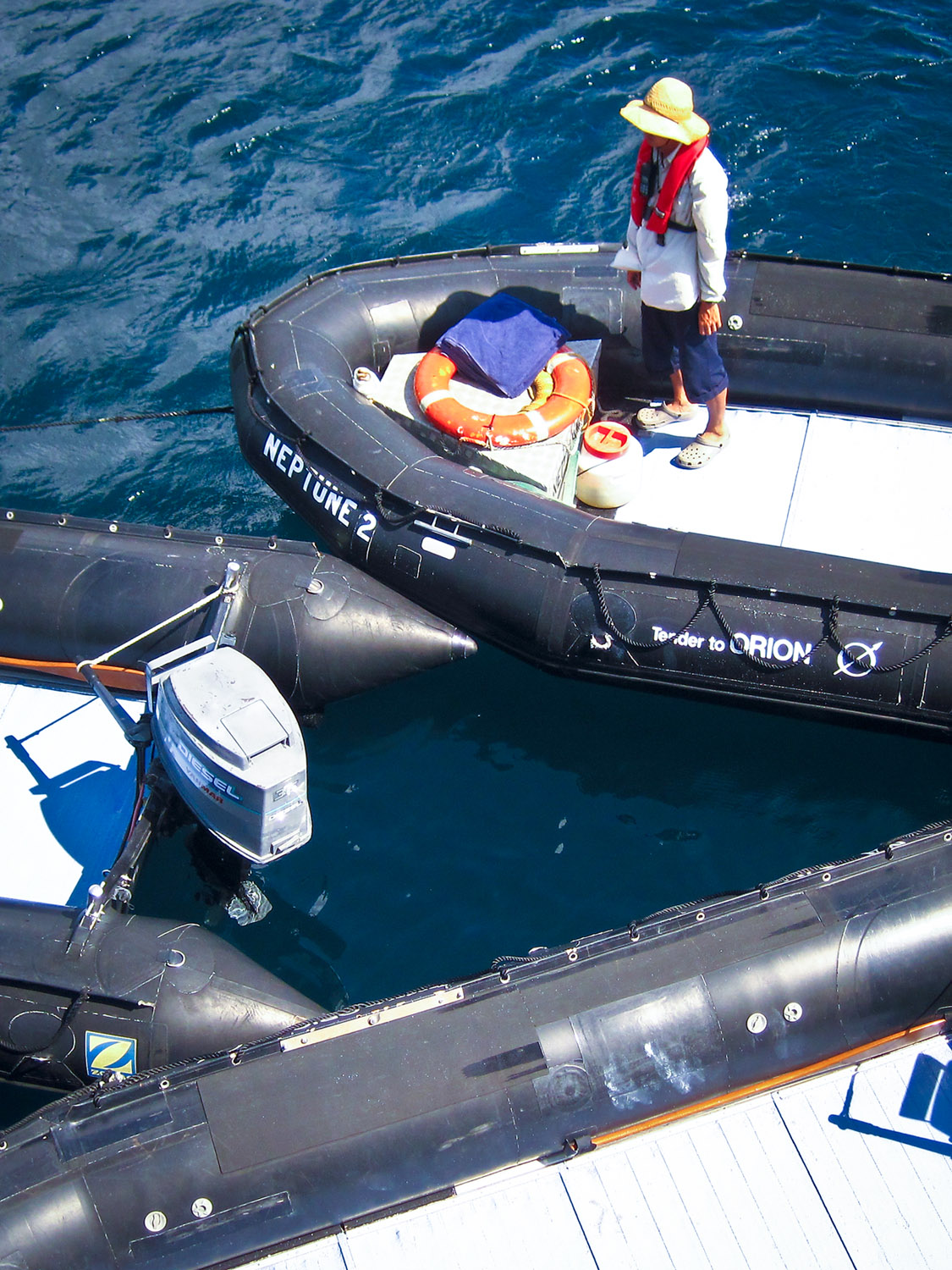
Zodiacs waiting at the marina deck.

So we are all on the zodiacs and heading down one of the fjords and the faces of the gorge is thick with vegetation. It’s hard to imagine how the towering palm trees can find enough earth to anchor themselves.
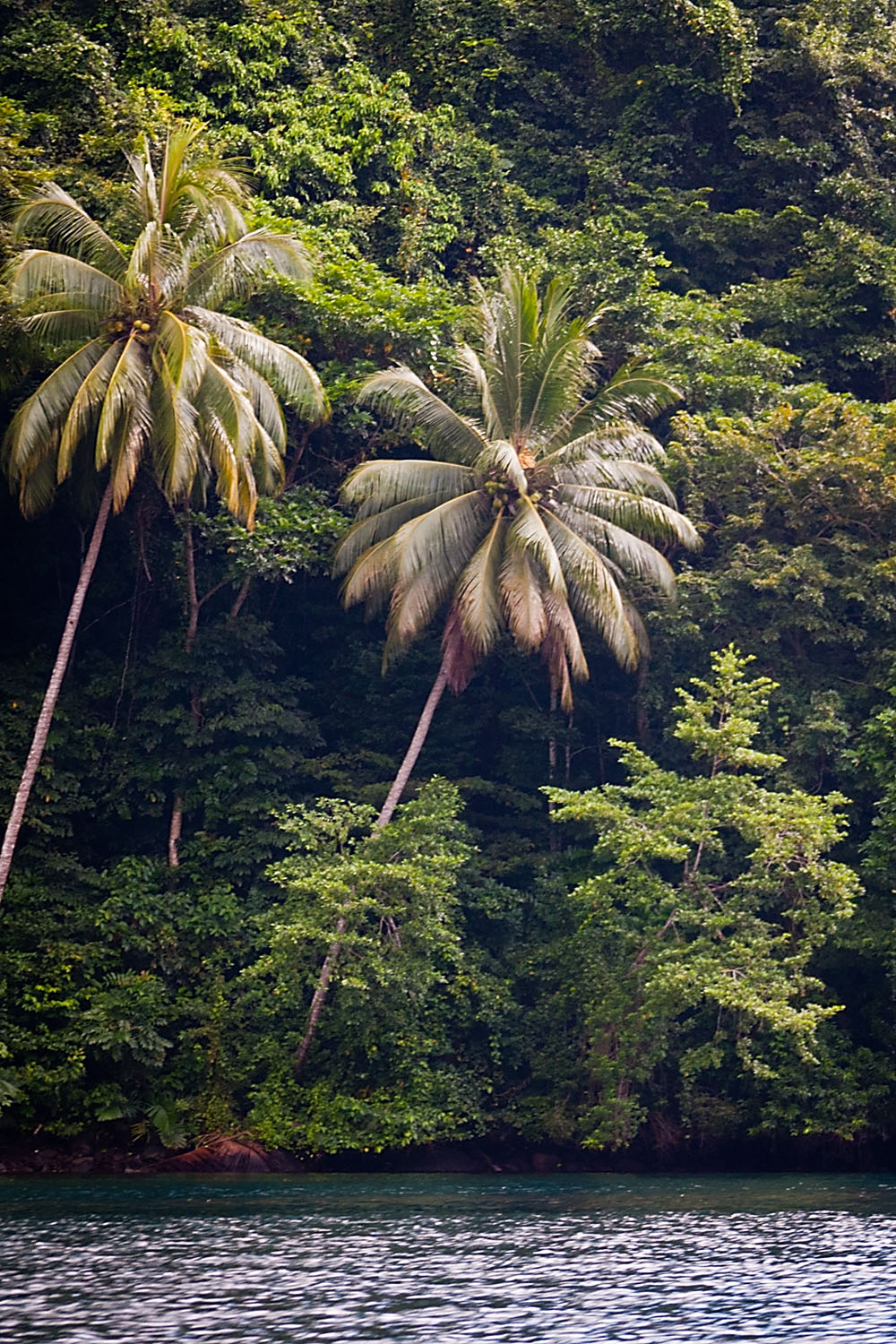
Fjord vegetation

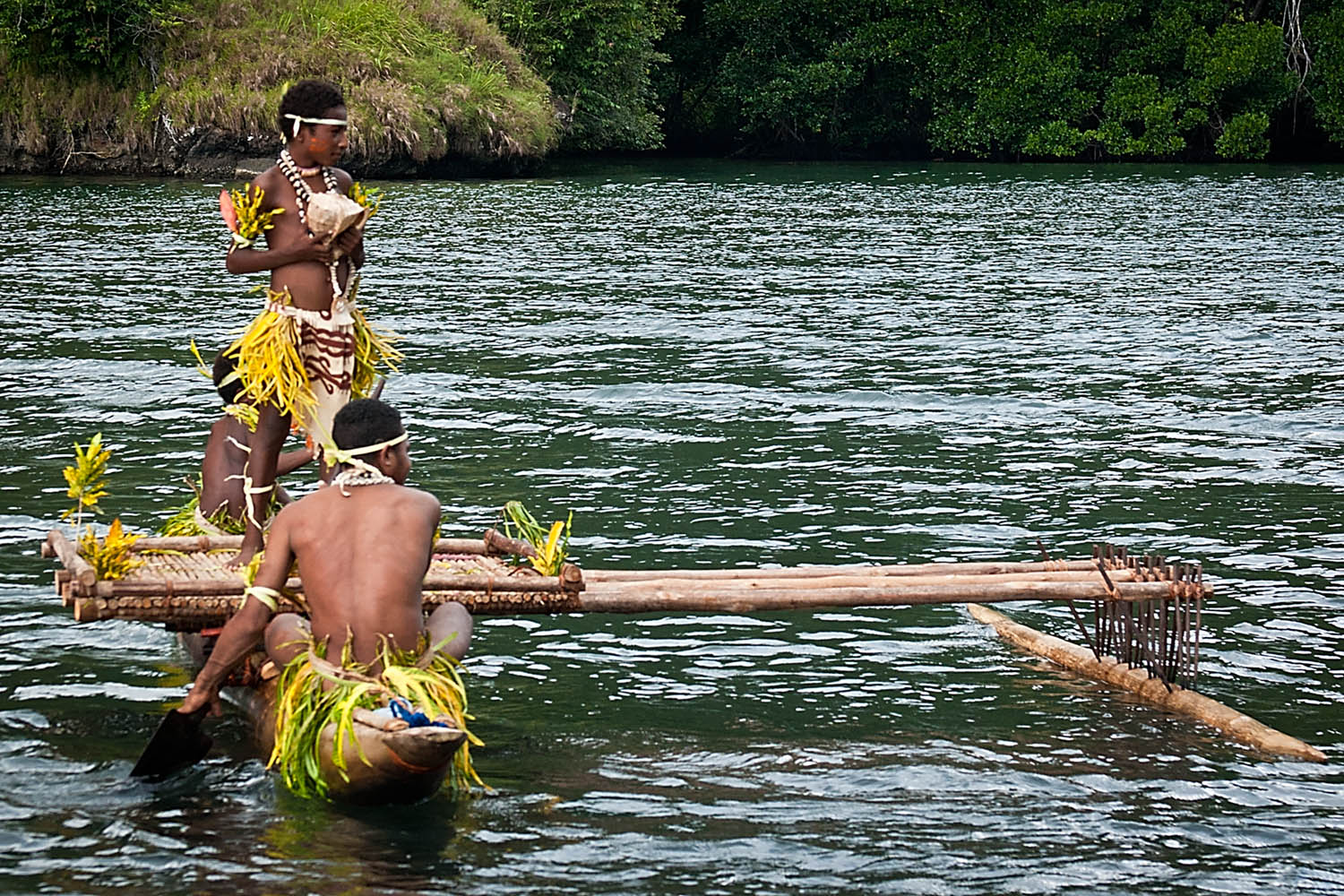
In the distance we can see a number of outrigger canoes and young Papuan natives dressed in their ceremonial gear. I’m not sure how many of us get to sit on each canoe but the platform area looks pretty small.
Outrigger Canoe and Crew

Well on ours we have three of us and they gave us implicit instructions not to move around! I don’t think the outriggers are all that stable. Once we are settled and happy all of the guys start paddling the outriggers into a narrow channel leading into the jungle from one of the fjords.

The vegetation on either side of the channel is rich and green and the trees overhang the channel so it feels like you are heading down a green tunnel. There is the occasional outrigger that has been hauled up onto the bank. After about half an hour we approach our landing spot deep in the jungle.
Heading up into the jungle
Outrigger on the bank
Approaching our landing spot

At the landing point we all “gracefully” hopped off the outriggers and waited until everyone had disembarked. Before we could head up the trail into the jungle the village elders came around and put a dab of coloured paste on our faces to show we were welcome. We had only walked for a couple of minutes when we heard shouting and these three warriors came running out of the bush leaping and yelling, brandishing spears and challenging us for walking in their territory.
The Challenge

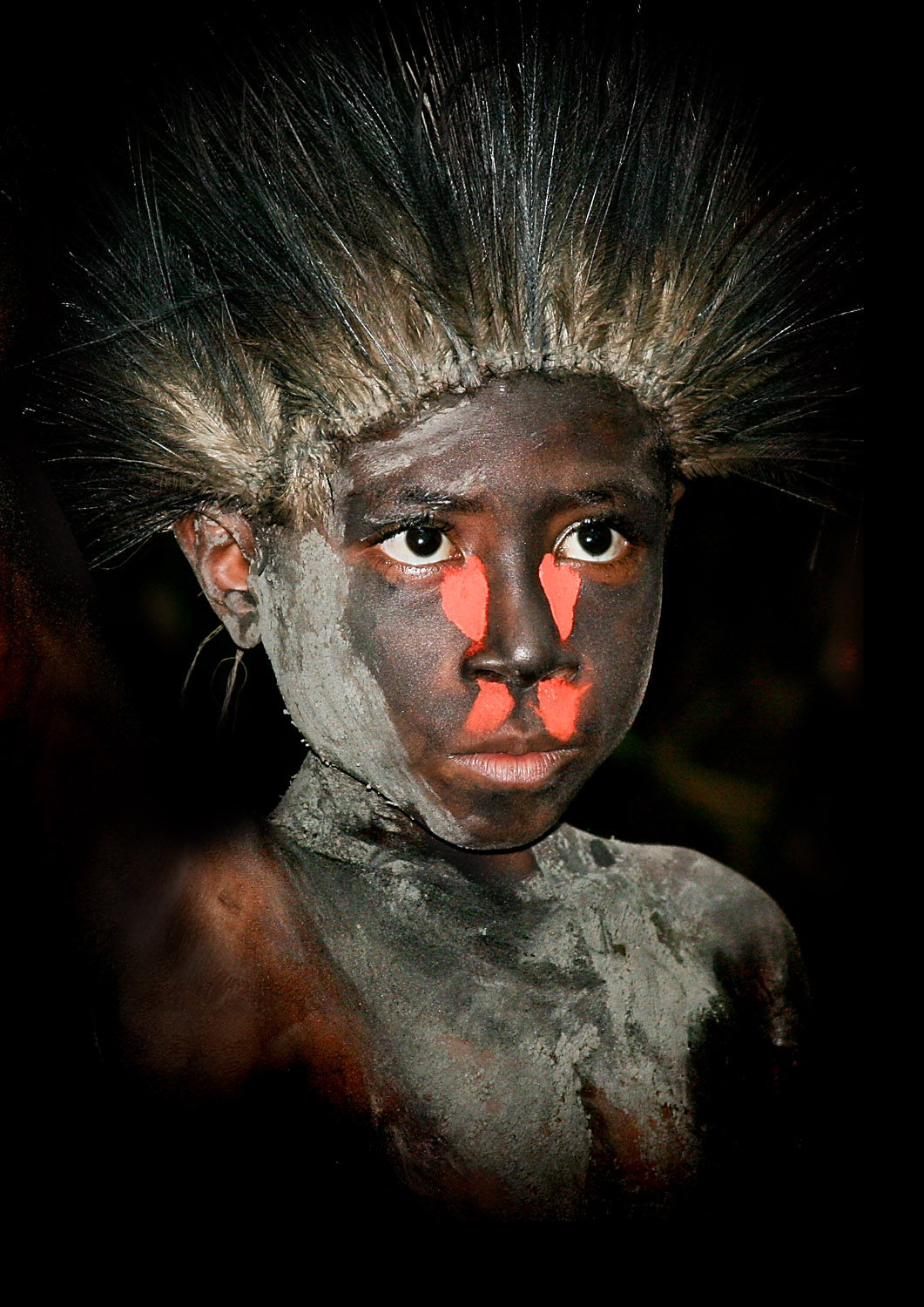
Of the three one was just a young kid but he looked the part with a painted face and spiky headdress.
Young warrior

I guess we must have looked suitable chastised for entering their territory because after a few minutes of spear rattling we were allowed to pass and enter into a clearing where there were a large number of villagers and a welcoming committee.
Welcome to Tufi Village

At the village we were shown a number of crafts and activities they perform on a daily basis, one of the most interesting was how they harvest, prepare and cook Sago.

Sago is a starch extracted from the pith of sago palm stems, Metroxylon sagu. It is a major staple food for the lowland peoples of New Guinea and the Moluccas, where it is called saksak and sagu. It is traditionally cooked and eaten in various forms, such as rolled into balls, mixed with boiling water to form a paste, or as a pancake.

Step one is to cut down the palm and carefully remove the outer layer of the main stem. This can be somewhat dangerous as the Metroxylon sagu palm has thorns on its stem that are six to eight inches long and VERY needle-like and sharp. The section of trunk that will be worked for starch extraction is about seven to ten feet long.

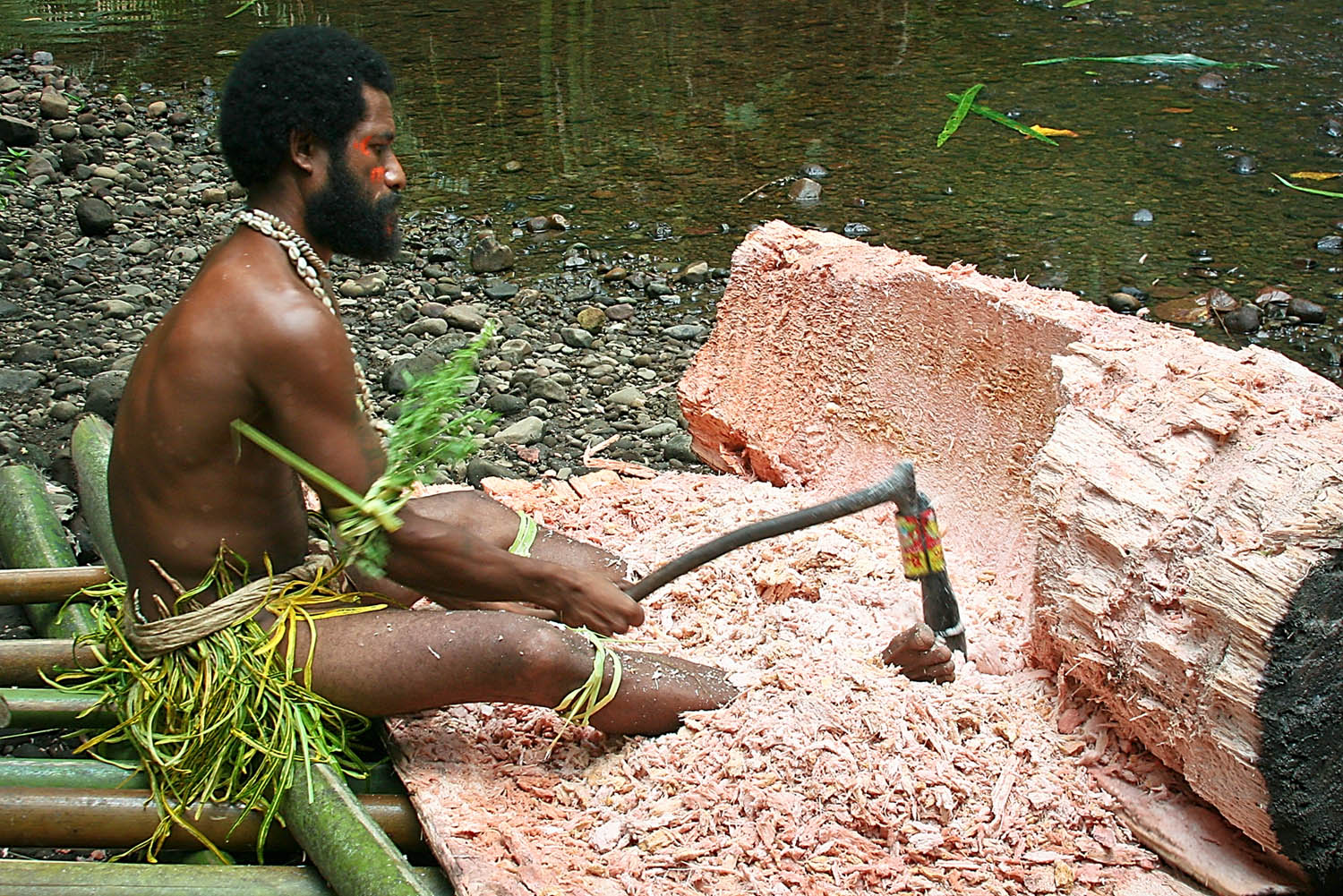
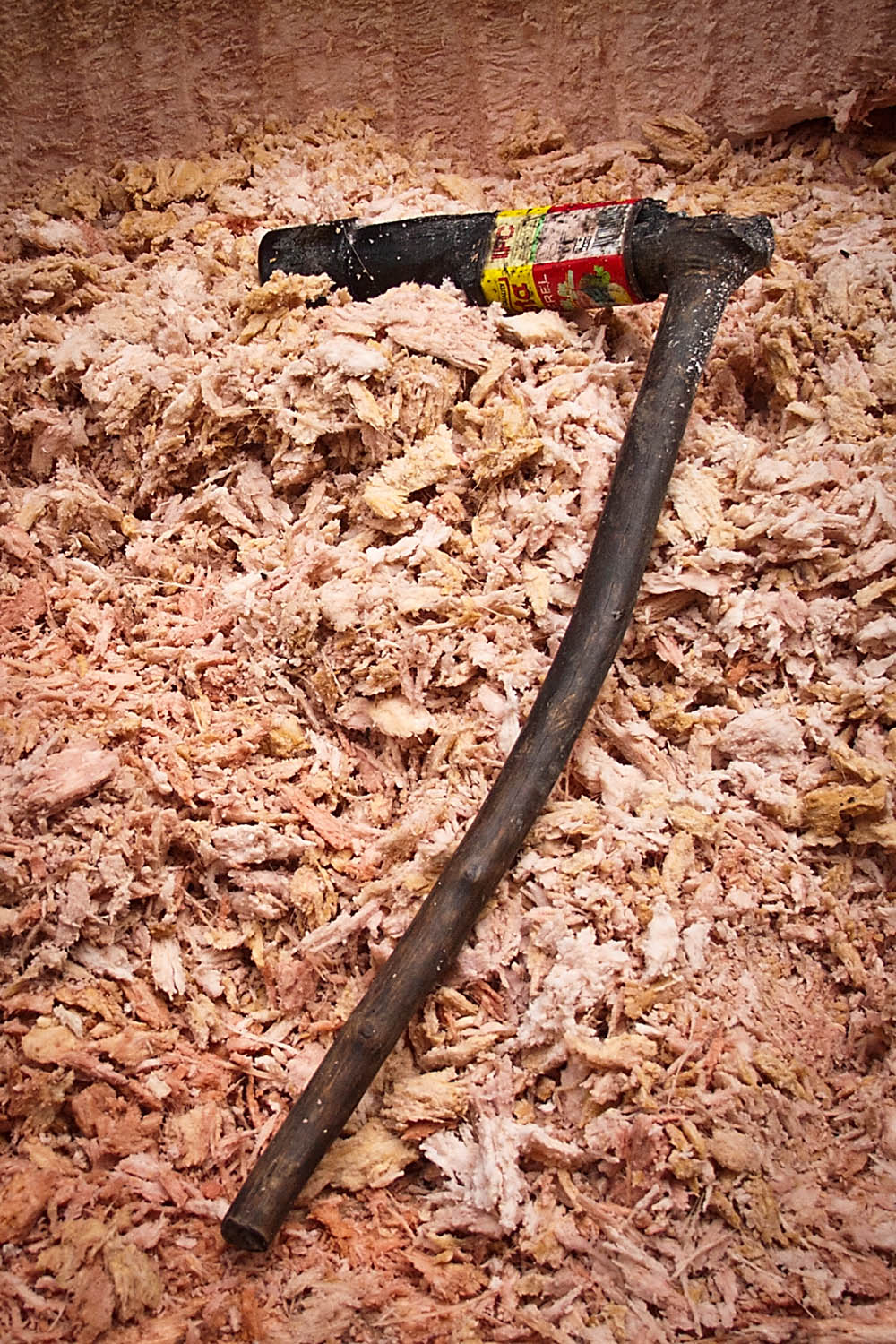
The second, and probably the most energy consuming, task is to chop-scrape the heart "pith" of the palm. This is done with a special hand crafted tool that is designed to shave off a bit of the pith with each swing. The object is to end up with sawdust like shavings. I was worried the guy was going to take his toes off with that axe!
Shaving the plant
Sago axe

Once the pith material has been thoroughly shaved and beaten it is then soaked in water. This has the effect of helping the starch separate from the non-starch part of the pith material. A filter is used that allows the starch through with the water that is channeled into a tightly woven bark bag. After the starch powder is filtered it is mixed with water and kneaded into a sticky dough.
Kneading the sago

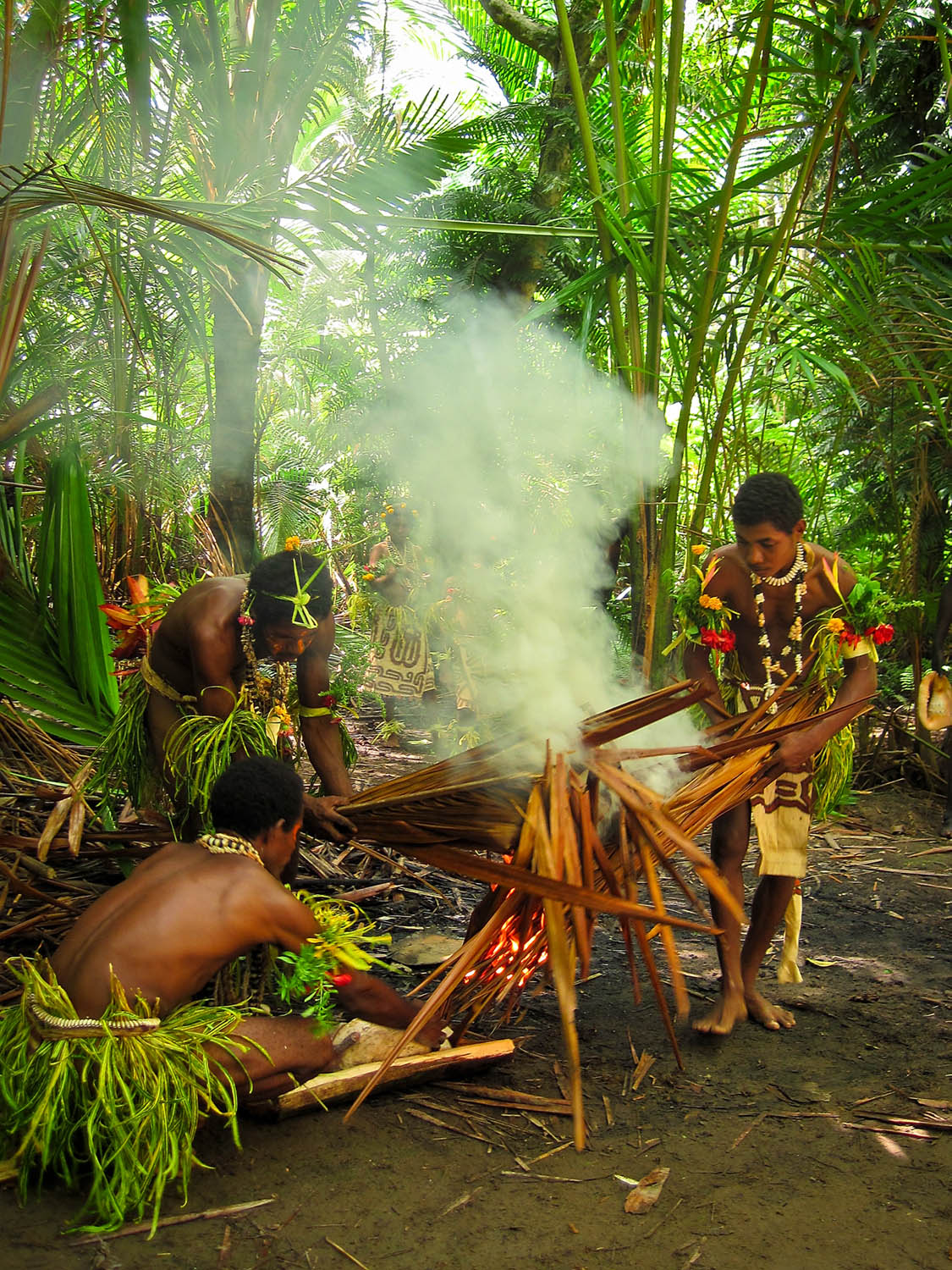
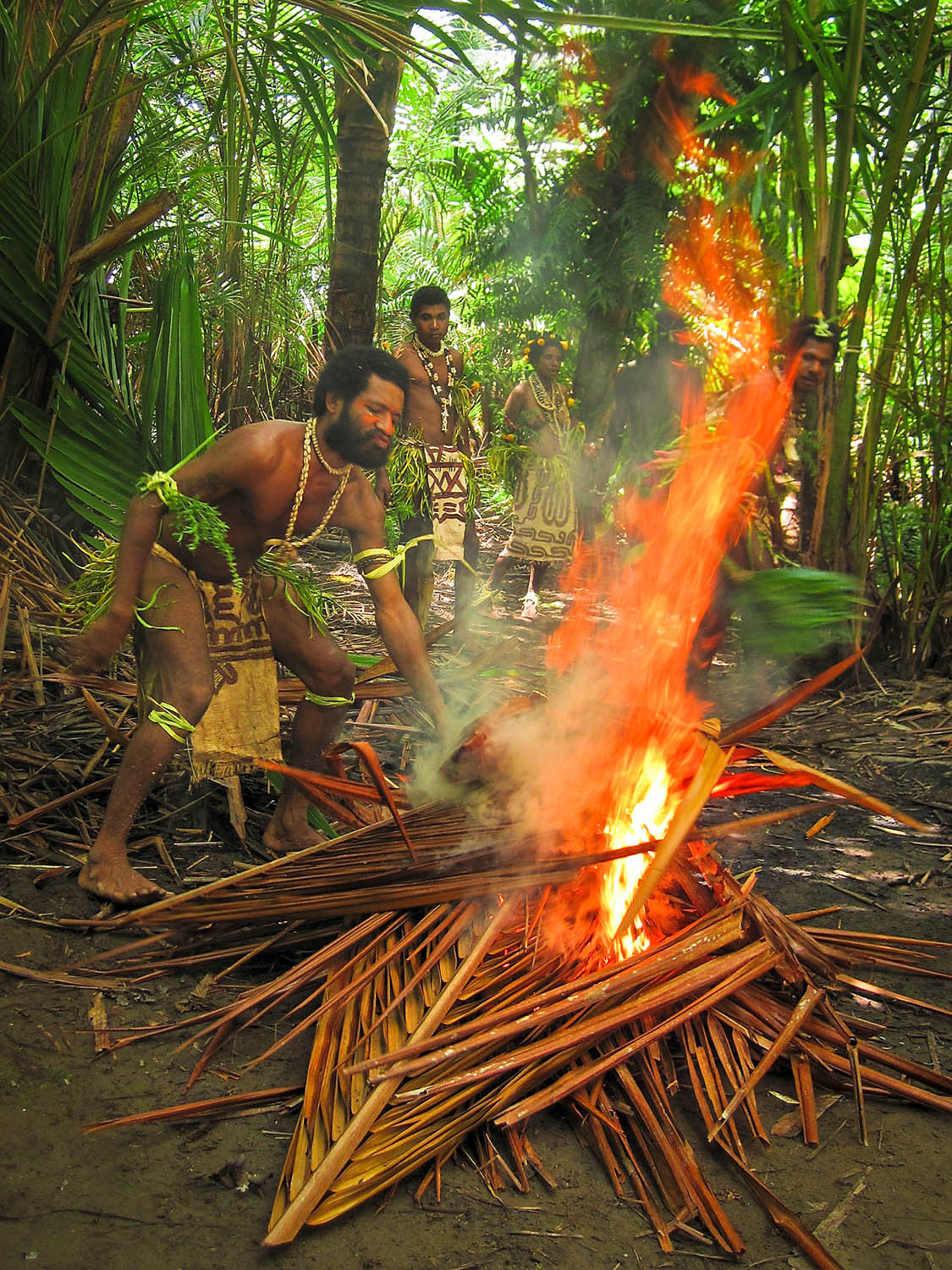
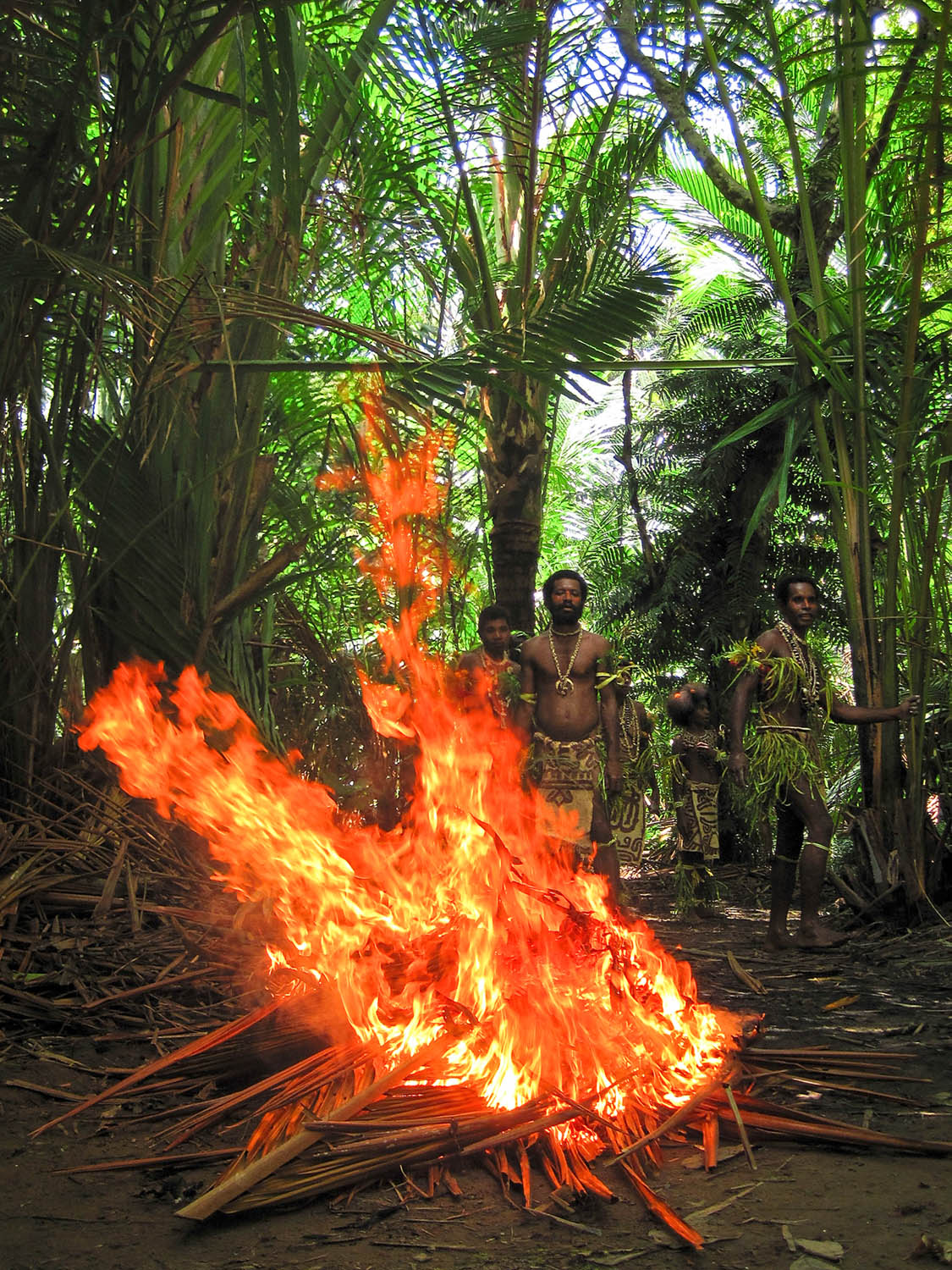
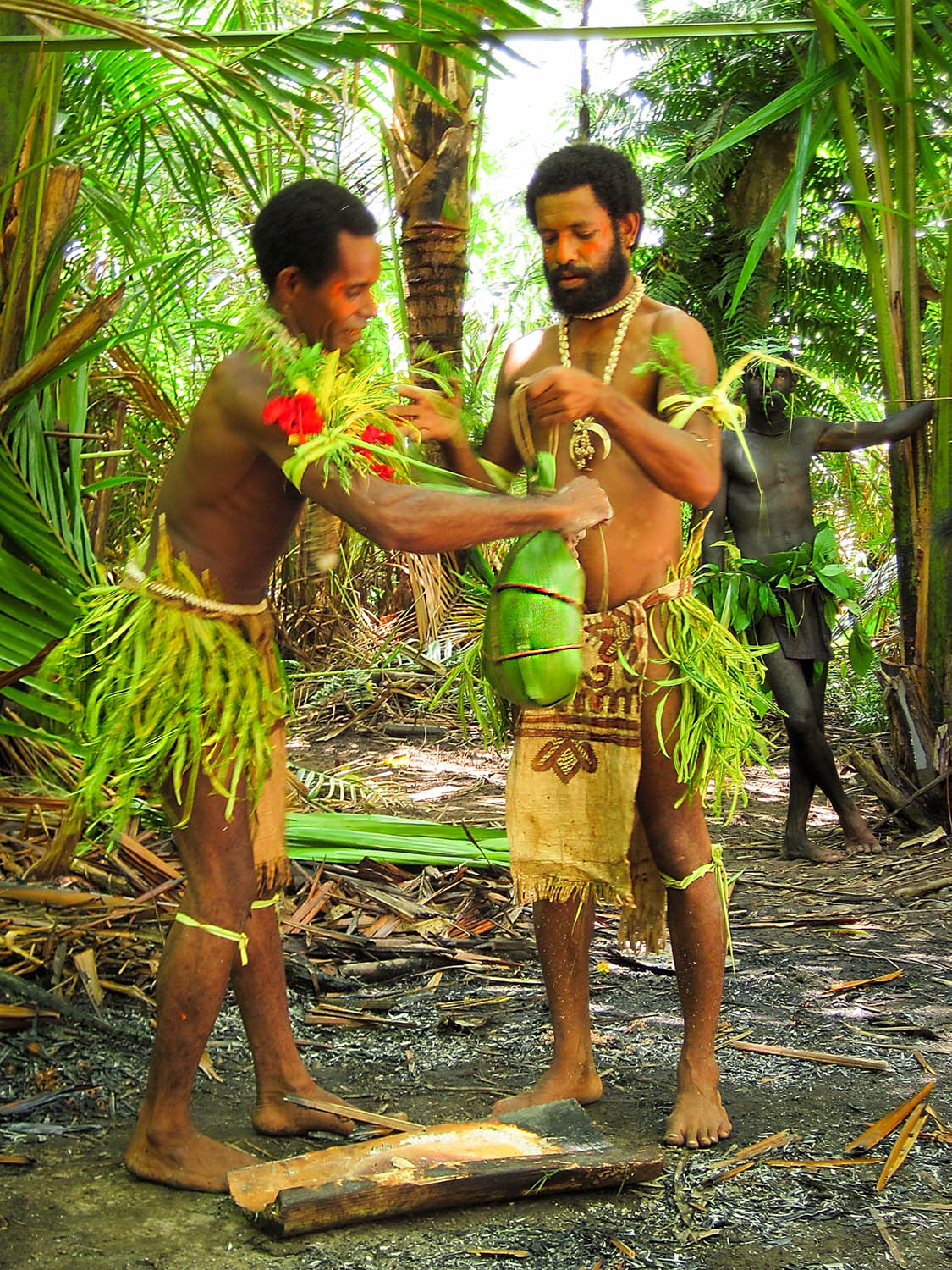
To cook it they took the dough and  put it in a split green bamboo stem, then built and lit a large fire of dry palm leaves over it. The heat was intense and the fire burnt very hot and very quickly, in a matter of minutes it was done. After the fire died down they cleared the charred palms, lifted out the sago and prepared a bag for it using banana leaves so they could carry it home.
Preparing the fire
Stoking the fire
The fire at it’s most intense
Removing the cooked sago
Wrapping it to carry it home

They came around offering a taste of the freshly cooked sago, they call it Papuan chewing gum. I tried some it definitely was chewy but it didn’t really have a taste. Some of the kids told me they cook it up as a pancake and have it with banana and sugar which sounds pretty good.

After the sago presentation we were treated to another cultural dance and song performance which was different again from the others we had seen and very dramatic amongst the dappled light coming in from the jungle canopy.
Young woman dancer
Young male dancer

After this we talked and took pictures of the villagers and eventually made our way back to the landing point for the outrigger trip back down the channel to the fjord. This time we have some motor boats waiting for us, we climbed on board waving goodbye to the outrigger paddlers as we headed back to Orion.
Kelly on the boat back
Some scruffy fellow she is with

Wow, what a great morning, Tufi is a fantastic place to visit. We’ve just got time for a quick lunch, then we are off to grab our snorkelling gear for a trip to the outer reef.

At 13:30 we are assembled for the departure to the village and this time rather than taking zodiacs there is a motor boat waiting for us.  Apparently the trip to the outer reef is about half an hour so I’ve got my Kindle with me so I can have a read on the way out to the reef.

I’m reading a very interesting book called “The Ghost Mountain Boys” by James Campbell.

Here’s an overview of the story, “Lying due north of Australia, New Guinea is among the world’s largest islands. In 1942, when World War II exploded onto its shores, it was an inhospitable, cursorily mapped, disease-ridden land of dense jungle, towering mountain peaks, deep valleys, and fetid swamps. Coveted by the Japanese for its strategic position, New Guinea became the site of one of the South Pacific’s most savage campaigns. Despite their lack of jungle training, the 32nd Division’s Ghost Mountain Boys were assigned the most gruelling mission of the entire Pacific campaign: march 130 miles over the rugged Owen Stanley Mountains and protect the right flank of the Australian army as they fought to push the Japanese back to the village of Buna on New Guinea’s north coast.”

You can get more information if you are interested at the Ghost Moutain Boys website.

Book/Expedition Trailer

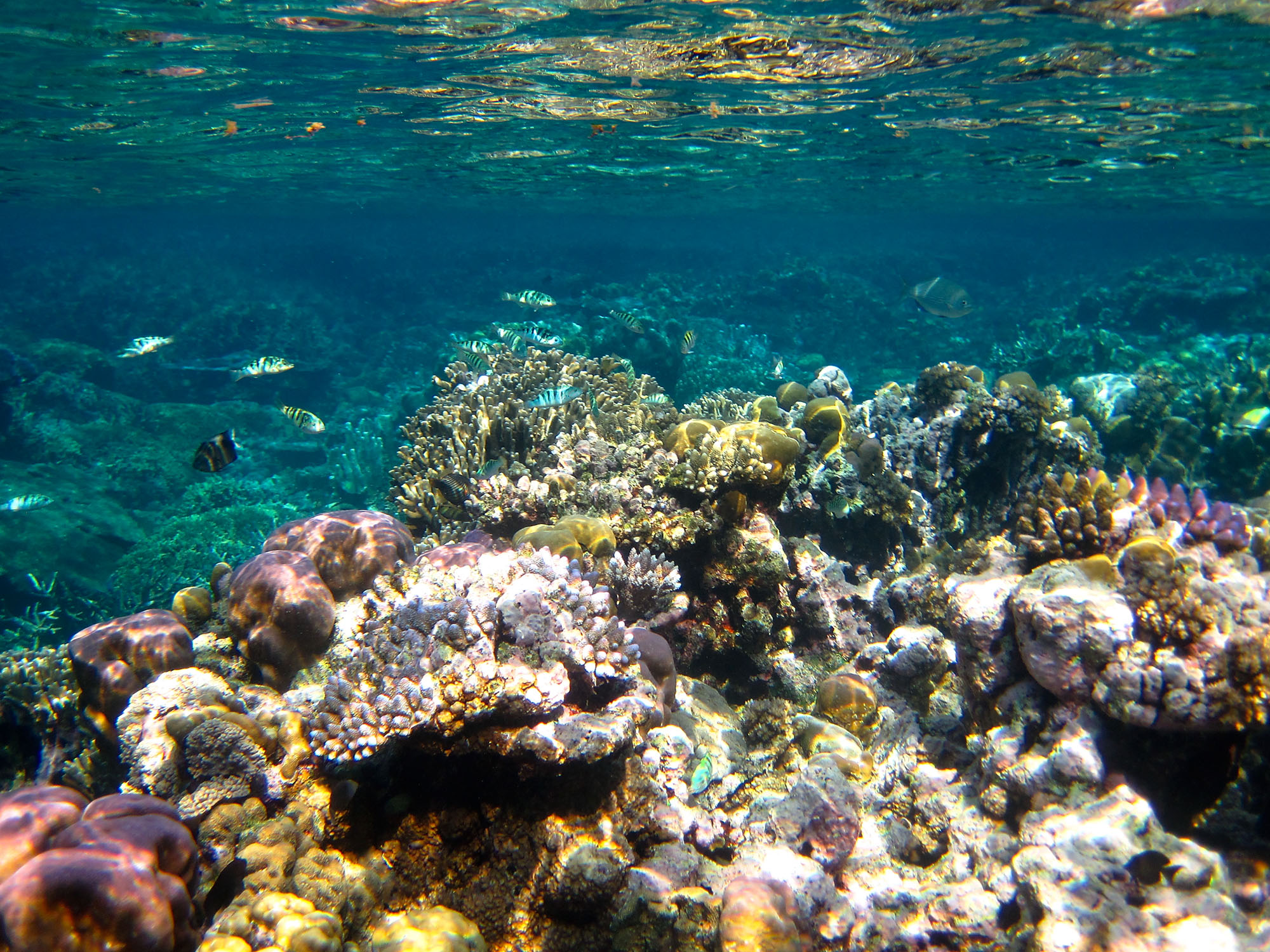
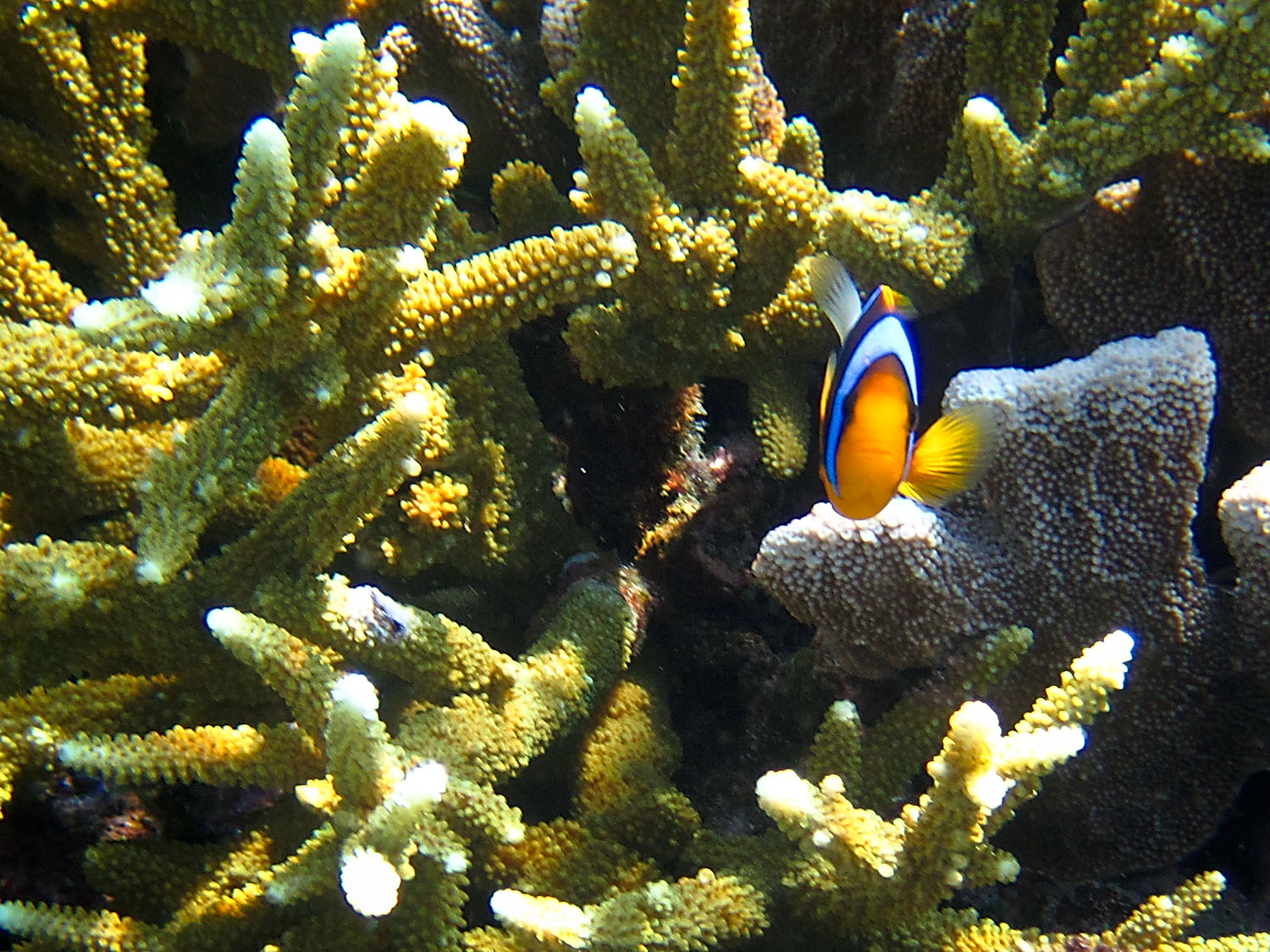
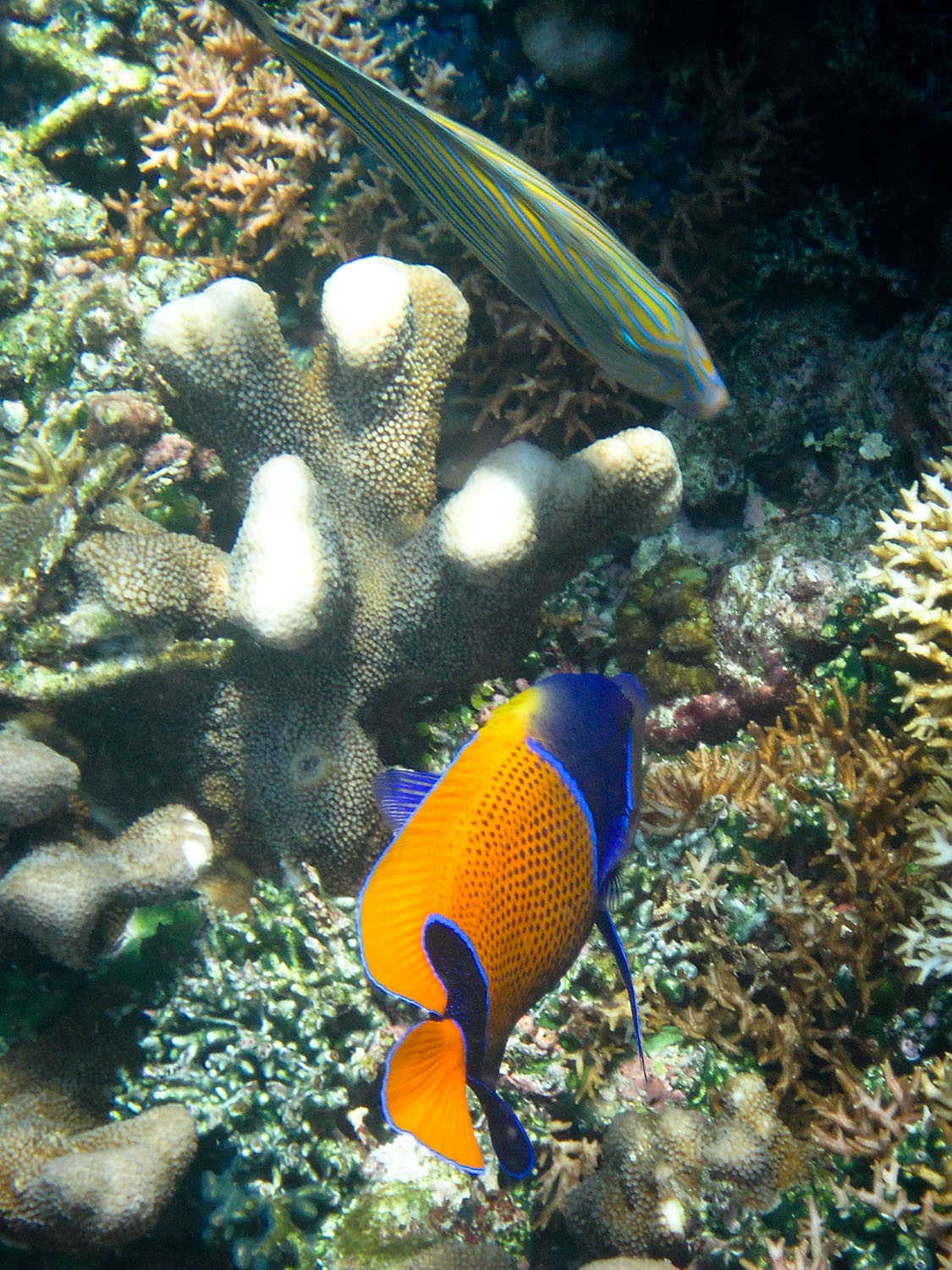
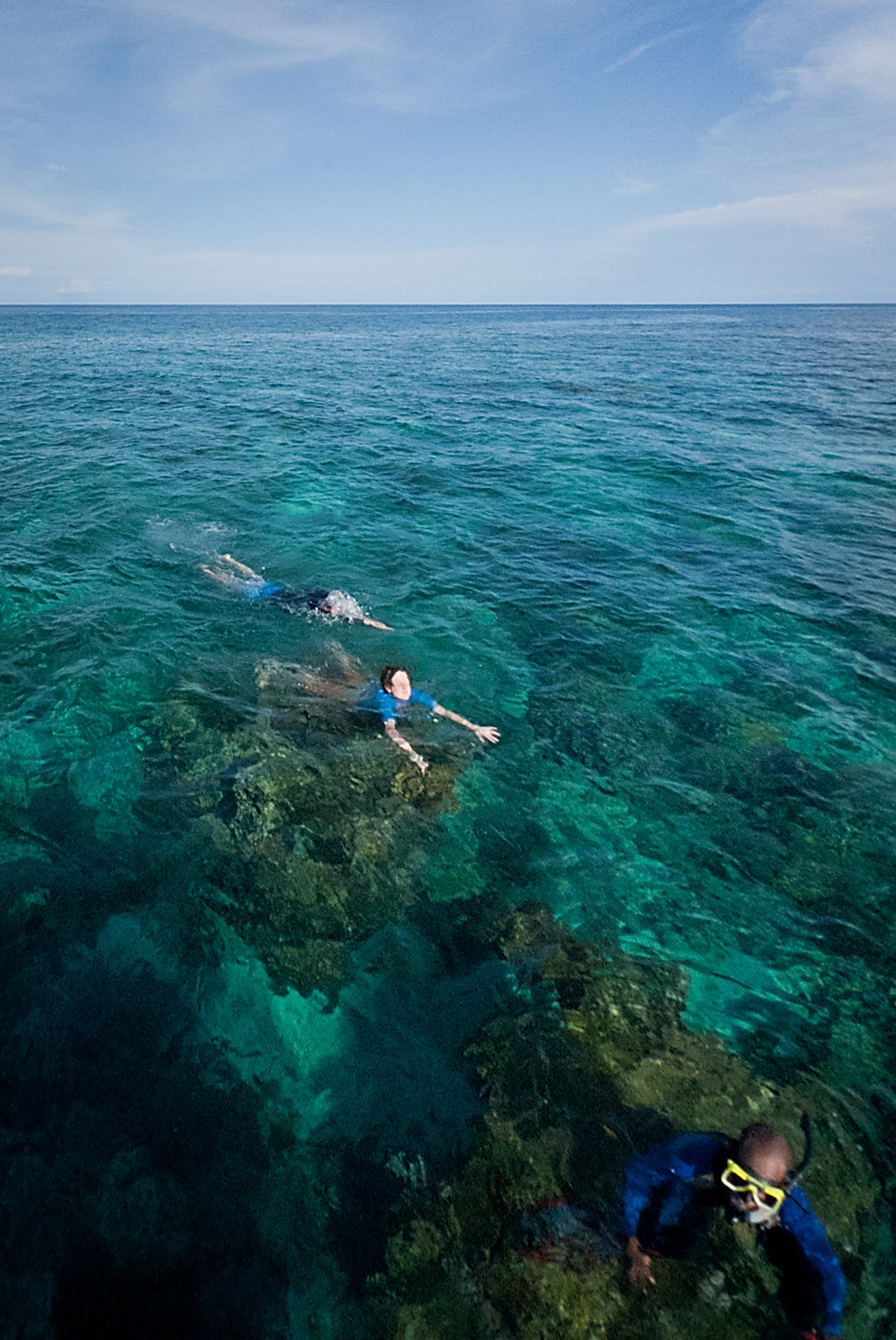
We arrive at the reef and it’s spectacular! The water is so clear you can see the coral and the fish swimming below you. We waste no time in getting our gear on and hopping overboard. What more can you say but it was a bit of heaven on earth.
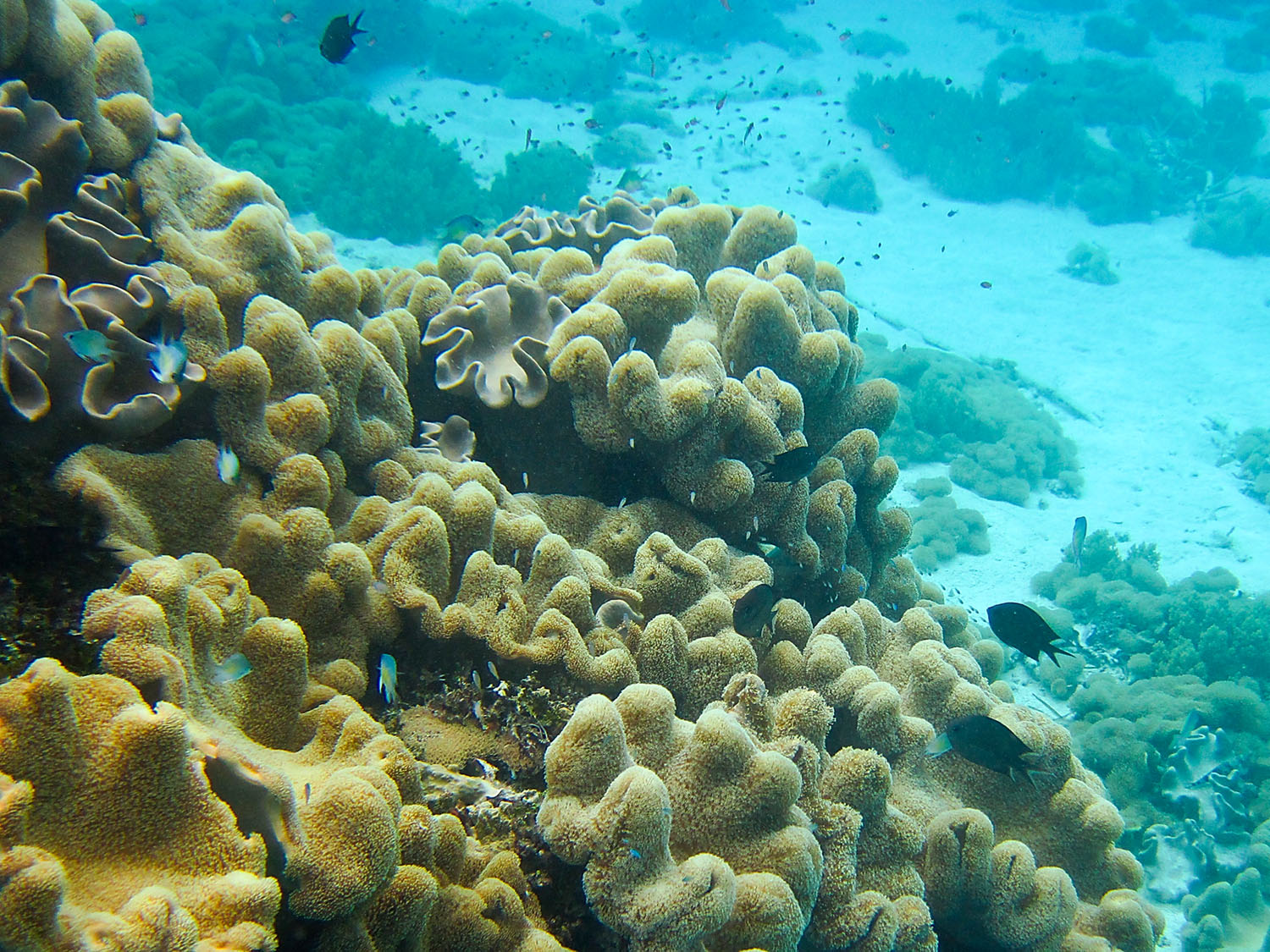
The reef
Nemo
Parrot Fish
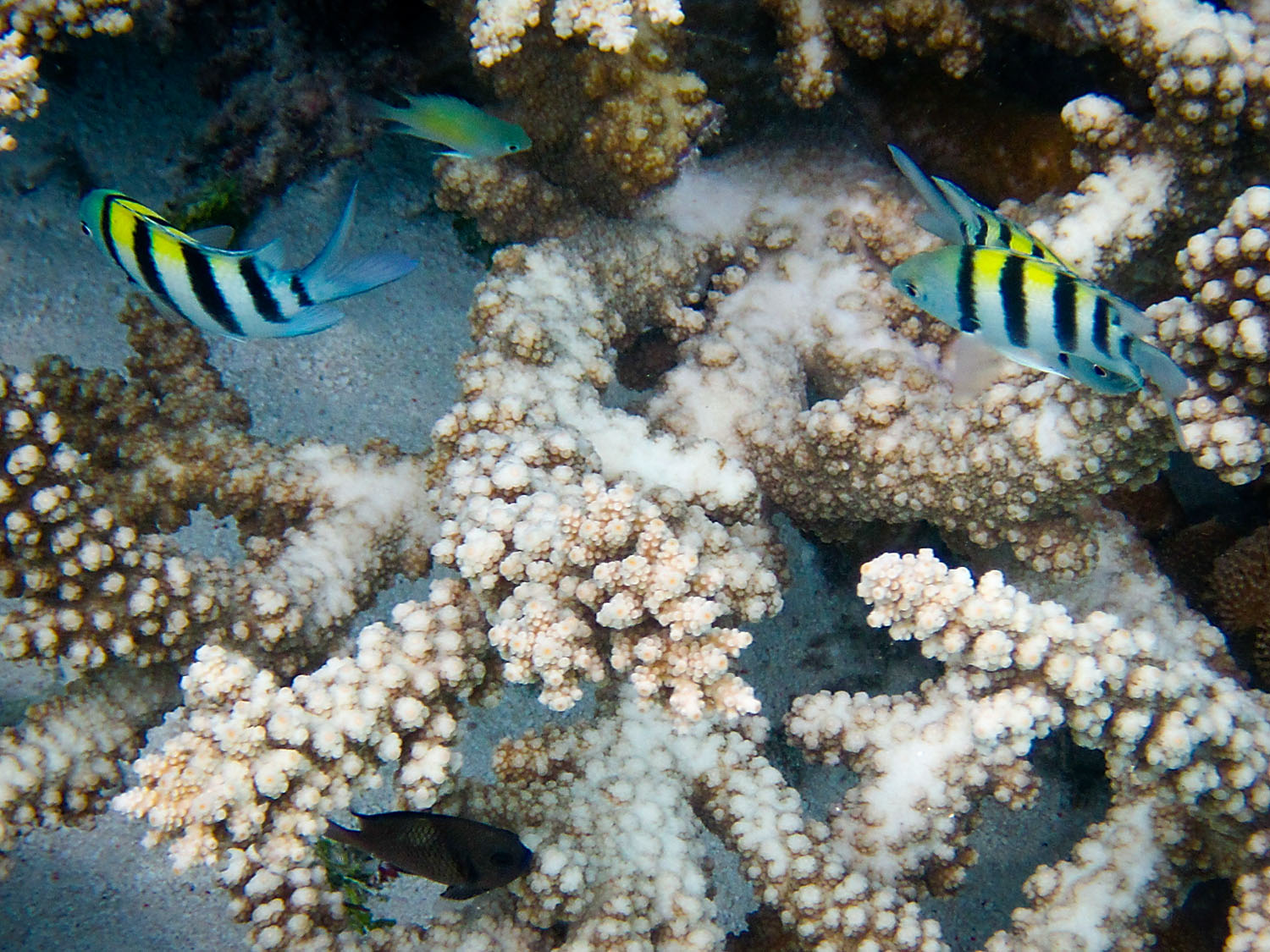
Fish (unknown)
Reef from the boat

They had to almost physically drag us from the water, I don’t think anyone wanted to go back. But all good things must come to an end and once again we headed back to the Orion.

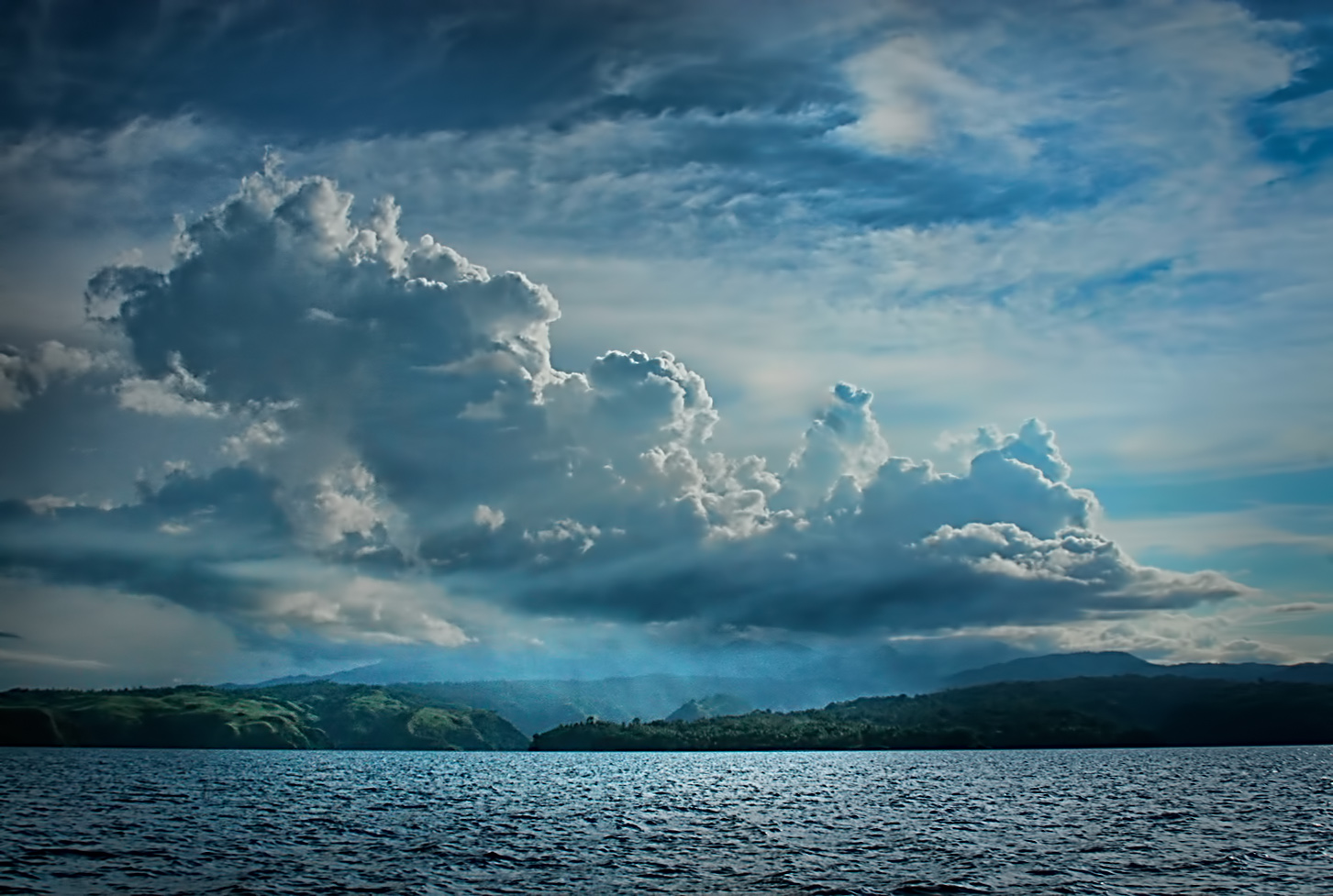
As we came in sight of the shore there was a beautiful cloud formation building up over the fjords and some isolated rain falling. This is a shot, inspired by the work of Peter Eastway, of that scene.
Clouds over Tufi Fjords

By about 16:30 we were back on board and time for a beer and a plunge in the jacuzzi. Dinner tonight was a island buffet under the stars in the Delphinus Café. What a way to end the best day yet.

Tomorrow, the Tami Islands.

Day #6 New Guinea Adventure

Kitava, The Trobriands

There’s a lot of peer pressure on this ship, what with all the great photographers and such but the pressure is the greatest to be up there on the the deck 6, at the bow of the ship for sunrise.

At 06:00 there’s Nick, Mike Moore from the Expedition Team, Peter, and several other guests all set up tripods mounted waiting for the sunrise. Woe betide anyone who doesn’t get up! This morning I’m there and I have the sunrise to prove it.

Sunrise

Overnight we have travelled north from Samarai Island to an area known as The Trobriands and Kitava Island.

Map of the region showing our headingGoogle map link

The Trobiand Islands are a 170 mi2 archipelago of coral atolls off the eastern coast of New Guinea. They are situated in Milne Bay Province and the majority of the population of 12,000 indigenous inhabitants live on the main island of Kiriwana. Other major islands in the group are Kaileuna, Vakuta and Kitava. The social structure is based on matrilineal clans who control land and resources.

We prepare to disembark for Kitava Island at 08:15 however local custom requires that all guest arrive together and stay together until all welcoming ceremonies are complete. This means that those guests in the first zodiac will have to wait by the ship until the last guests board their zodiac. So rather than sit bobbing in a zodiac in the hot morning sun we hang back for the last one. Once we are aboard all the zodiacs head for the island.

As we approach the island we can see that the villagers have created an arena on the beach where we will be entertained by their dancers and performers. We land in a lagoon, formed by the tiny coral cay of Nuratu Island just off the main beach of Kitava Island, and are greeted with garlands of orchids and welcomed onto the island. As we are in the last zodiac all the best seating has gone but we get to sit on rush mats close to the action.

After a welcome by the chief and other representatives of the villagers the entertainment begins. First out a troupe of young men who even though the want to appear intimidating and maybe a little threatening are actually having a great time and hopefully enjoying it as much as we are.
The performance begins

The look on their faces tells it all, a mix of terror at having to perform in front of strangers and remember all the moves but also great joy that we have come to watch them perform.
The young men of the island

Next up it’s the turn of the girls and they are beautifully dressed and decorated with ribbons, feathers and painted symbols.
The young girls

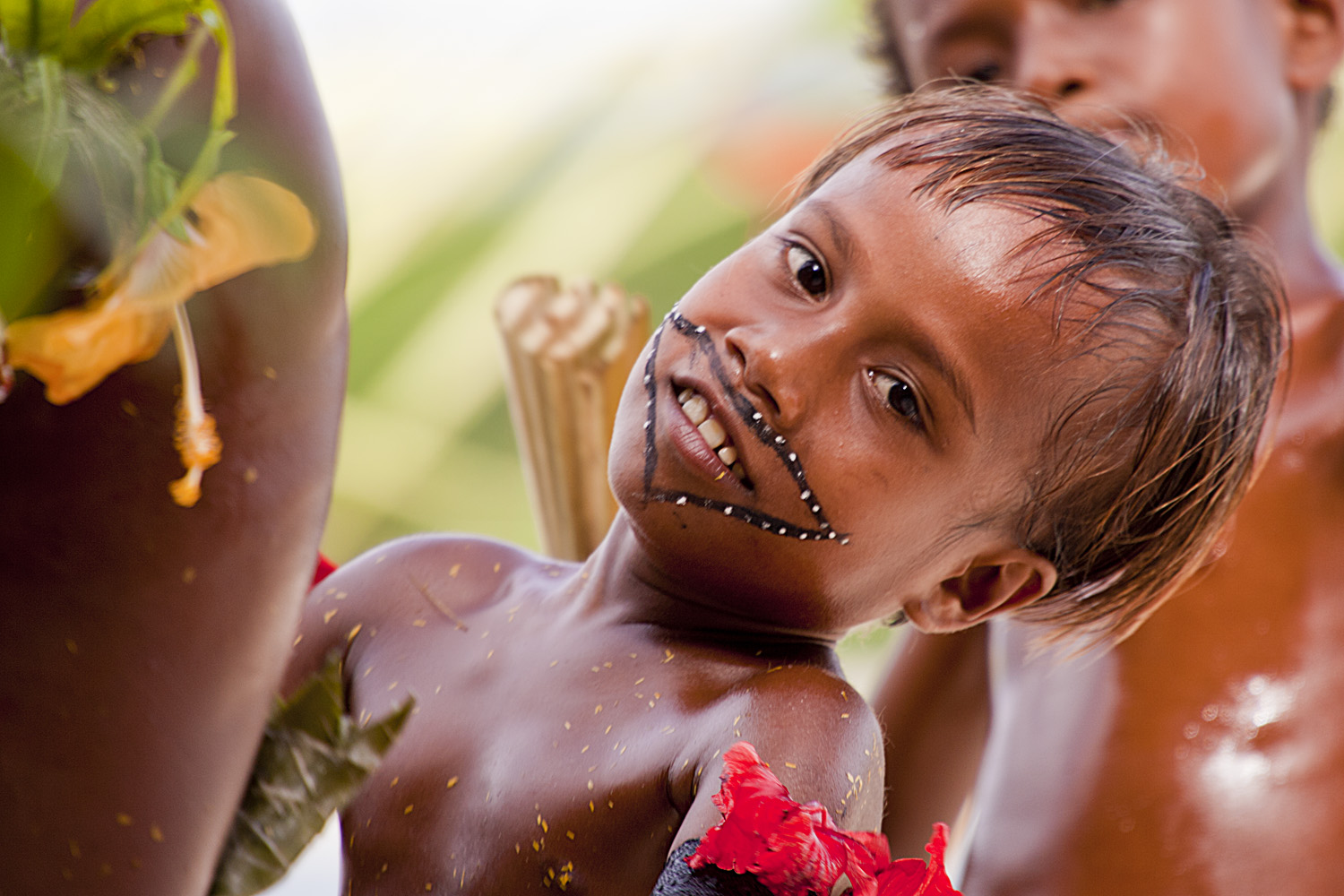
After the girls there is a foot-stomping performance by the young men who use bamboo sticks to beat out the time. These young men seem to be really enjoying it and there is one cheeky young man in particular who throws himself into the performance.
Cheeky Kid

All the while this is going on those who have finished performing join those villagers who have come to watch and sit around the edge of the arena taking in the entertainment.
Spectator
Performer
Helene [Orion Expedition Team Member]

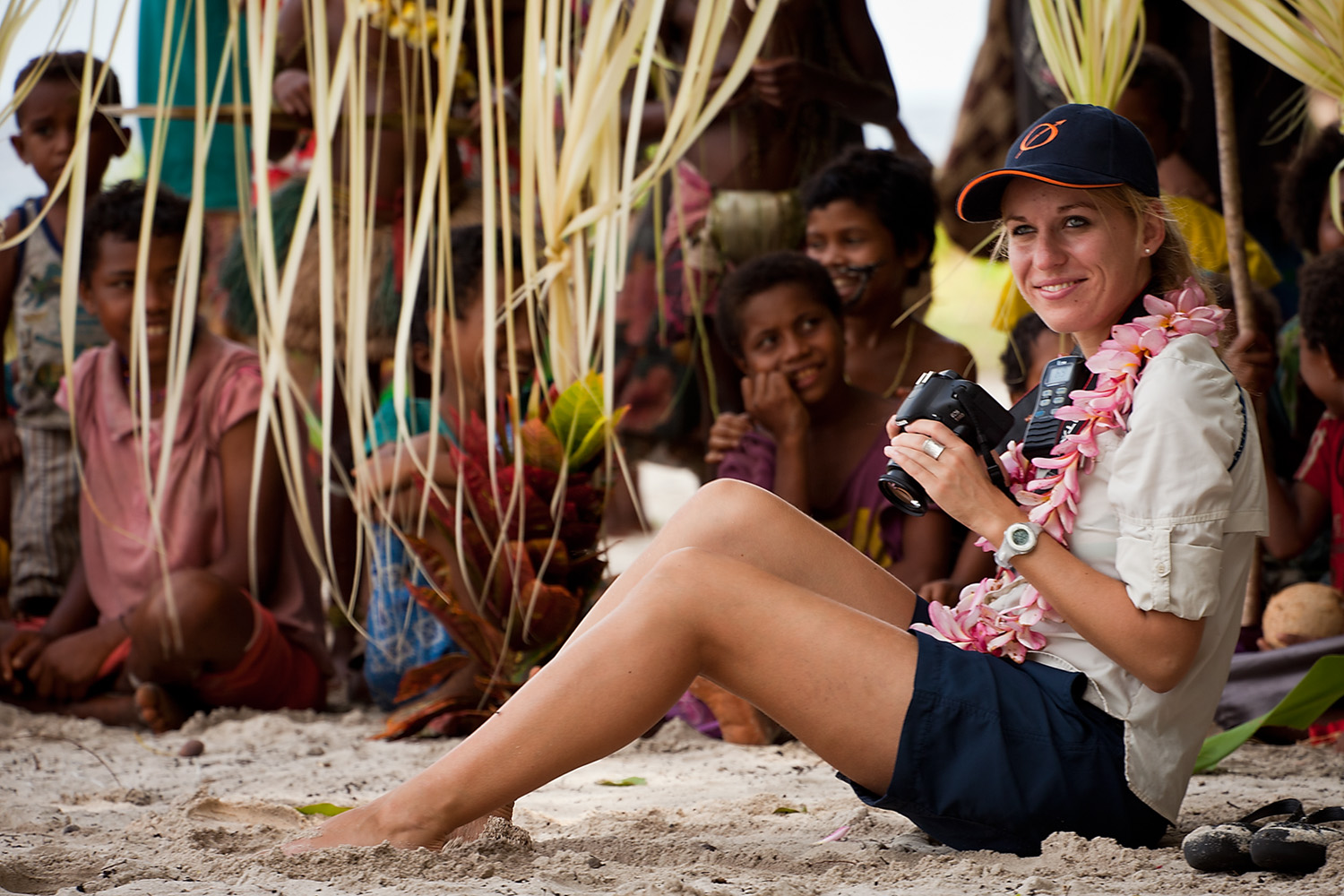
At one stage a group of older women enter the arena to perform and they gesture to the audience requesting we join them in the dance. As we are sitting right on the edge of the arena Kelly and I hop up to join them along with another of the Orion guests. Nick happened to be shooting some video at the time and captured the event. Needless to say there was a lot of hollering and laughter from the villagers as we attempted to match their style and grace!


Video of Kelly and I dancing

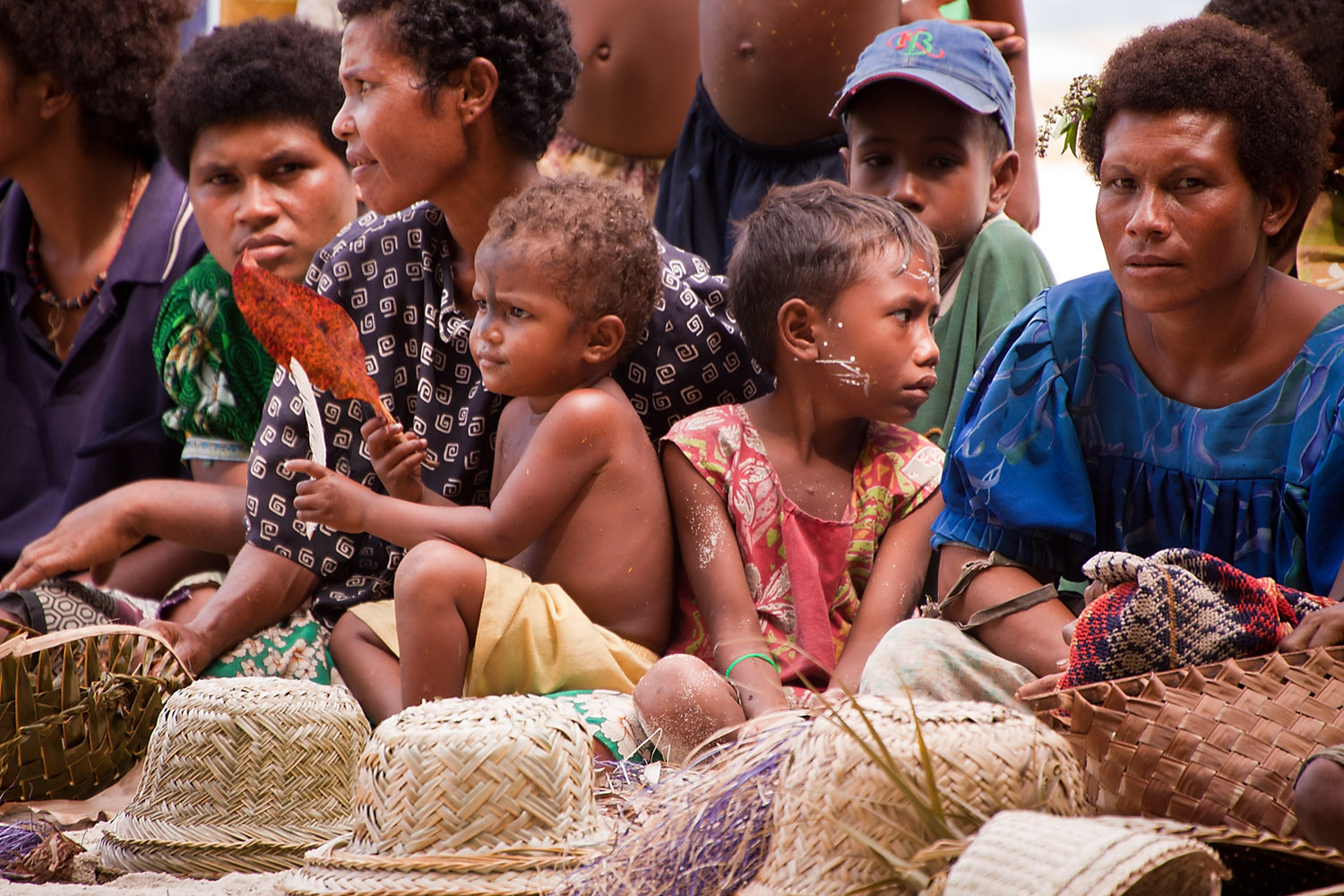
After the performance was over we had a chance to walk around and look at all of the beautiful artefacts and crafts they had arranged for sale.
Group of women and children selling woven bags and hats

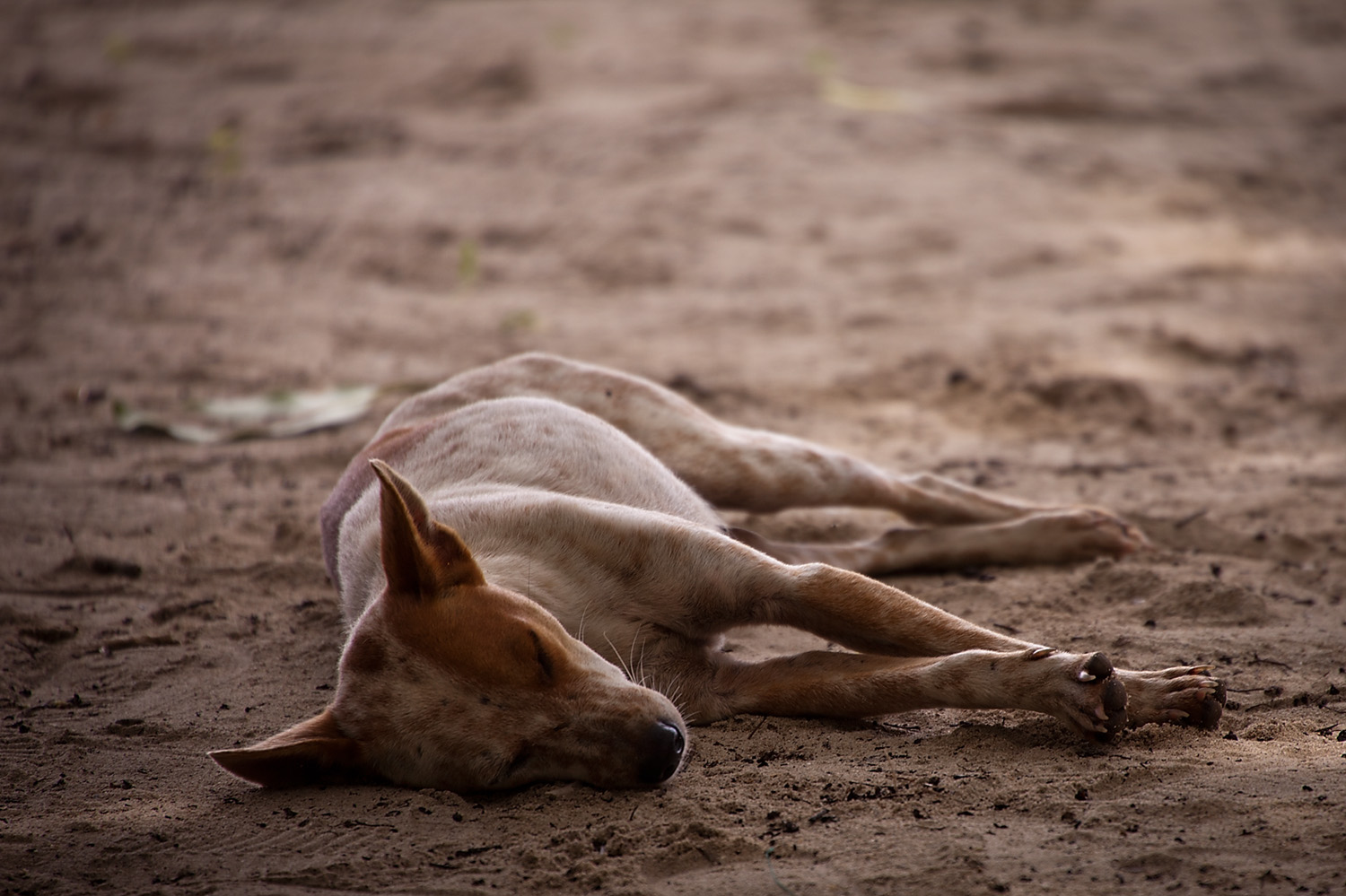
I think it was all too much for this dog who just slept in the middle of the path where they were selling all their goods.
Sleeping Dog

So after having a look around the market, Justin called us together and we started the trek up the hill to the village. It was incredibly hot and we were told it would take about 40 minutes to reach it.
All ready to hike up the hill with my camera gear

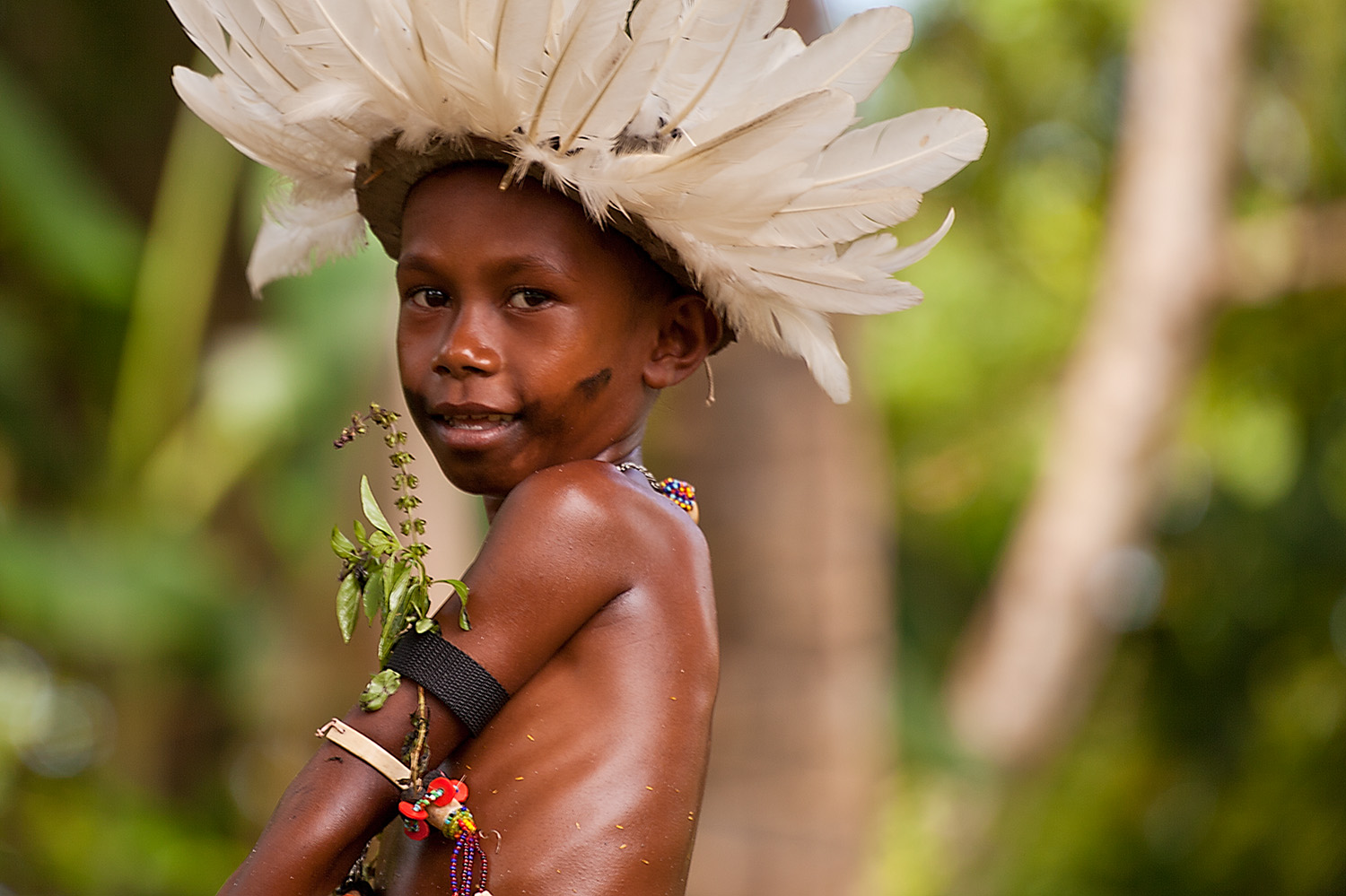
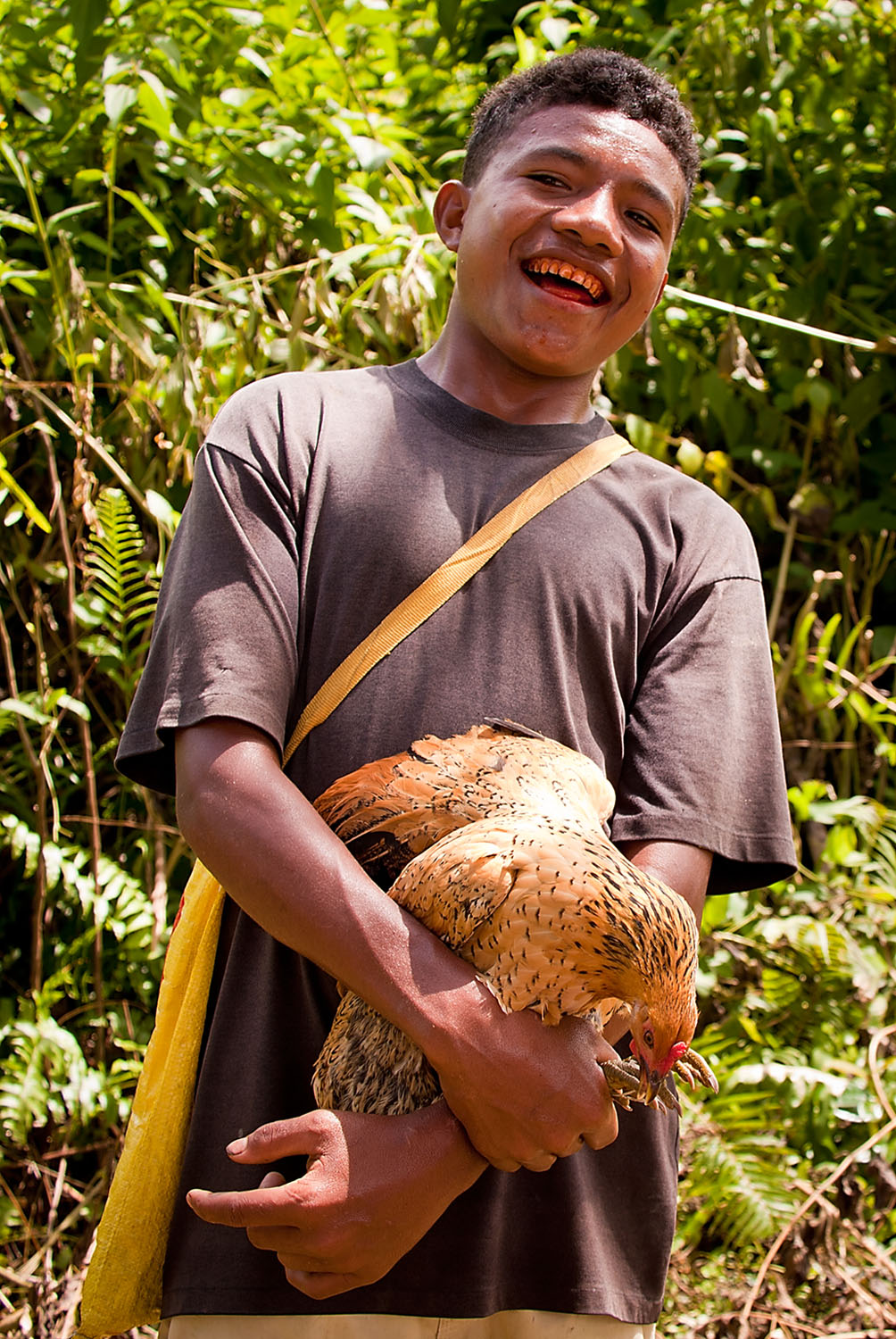
Along the way there were lots of villagers walking with us, some just sitting watching us others still dressed in their symbolic costumes, others carrying their chickens.  We pass local gardens growing crops of taro, yam, banana and breadfruit, the staples of the islanders.
Young boy in feather headdress
Young man with chicken

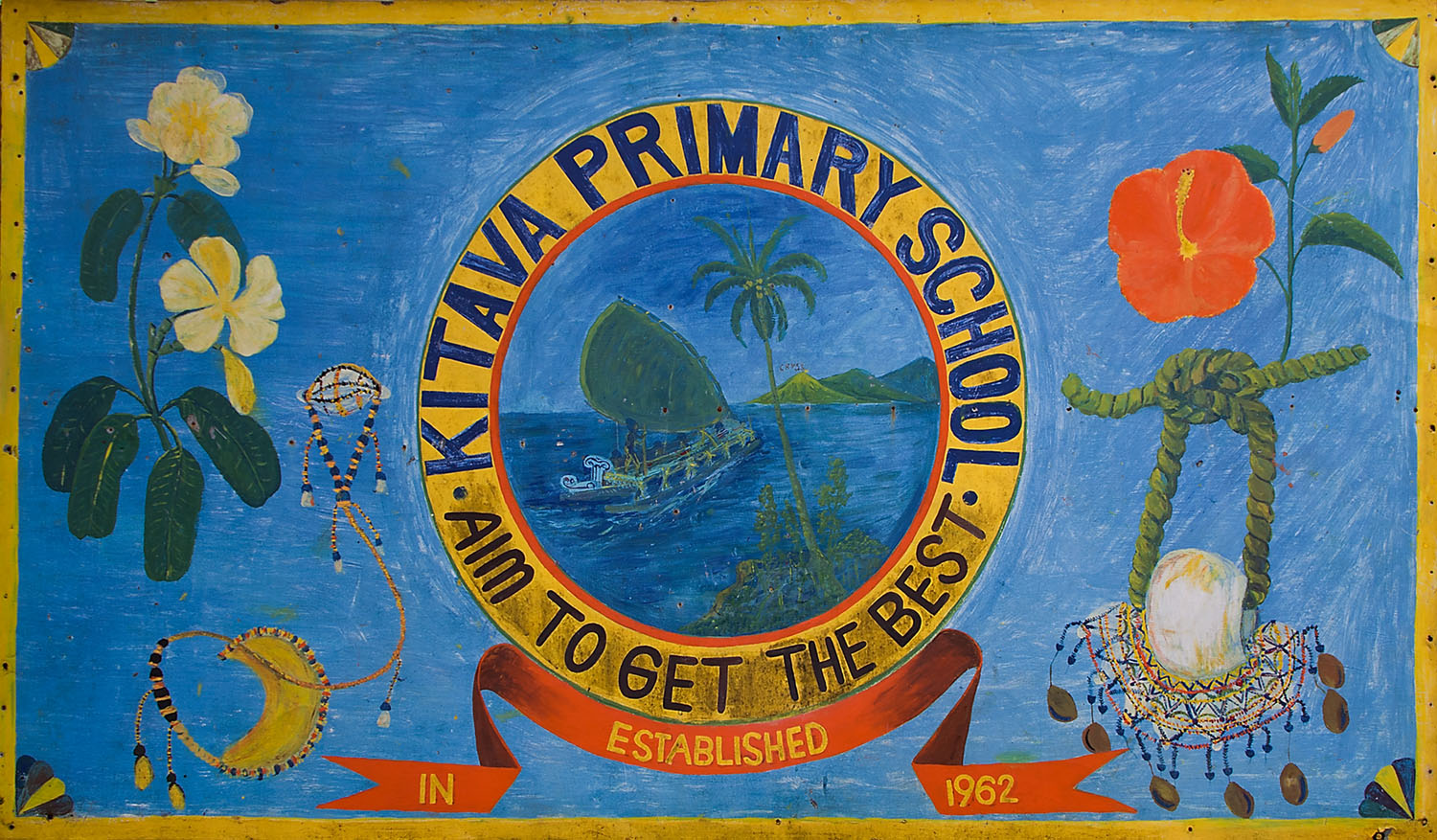
Just before we got to the main village we came to a flat area where the local primary school is located.
Primary school sign

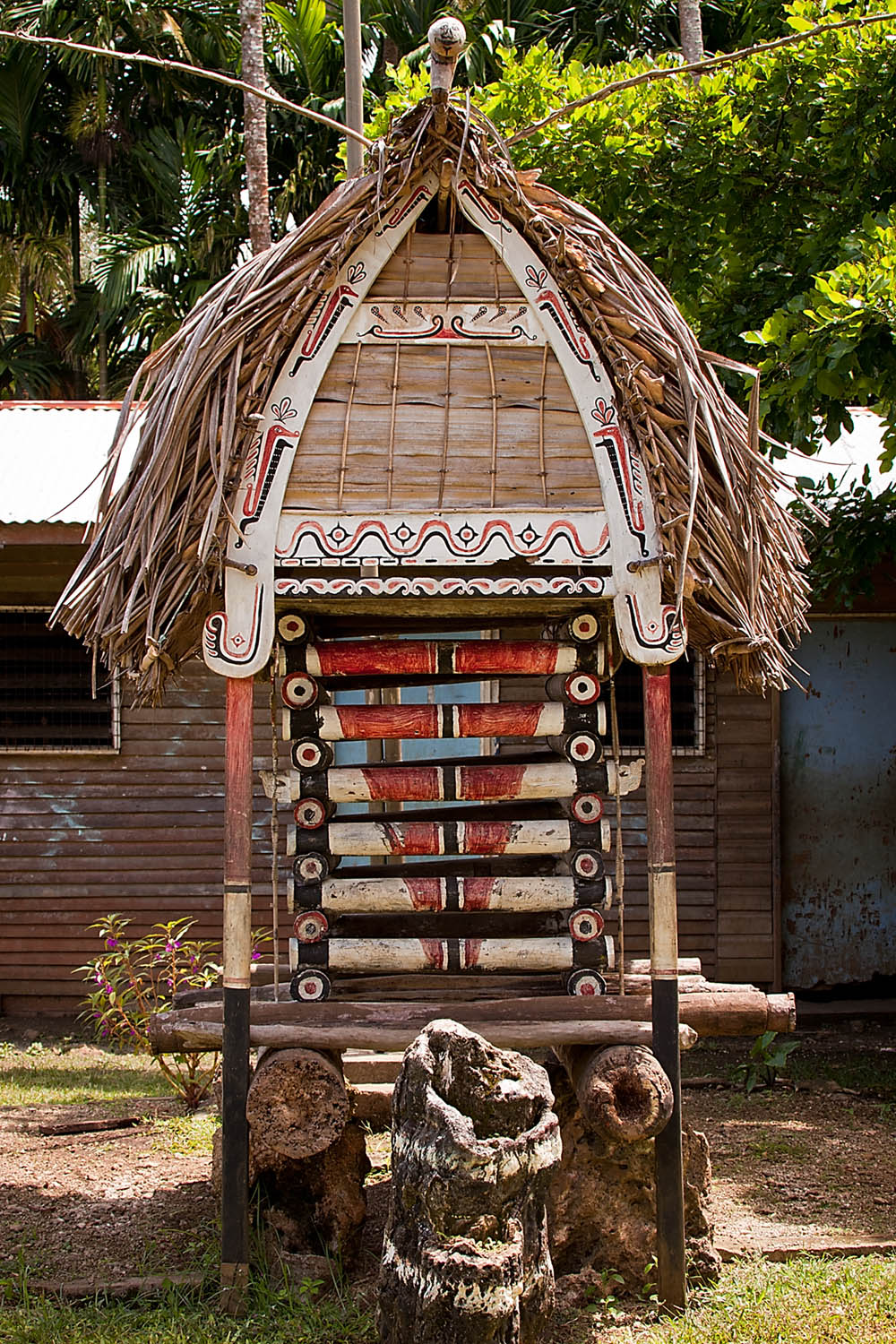
Close to the primary school is a Yam storehouse. The islanders are famous for their culture and huge yam gardens, yams are more than just the staple diet, and have cultural significance in tribal rituals. Yams are proudly displayed after harvesting and then kept in elaborate storehouses.
Yam Storehouse

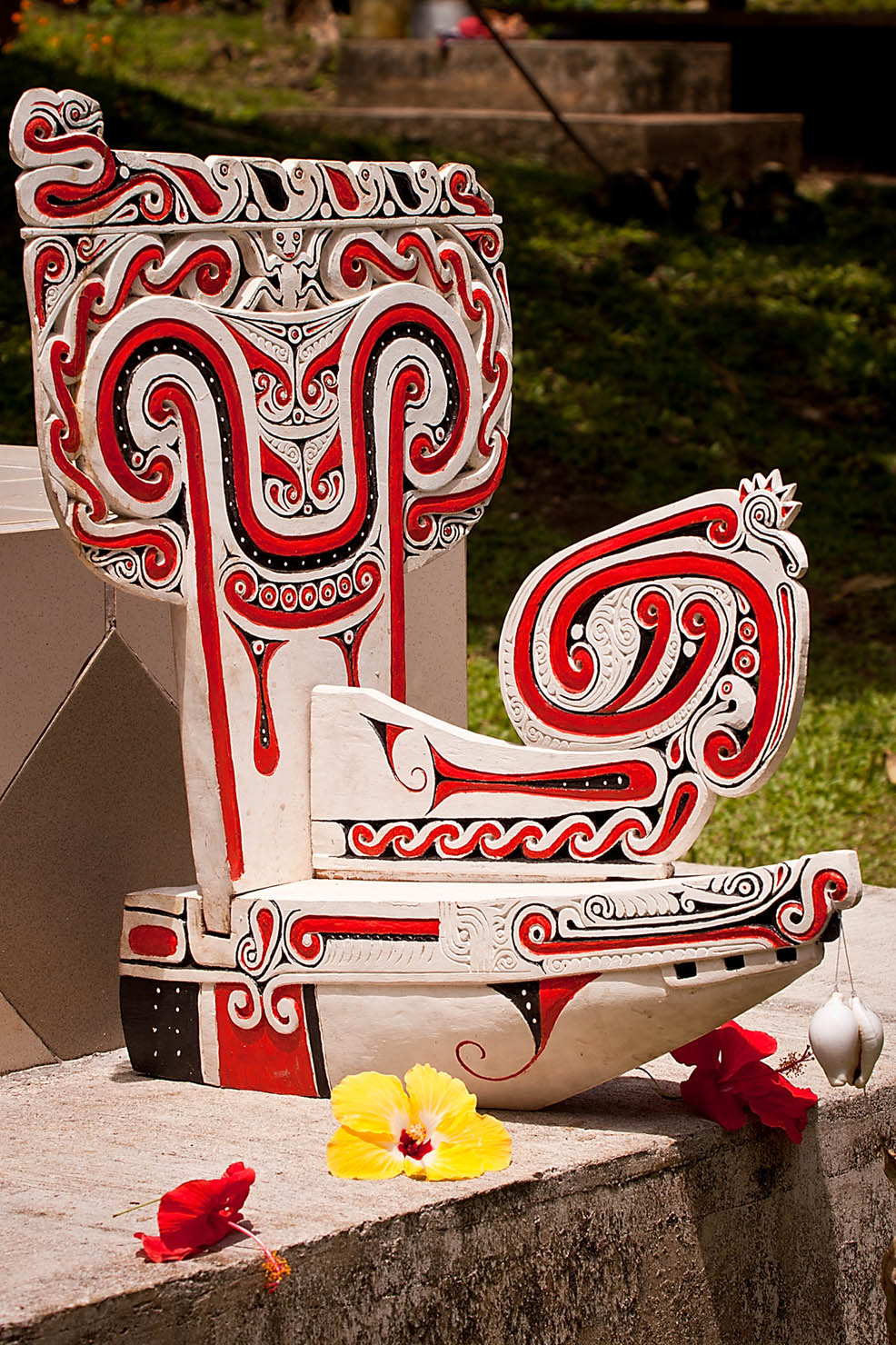
We passed the school and kept heading up the hill. At one spot we came to a memorial grave (I think it was someone that Justin knew, I'll try and get the name) that was decorated with a beautiful replica of a traditional canoe bow with splashboard and wavesplitter.  These two are the most distinctive features of the Kula (local) canoes. The splashboards enclose the ends of the canoe and provide a greater overhang on the outrigger and give protection from spray and water surging into the hull and the wavesplitter holds the splashboard in place.
Memorial with canoe bow

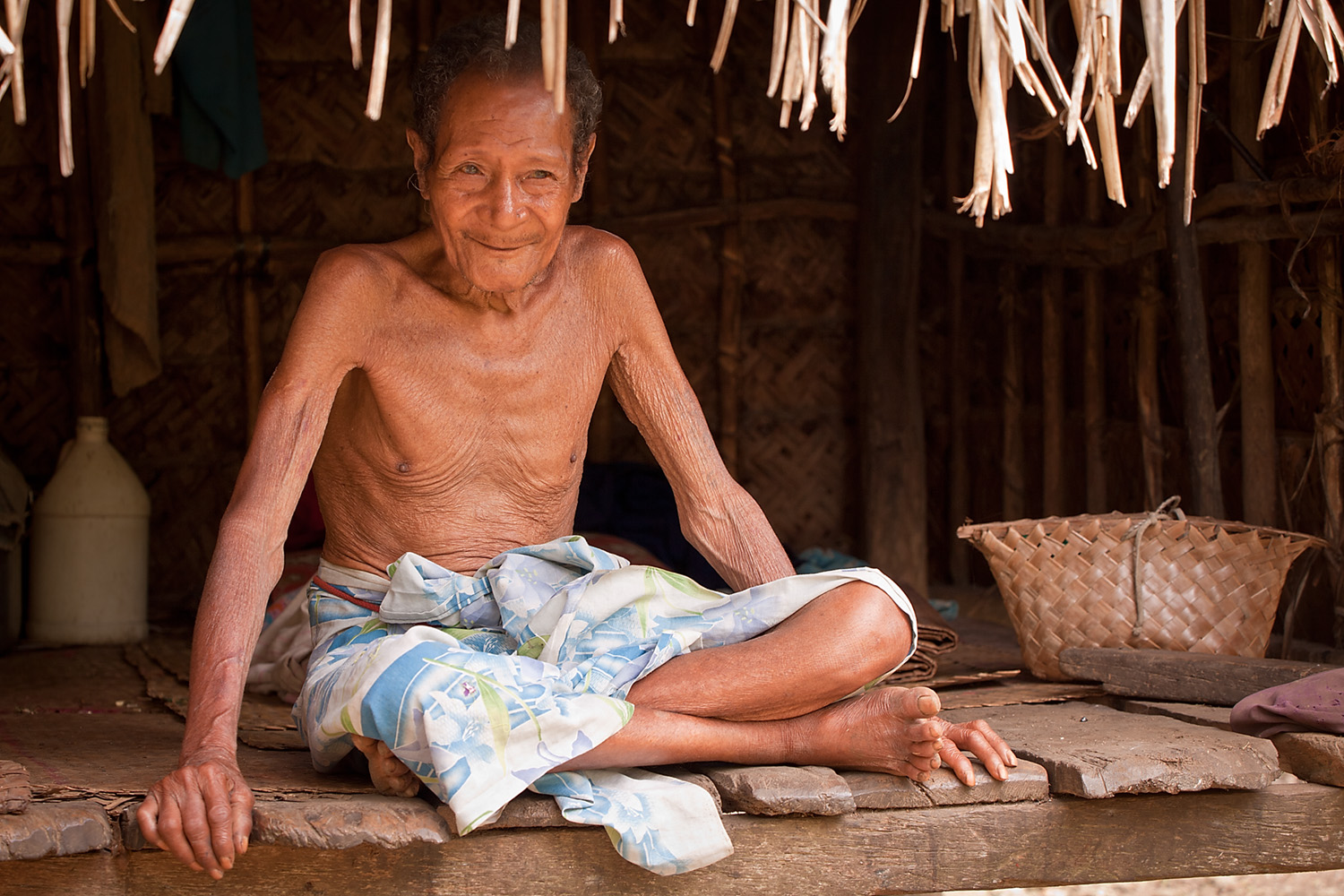
A few minutes after passing the memorial we finally reached the village. Seeing it took my breath away, ahead of me was a long  wide path with huts down either side, and villagers either working or just sitting watching us. As we walked down the path everyone was incredibly friendly waving when we waved and happy to let us take their photographs, once I had politely asked them if I could. I was taken by one elderly man who seemed quietly amused at all these white folk walking through his village.
Elderly villager

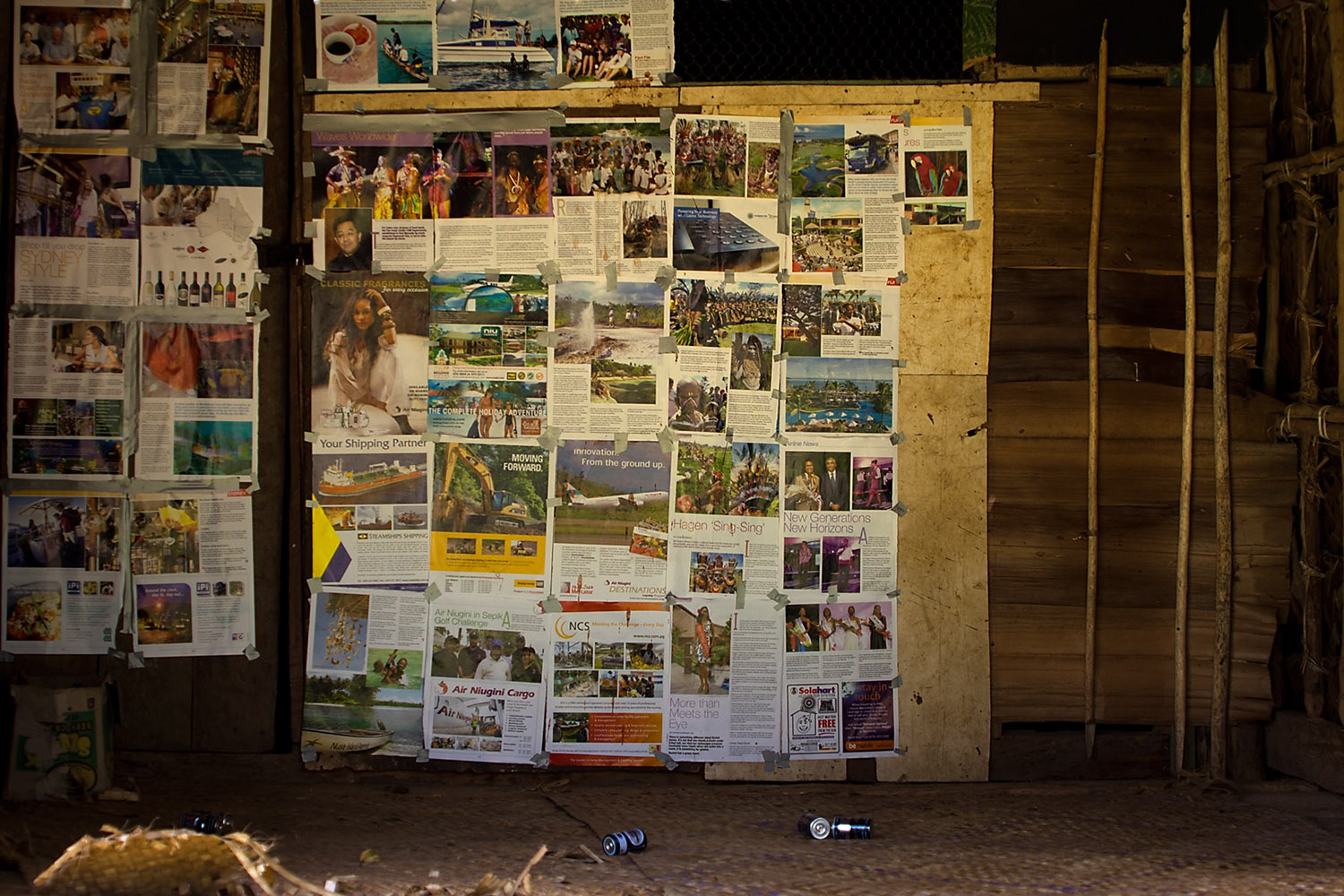
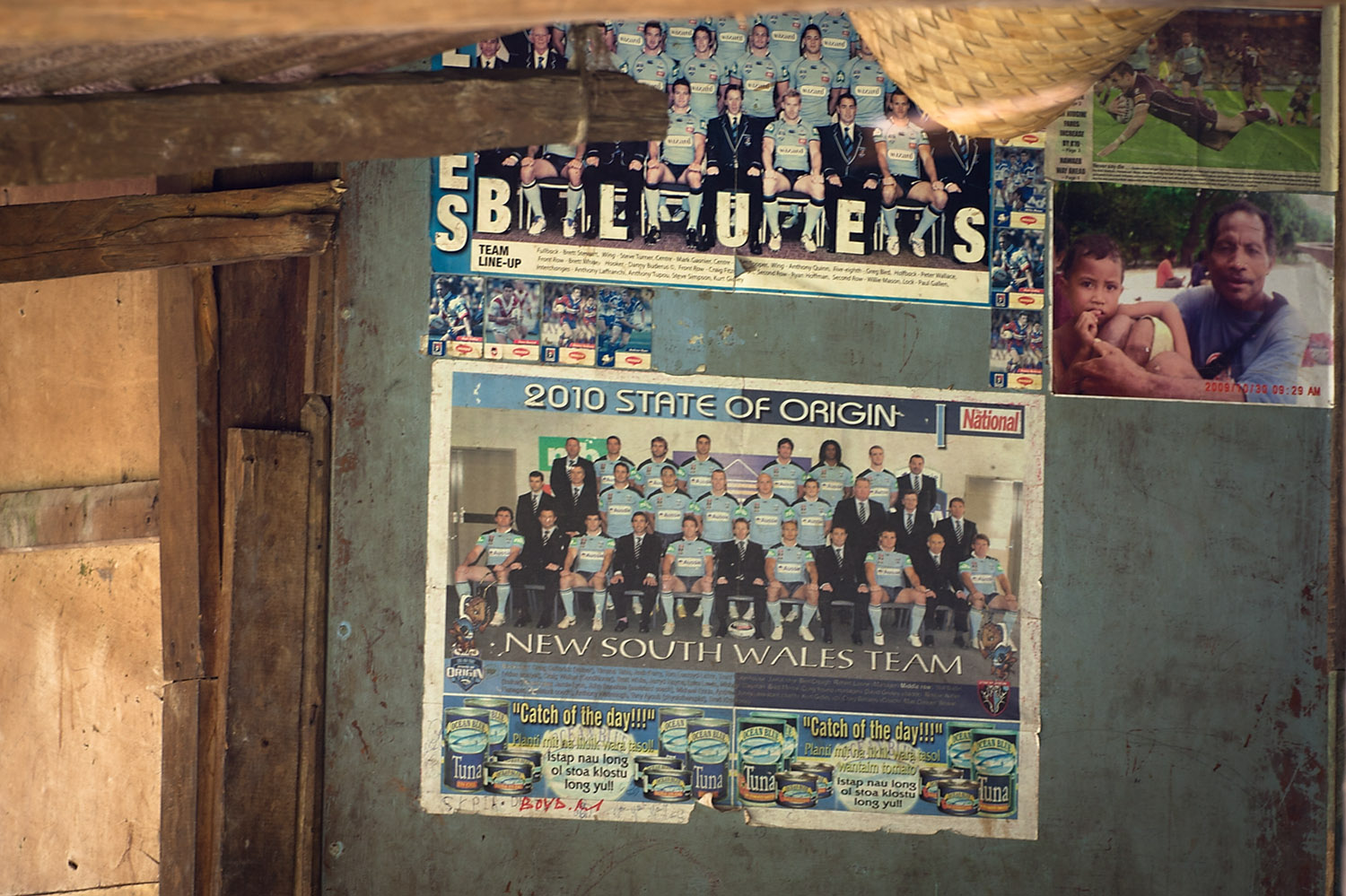
Early in the day I’d been talking with a few of the friends we’d made on the ship and musing about what sort of view and understanding the villagers would have had of the world outside their village, from what seemed to me to be one of the remotest places on earth. Imagine my surprise when I saw the decorations that many of the villagers had put up on the walls of their huts.
Newspaper & magazine clippings
State of Origin Poster!

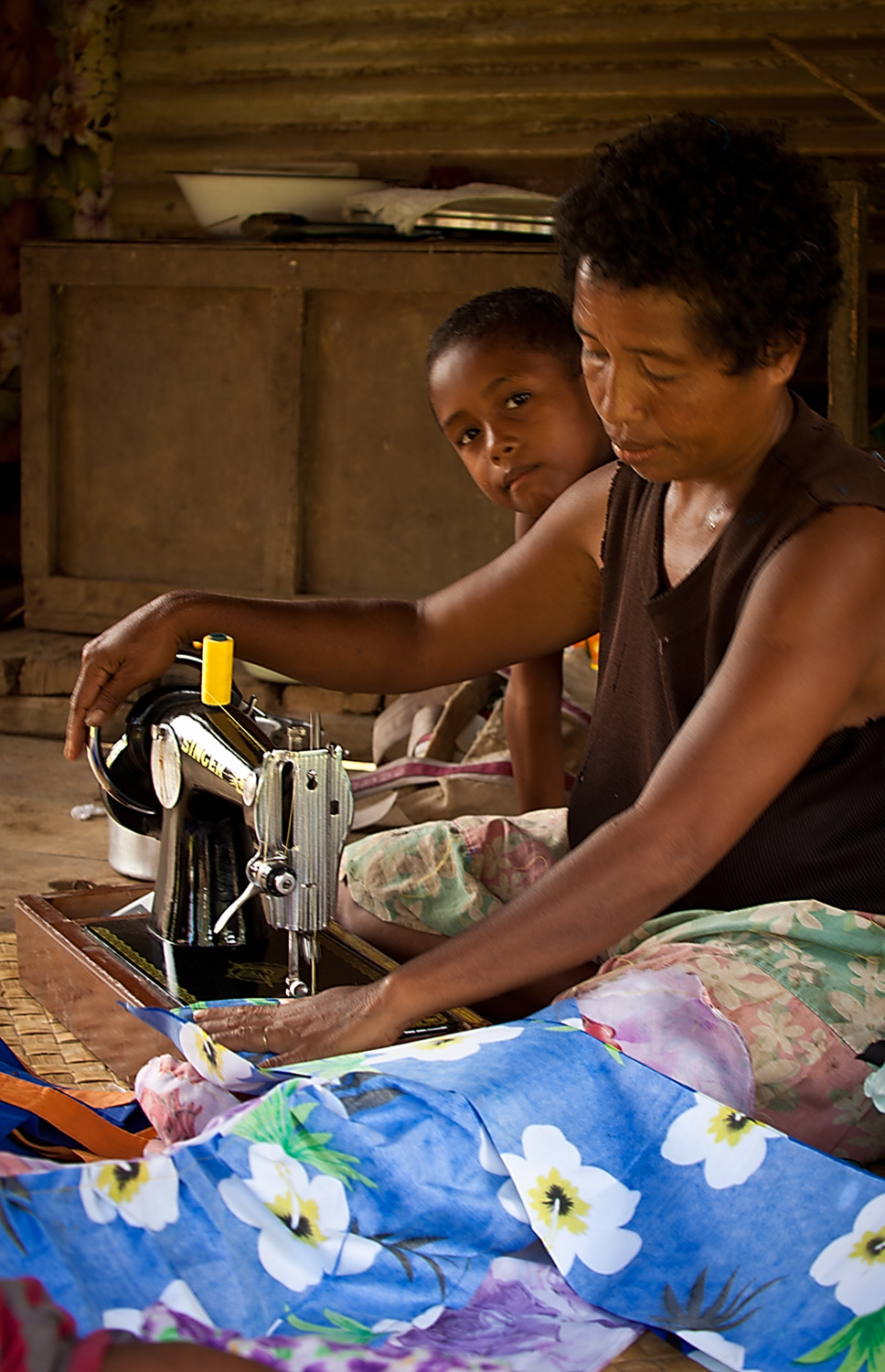
At one of the huts there was a woman with an hand operated sewing machine making clothes. She told me they bought the material from a store on the mainland and she made the clothes that, once finished, were given out to the other villagers.
Woman sewing

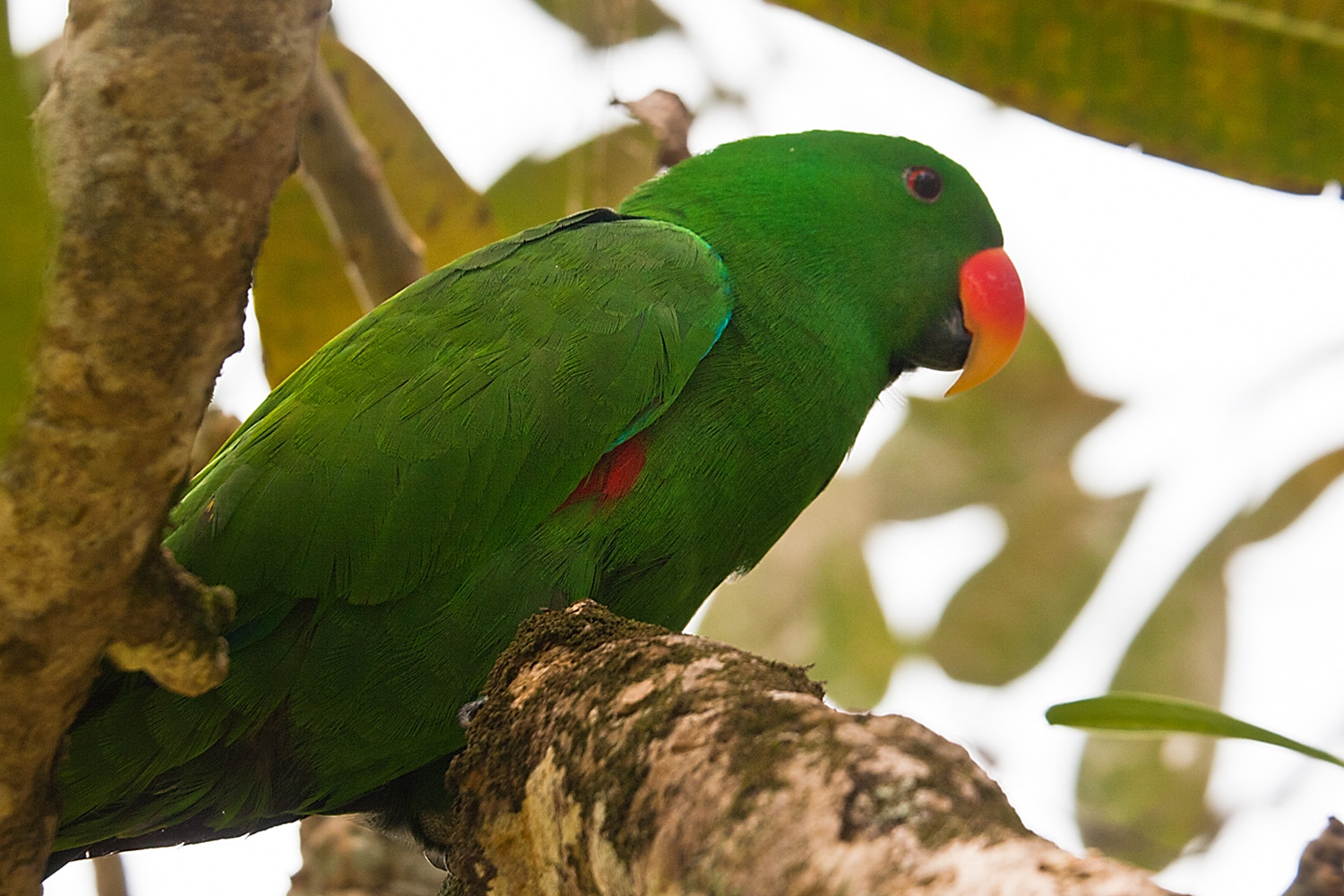
Just walking through the village was such a visual treat there was so much going on, Kelly spotted this beautiful parrot …
Parrot

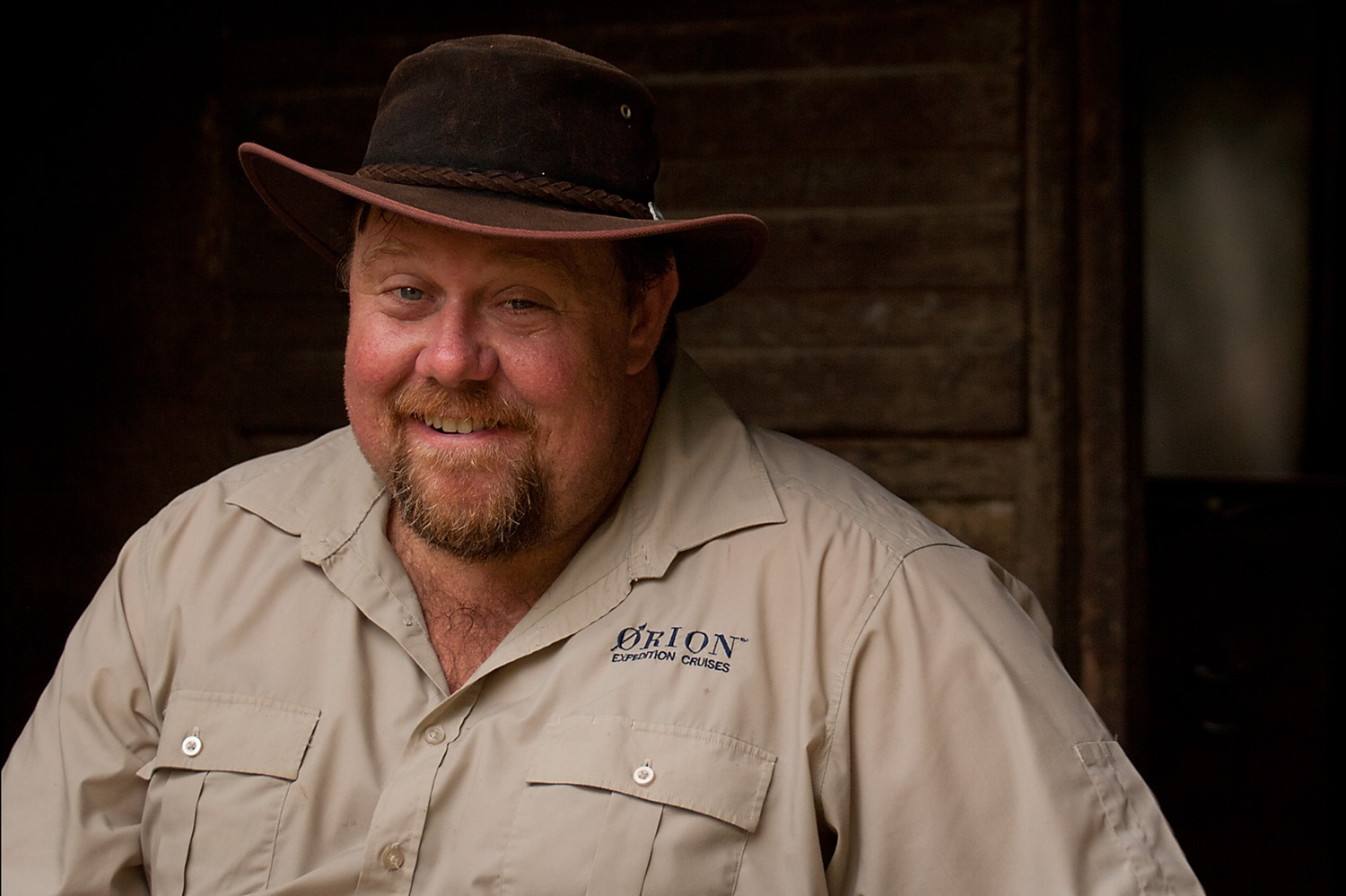
… and I spotted Justin taking a well deserved break.
Justin

We finished up our visit with a refreshing drink from recently picked coconuts and headed back down the hill to the beach and into a zodiac that was waiting to whisk us back to the Orion.
Approaching the Orion in zodiac

Back on board we wasted no time in getting changed and collecting our snorkelling gear as we were off to the island of Naratu, just opposite to Kitava for some more great snorkelling.
Fishes
Fishes

We caught the last zodiac back to Orion at around 14:30 and headed up to deck 6 to wash out our gear and spend a bit of time in the Jacuzzi. The water is cool and refreshing just the perfect thing to relax before our next event at 17:00 a lecture by Nick Rains on ‘Essence of Landscape Photography’. Once again another great insight into how Nick goes about composing his landscape photography and how he achieves the perfect blend of balance and drama.

At 18:30 on each day of the cruise the Expedition crew do a recap of the day’s events illustrated with pictures they have taken during the day. You have to watch out because they are always trying to get at least one shot of a guest in a not so flattering pose!

As soon as tonight’s briefing finished I dashed up to deck 6 to get a quick shot of the sunset as we sailed away from the the Trobriands and toward Tufi.
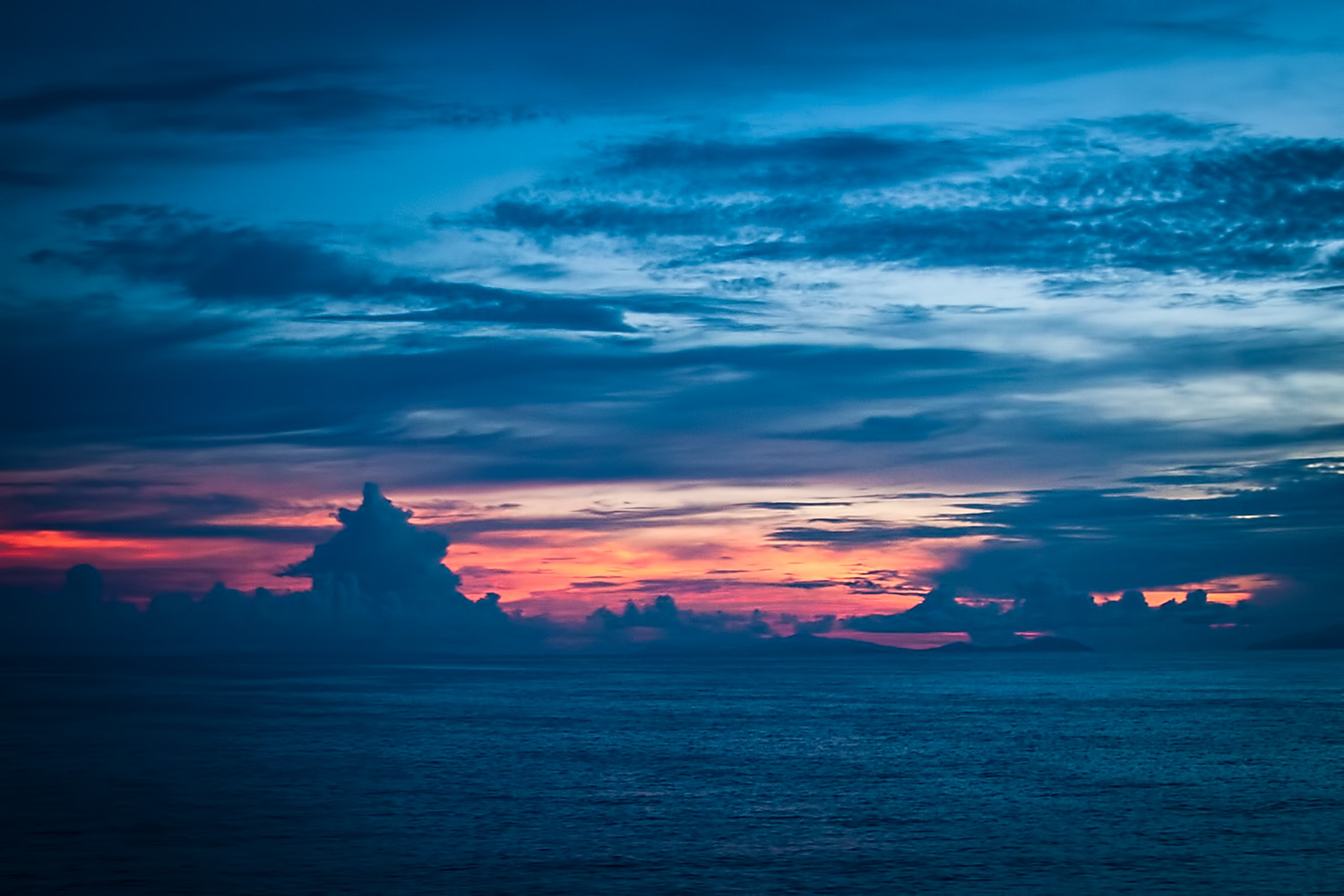
Sunset

This evening we have the Captains reception in the Leda Lounge. This is where we get formally introduced to our Captain and enjoy some cocktails with the other passengers before heading down to the Constellation Restaurant for the Captains dinner.
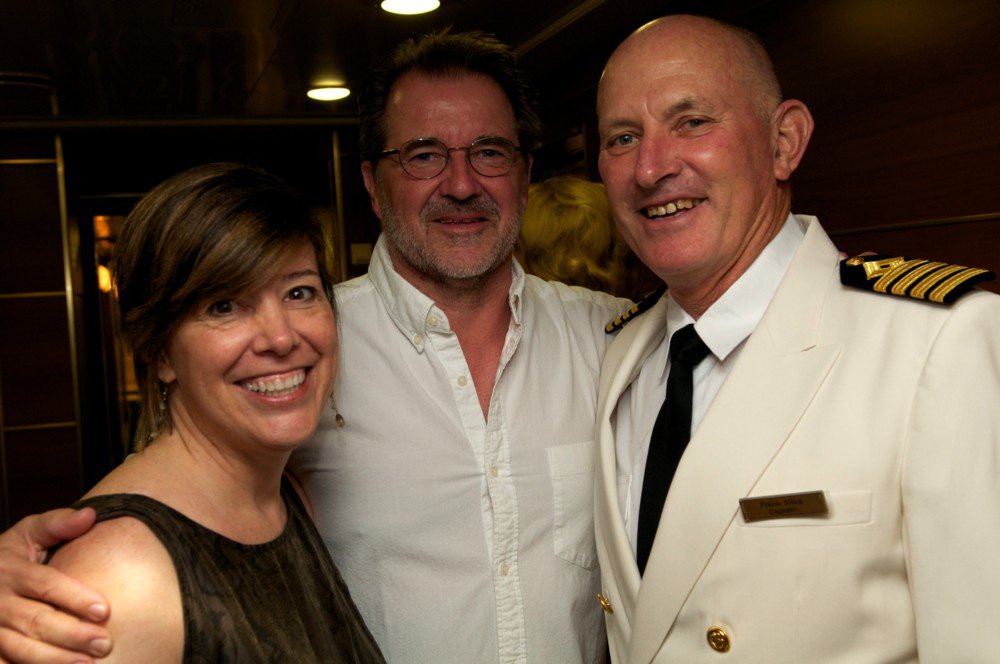
Hanging out with Captain Frank

Day #5 New Guinea Adventure

Samarai Island, Papua New Guinea

This morning we have an early 5am wakeup call for a dawn photography session, organised by Nick and Peter, on the island of Samarai  It’s a bit like being back in Africa and getting up for the 5am Safari. We head for deck 6 to grab our cameras. [The reason the cameras are on deck 6 is that the ship is air-conditioned and outside it’s very humid. If you keep your camera and lens in your cabin it’s going to take about 30 – 45 minutes for the camera and lens to acclimatise, in the mean time you cant see anything because your camera is all fogged up.]

Once we have all our gear it’s down to the swim deck, jump into the zodiacs and head for the island, just visible in the early morning light, not too far away.

Approaching Samarai Island

Early morning view of the Orion anchored offshore

During the night we’ve been backtracking a bit and come back south into the China Strait Islands.

Map of the region showing our heading - Google map link

Nick and Peter, in their presentations, have been discussing the best time to shoot and dawn is a favourite time of theirs and they are keen to get set up before the sun is too high in the sky.

We arrive at a small wharf at the island but there seems to be a bit of confusion amongst the zodiac drivers and there is a bit of radio chatter going on. We don’t disembark but head off in another direction, seems as though some of the expedition team are on another island. Oh oh, we’ve turned back again and are heading back to the first island we went to, unfortunately by this time the sun is getting higher and higher in the sky and I think Nick’s upset that we’ve missed getting to the island in time for the sunrise.

The zodiacs pull up next to a small landing on the wharf and we all hop out and head up the steps to the main landing.  There are a few people on the wharf, some loading gear and boarding a small boat, the others watching what we are up to.


Young Kids

Local Boat

In the early 1900’s Samarai island was the thriving colonial capital of the territory of Papua and the town’s street-scape carries reminders of it’s past glory. It use to be described as one of the most beautiful places in the South Pacific. By the 1920’s the town had declined in importance and after the outbreak of World War II the Australian Government ordered the evacuation of the island in 1942 and destroyed the wharves and buildings being used by the advancing Japanese.

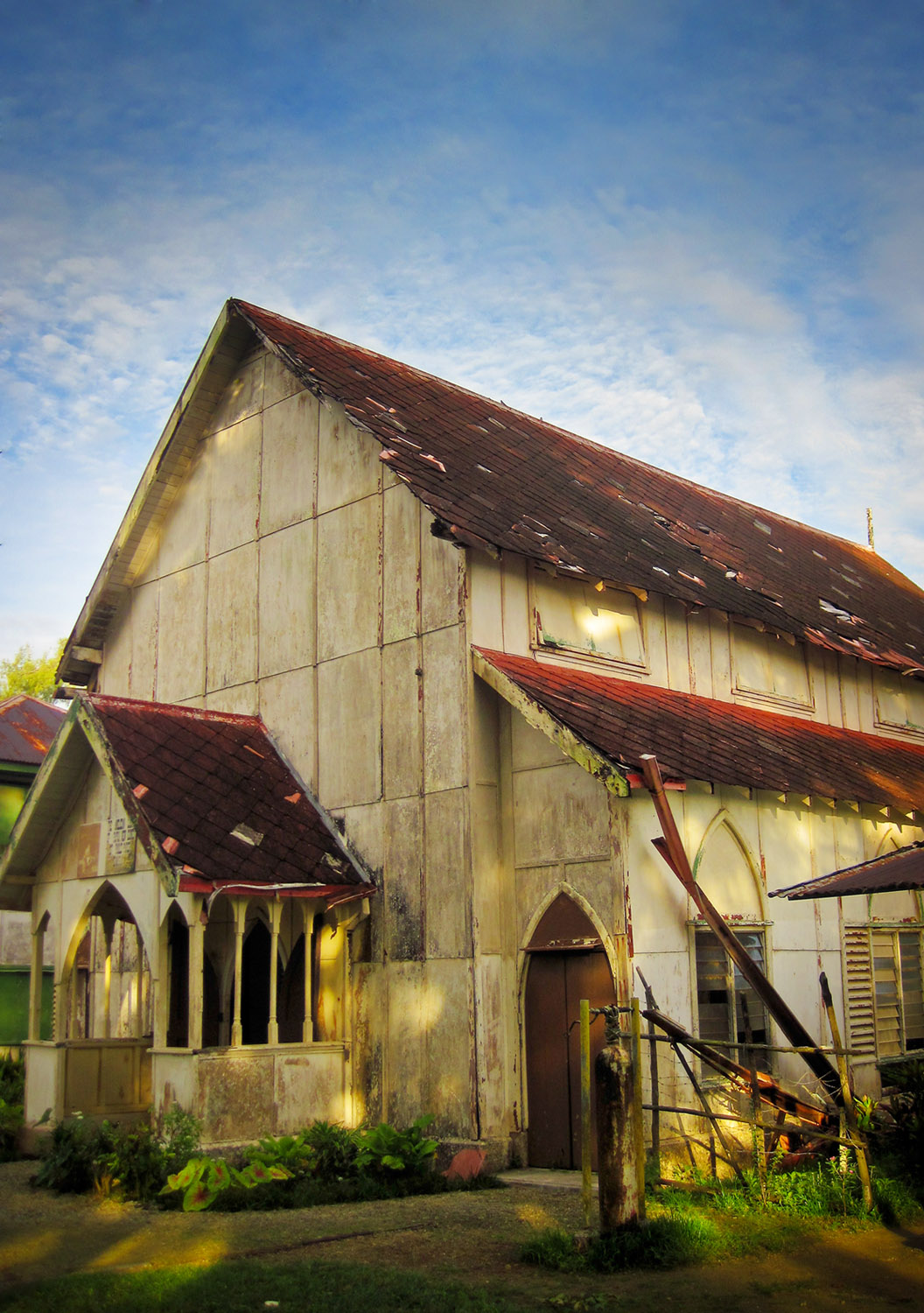
Samarai was reestablished after the war but never returned to it’s former glory and has assumed an atmosphere of slow decay. Which means for those of us visiting the island a wonderful photographic opportunity with all those textures of rust and faded paint. One of the most striking, and the oldest surviving, building is St. Paul’s Anglican Parish church. It’s just a short walk from the pier and by the time I’ve finished up at the wharf everyone else who was on the zodiacs have already moved through this section of the town, so I’m all alone so I in the quiet early morning standing in front of this wonderful old church.

St. Pauls Parish Church

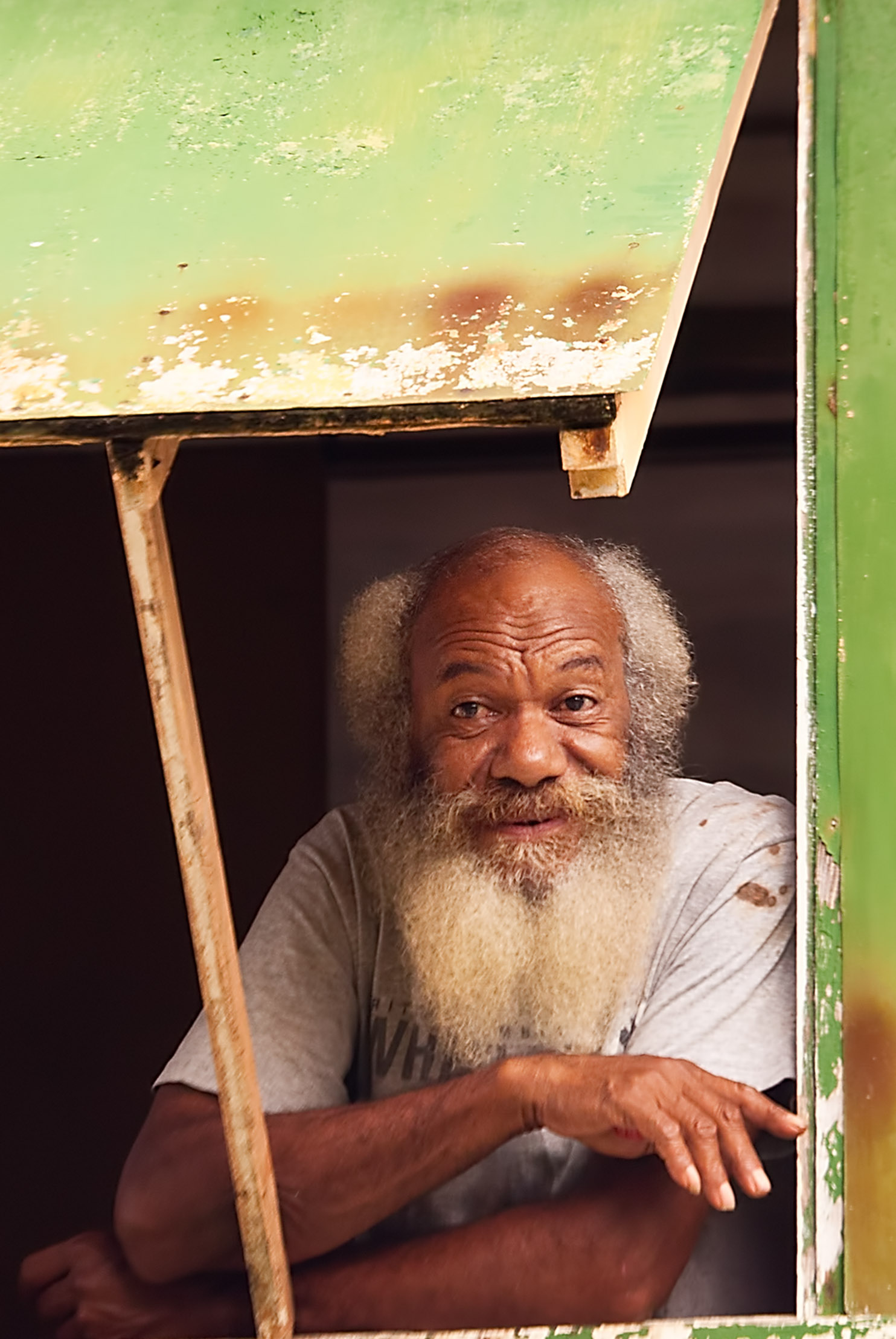
The next thing I notice is this old man, with a big white beard, dressed only in board shorts walk up to a large gas cylinder suspended above the ground. He bends down and picks up a rock and begins to bang the cylinder that rings like a bell. Instantly dogs all around town start barking madly as he’s banging away.

Old bell ringer

When he finishes I ask him what he’s doing and he tells me that he looks after the church and at 6am, 12 noon and 6pm he rings the bell. I’m not quite sure if he’s actually calling the faithful to church or it’s just the village wakeup call. I wish him well and head off toward the wharves.

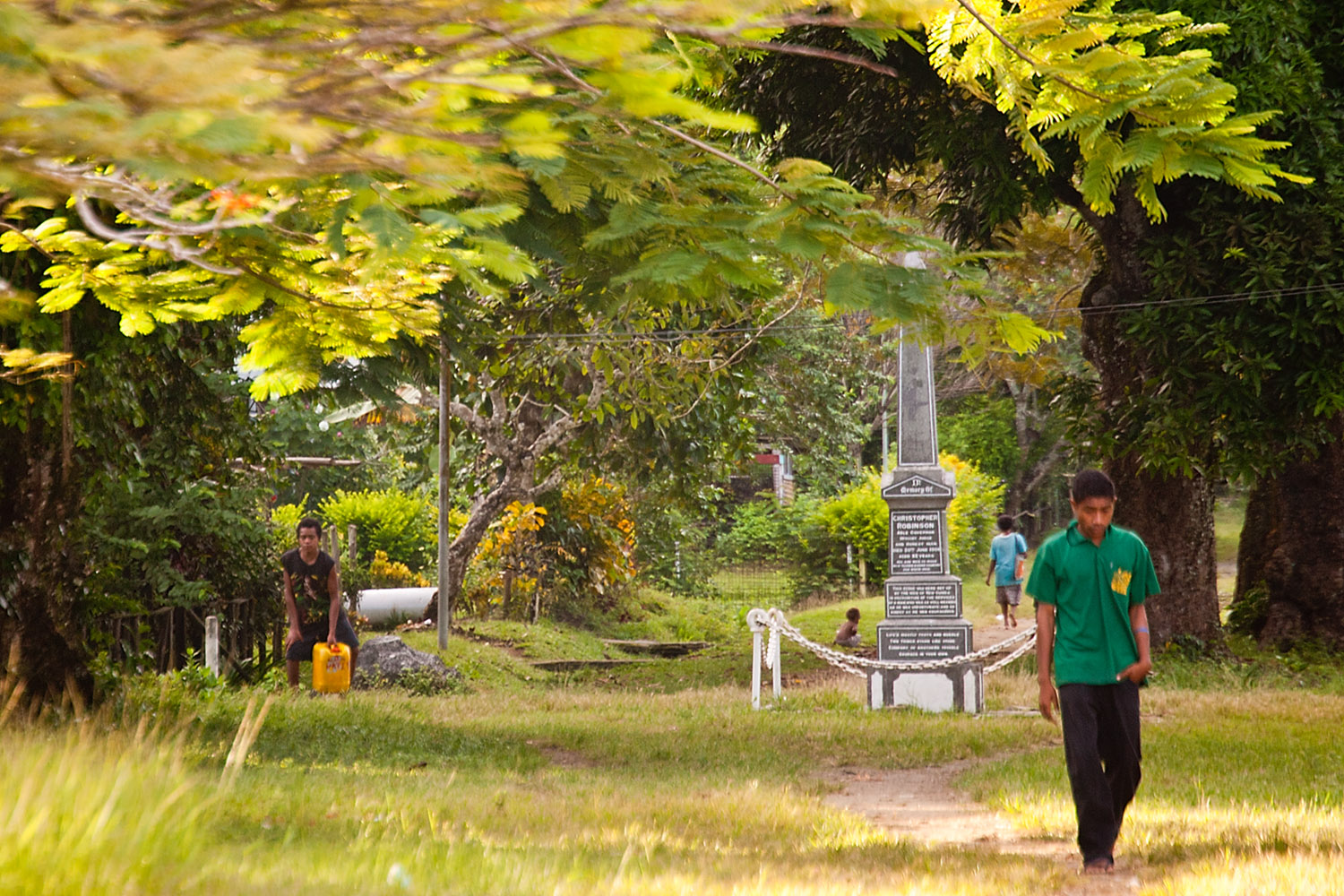
On the way to the wharves there is an intersection and a path heading off toward the hills. At another crossroad, further up the path, I could see a memorial that I found out later is dedicated to  Christopher Robinson, the one-time administrator of the island who committed suicide here in 1904. The inscription noted he was ‘as well meaning as he was unfortunate and as kindly as he was courageous’ and that ‘his aim was to make New Guinea a good place for white men.’

Robinson Memorial

I found the wharves and as I mentioned before the old wharves were destroyed in the war. Some of them have been partially rebuilt and there are still some local boats that use them.

The old wharves

Time was flying and by now it's about 07:00 and time to head back to Orion for some breakfast. I met up with the other early bird passengers and we made our way back to the wharf and the zodiacs for the trip back. On the way back to the wharf Kelly spotted the bell-ringer watching us from his home next to the church.

Old bell ringer

We hopped in a zodiac with Nick and Peter and headed back to the Orion.

Nick and Peter (checking out the 8mm fisheye)

After breakfast it was time for another trip to Samarai Island. This time it was a general disembarkation and most of the passengers would be heading ashore. This time it would be a wet landing. [A wet landing is one where you don’t have a wharf to tie up to and basically hop over the side of the zodiac into shallow water and walk onshore.] The zodiacs pulled up to a small beach alongside the wharf we'd arrived at earlier this morning.

Looking back at Orion from the wharf

I’d taken a quick look in the church this morning  and it was amazing, the building was in a pretty bad state of repair and looked as if it could fall down at any minute. I really wanted to capture the look of it so I made sure I brought my 360 Panorama gear with me. So once we’d landed I headed back to the church. This time I was met by a different man who was apparently also connected with the church, I asked him if I could photograph inside it. He was quite happy for me to do so so I headed on in to set up my gear.

Church custodian

Shooting a 360 Panorama requires a little bit of preparation as I need a tripod, a rotator [a device that I attach the camera to and that turns in a set number of stops], a camera and a wide angle lens. In this instance I’m using a Canon 5D MkII and a Canon 15mm lens. I take 6 images around and one up. Once I’m done I stitch the images together to make what’s called an Equirectangular image that becomes the source that is wrapped around a cube which allows a viewer to look in any direction in a complete 360 orientation.

Interior of Church (Equirectangular)

Once I’ve finished in the church I head off with some of other passengers to have a look around and work our way up the hill to the old Hospital. I can't believe how much the town is full of wonderful bits and pieces that provide great photo opportunities.

Old Ticket Window?

There is the skeleton of the old Burns, Philp & Company warehouse. At the entrance to the warehouse you can still see the old company logo created in the concrete. The splatters aren’t blood but the red juice spit out by the Papuans chewing Bettlenut.

Burns Philip Warehouse Company Logo

At one time Burns, Philp & Company were one of the major traders in the South Pacific arena and in fact were the first company to offer tourism to New Guinea, in 1984, advertising the ‘New Guinea Excursion Trip’.

The building is abandoned but the walls provide a tapestry for grafitti and comments.

Wall with Graffiti

Just down from the warehouse is an old Shell depot, all locked up, overgrown with weeds and seemingly deserted.

Shell Depot

We continued on our walk and turned a corner into a small side street, off the main path, that had an amazing display of native flowers with the most brilliant colours.
Brilliant Flowers
Hibiscus Flower
Hibiscus Flower

Our trip to Samarai finished up with a hike up the hill to see the old abandoned hospital, which was pretty much a ruin by this time with only one building still standing.
Hike up hill to Hospital
Hospital ruins

I finished up on Samarai wishing I could have spent another couple of hours walking around, meeting and talking with the residents, but ships timetables wait for no man.

After lunch, at 13:30, there was a quick trip to the island of Kwato scheduled. Just 3km west of Samarai the island is apparently very peaceful with the remnants of boat-building equipment evident among the trees. We hopped into the zodiacs and headed to Kwato for a wet landing.


Approaching Kwato

By the time we got there it was bucketing down with rain, trust us not to be carrying any wet weather gear :-( Kelly was lucky and managed to score a plastic poncho while I kept ducking under trees and at one stage even sheltered with a family on their verandah to avoid the rain. One of the villagers saw we were getting soaked and offered us shelter in old wood mill.
Wood Mill

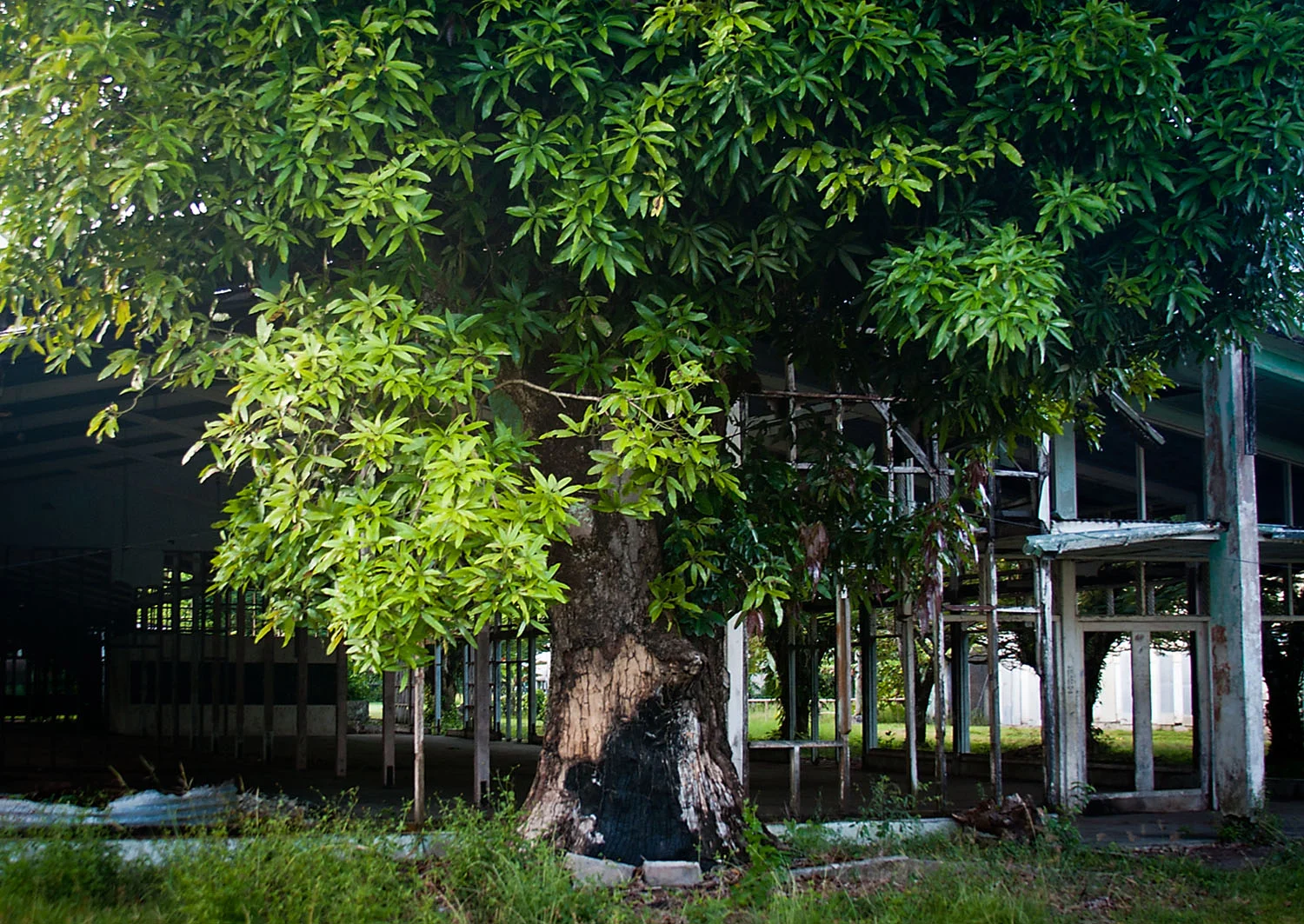
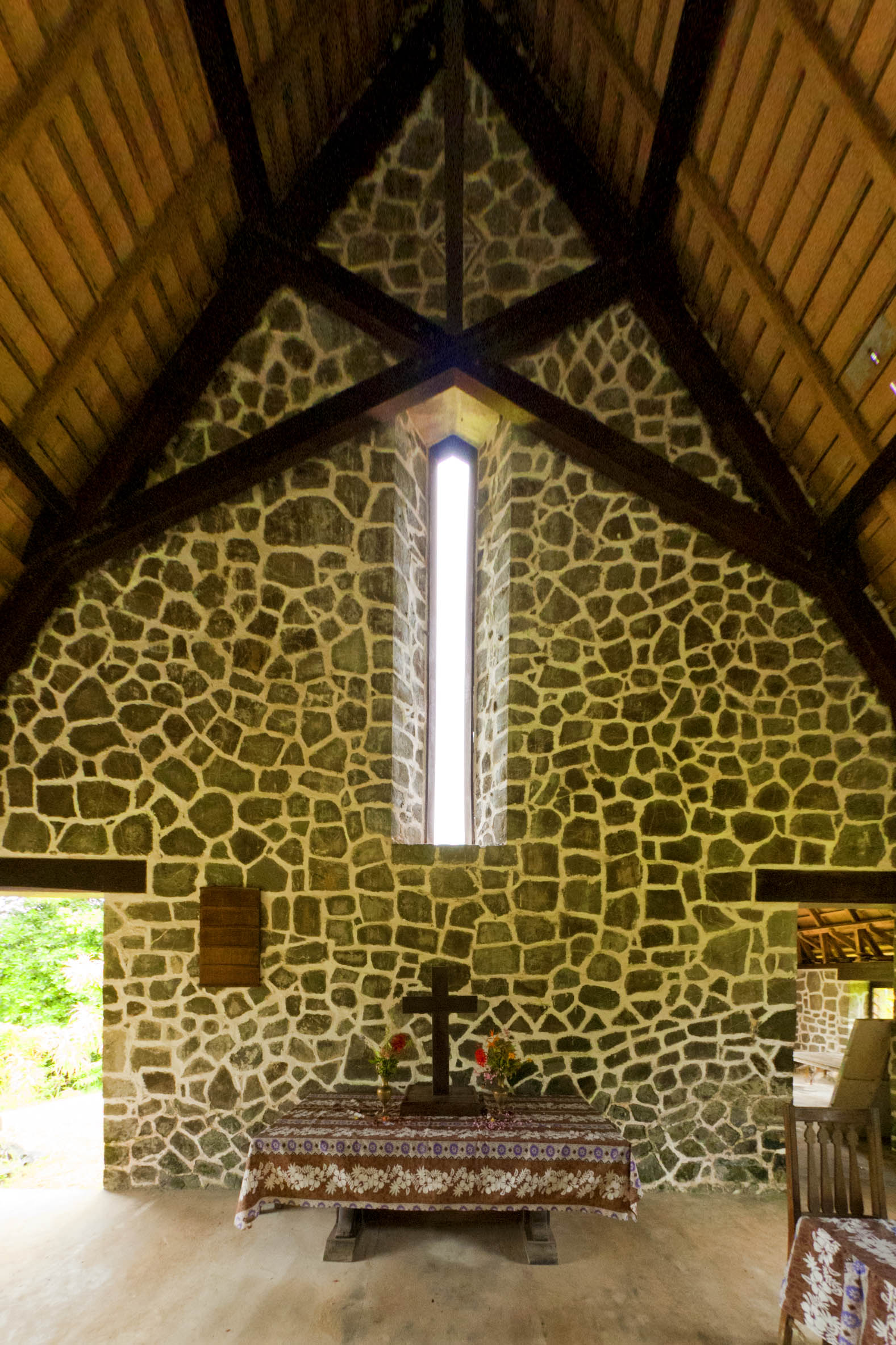
Finally the rain eased and we followed the old tree-lined road up the hill until it cleared the forest. In the clearing we came to a stonewalled church that was built in 1937 from materials brought from Scotland. Unfortunately The Kwato Church suffered a decline in the 1970s and it stands today as a testimony to the missionary of a bygone era.


Interior of the Church
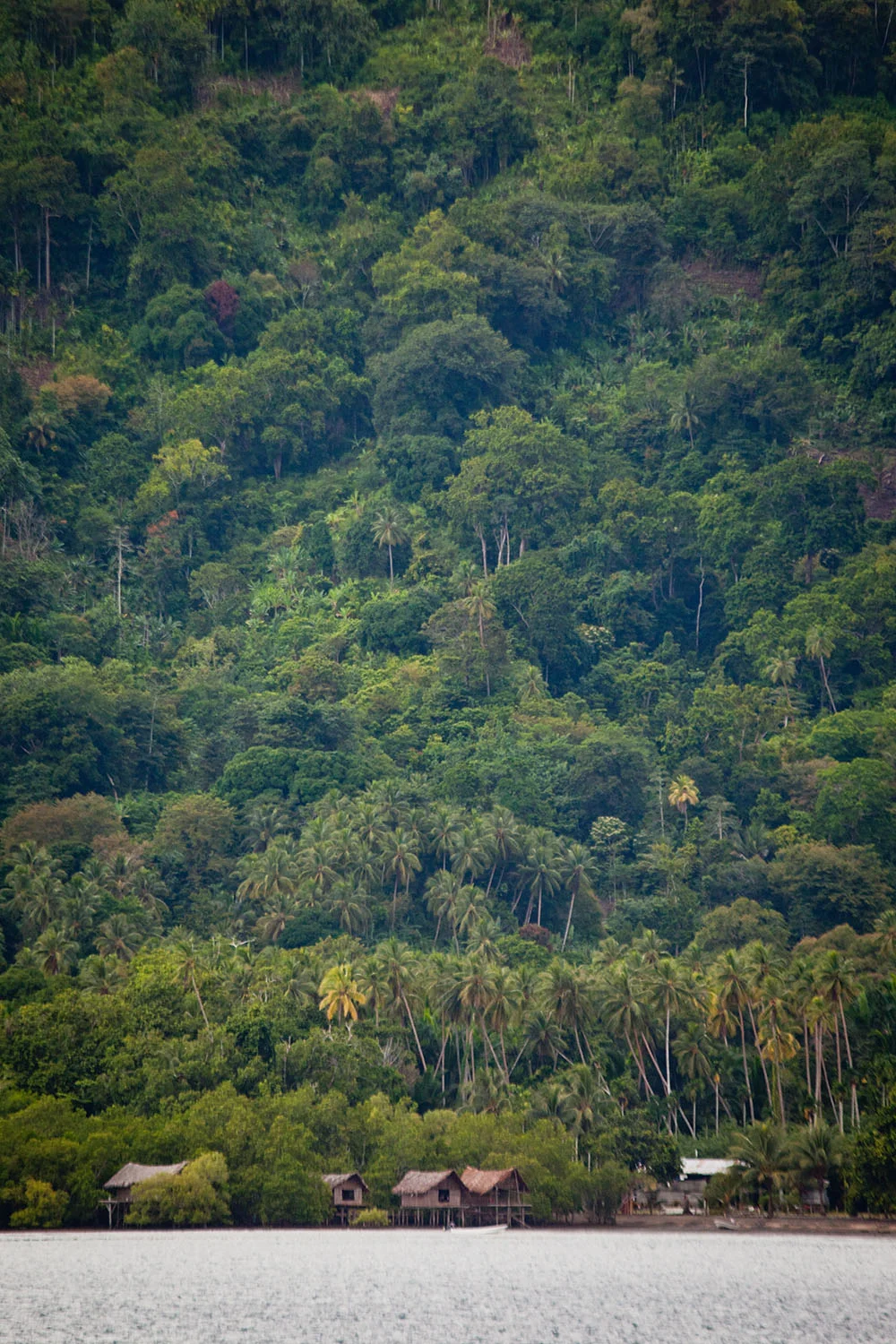
View from the clearing

It’s been a pretty hectic and long day already but we have one more excursion before we are done. We head back to the Orion and once we are all onboard Captain Frank repositions her close to a small island called Deka Deka. Here we will do another wet landing and then spend the afternoon swimming and snorkelling. It’s still a bit overcast but hot so it’s a great way to spend the afternoon.
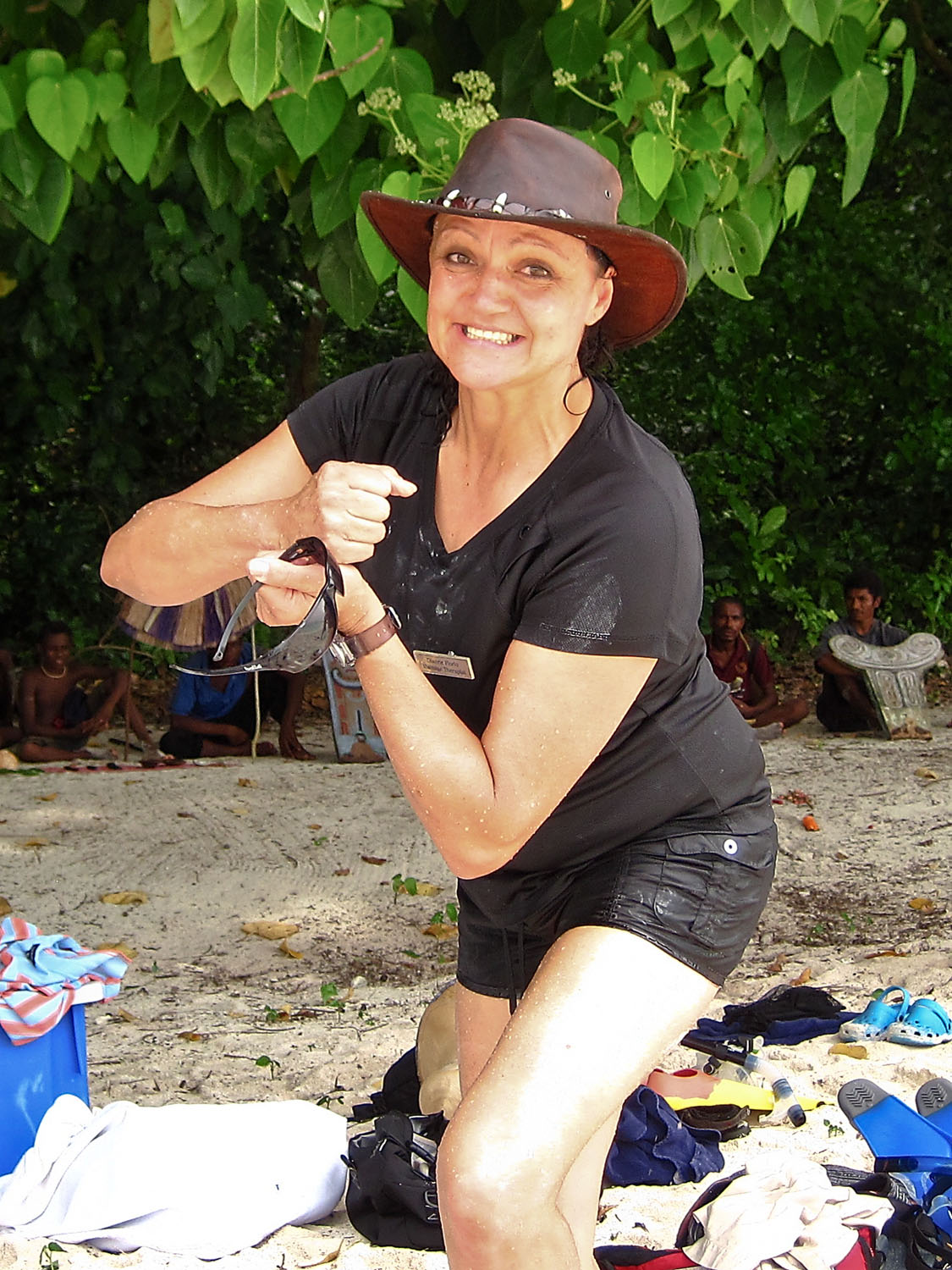
Di (the massage therapist) showing what she will do to me next time we have a session!
Fish we saw while snorkelling (I need Mick Fogg to identify the fish!)

So after a really long, hectic but fantastic day Kelly and I are lounging back in our suite. Tonight we’ve ordered room service so we don’t have to get all dressed up and we can just sit back in bed watching one of our favourite video series, Breaking Bad, that we’ve brought along with us.

We can hear the ship weigh anchor and feel it get underway as we head for Kitava.

Day #4 New Guinea Adventure

Map of the Region showing our heading - Google map link

Alotau, Papua New Guinea

Whoo hoo, we are out of the Coral Sea, it’s much calmer, the sun is shining and Kelly is feeling much better.

This morning we are heading for the town of Alotau. It’s the capital of Milne Bay Province, and is nestled on the edge of the bay named by Captain Moresby in 1873 after Lord Milne of the British Navy. Alotau means “Bay of Views” in Suau language.

Approaching Alotau

Our ETA to Alotau is 13:00 hours so there is time for a bit of brekkie and a couple of lectures before we arrive.

It’s great to see Kelly up and about again and we both head off to breakfast looking forward to a great day. By the time we get to breakfast the tables are filling up quickly and we see our first glimpse of Papua New Guinea.

We have sailed from the Coral Sea to the Solomon Sea and are passing Sideia Island in the Louisiade Archipelago. The weather has cleared completely and the clouds just tower over the shoreline.

Dramatic Clouds in Milne Bay

Peter Eastway’s first presentation started at 09:30 hours, and he gave an amazing overview of his work and presented a slideshow that gave us an insight into how he created his vision of what he saw when taking a photograph using Adobe Photoshop. It was inspiring, and I can’t wait to apply similar techniques to my photography.

Not long after Peter had finished, Mark gave a presentation on the Battle of Milne Bay. This area is significant to Australia as several battles were fought and legends created in this region, none more known than the story of Kokoda. At Milne Bay, Japanese marines attacked the Australian base on 25 August 1942, and fighting continued until the Japanese retreated on 5 September 1942. The battle was significant as it was the first in the Pacific campaign in which Allied troops decisively defeated Japanese land forces, forcing them to withdraw and completely abandon their strategic objective.

Around lunchtime, we sighted Alouta, and at approximately 13:00 hours, we berthed at the dock in Alotua. There was a lot of interest in our arrival from the dock as well as from local kids paddling out and circling the ship in their outrigger canoes.

Young boy in an outrigger canoe

There were, however, a couple of guys who didn’t really seem all that interested in our arrival.

Couple of guys not too interested!

The dock itself seems to be mainly used for loading Copra as we could see inside the dock buildings large stacks of bags containing Copra and smell the distinctive coconut aroma in the air. Copra is the dried meat, or kernel, of the coconut. Coconut oil extracted from it has made copra an important agricultural commodity for many coconut-producing countries.

Coprah Warehouse

During an Orion cruise, you can usually select from a number of Shoreside expeditions. Kelly and I had decided that we wanted to do the Bat Cave Adventure. Hell, as a Sydneysider, we have an affinity for the little guys, and any description that says you are going to get dirty and down in bat guano has to be fun.

Our tour was due to start about half an hour after we docked. After a couple of shabby-looking four-wheel drives arrived on the dock, we disembarked.

The expedition team briefs the group every night before arriving at a new destination. When they discussed the Bat Cave, they showed a picture of a large furry spider and said they were present in the cave. Half a dozen people changed their minds after that and signed on for the History Tour instead. I envisioned something out of Raiders of the Lost Ark, where the guy’s back is covered in hairy Tarantulas.
Well, I’m sure we’d survive, so Kelly and I piled into one of the vehicles, and Mark, an expedition member, and a few others got into the other one and off we went. Of course, as soon as we are off the ship, it starts to rain again, but this we discover is pretty standard for this part of the world: sunshine in the morning, rain in the afternoon.

We head out of town in our convoy, with our vehicle in the lead. We pass the market and the local fishing boats on the way out.
Fishing Boats

The ride out of town is pretty good; it’s a bituminised road with a few potholes that we have to navigate around and lots of friendly locals waving to us as we pass. Every so often, these little roadside huts are a bit like the Papua New Guinea versions of 7-Eleven’s. I like the Pidgin “Winim LCD TV” on the Maggi posters.

Roadside Stall

As we head further out of town, we pass through a huge Palm Oil plantation.

Palm Oil Plantation

According to our driver, this used to be a Coconut plantation but was cleared for Palm Oil because the return is much better. As you drive through, large piles of seeds wait to be collected.

Palm Oil Seeds

After about 20 minutes our driver pulls over, turns around and heads back to town. He tells us that the other vehicle has broken down, and he needs to go back and see if they are okay. After about 10 minutes we are almost halfway back and there has been no sign of them, suddenly he pulls over and turns around again. Apparently, they were only about a minute behind us when they broke down, and our guy just drove straight by them. So we got to see the Palm Oil plantation all over again.

After meeting up with the other vehicle, which now seems okay, we kept going. After another 10 minutes, we turned off the main road onto a jungle track.

Jungle Road to the Bat Cave

It seemed like we travelled along this track up and down hills for another 10 minutes until we pulled into a small clearing to be met by our guide, who we found out was named Roger.

Roger, our guide

Roger was very happy to see us, and we headed off into the bush to the Bat Cave with some other local guys. I thought we would climb up for some reason, but we went into a valley instead. By this time the rain had eased off but it was damn humid and every thing was slippery so by the time we made it to the mouth of the cave we were hot and exhausted.


Scramble in the Jungle

Getting into the cave was another experience, basically it was a matter of sliding down on your butt, watching out you didn’t smack your head on the overhanging rock. All the time, we were looking out for these large furry spiders we’d been told about.

By the time we had all made it into the first part of the cave, we were all sporting examples of bat guano on parts of our bodies, mainly our butts! The guides provided us with as many flashlights as they had. I missed out, but at least Kelly had one, and we headed into the cave.

Now I thought the cave would be cool and a bit refreshing after the humidity outside, but no, it was just as humid if not more inside. The floor of the caves was sort of squishy and consisted of compacted bat guano deposited over the years. I have to say the Adventure side was a bit of a letdown. Don’t get me wrong, it was fun to do, but the large furry spiders, well, we never saw one. We saw many cockroaches, a couple of frogs, a spindly spider and some very elusive bats.

A Frog and a skinny spider

After about an hour in the cave, we climbed back out. Coming back out was a bit easier than going in, and by the time we had all made it back up to the top of the hill where the vehicles waited for us, we were pretty beat and a sorry-looking lot, except for Roger. He looked pretty dry, clean, calm and collected.

Tony & Roger

We thanked Roger and the other guys, got back in the vehicles, and headed back to Orion. We were looking forward to a shower and getting out of our bat-guano-splattered clothes and boots.

Just clean again, and Captain Frank comes over to the ship's public address system to let us know that a team of Papuan New Guinea cultural dancers will perform for us on deck 6 at 17:00 hours.

We grab our cameras and head up to see what will be the first of many cultural presentations on the trip. The dancers and singers were fantastic, the costumes amazing and it was a welcome to Papua New Guinea we would never forget.

Leader of the Group

Male Dancer

Female Dancer

After the welcome, we thanked them all personally, and as they left the ship, Captain Frank prepared to undock the Orion, and it wasn’t long before we were sailing out of Aloutau as the sun set, off to our next destination, Samarai and Kwato Islands.

Sunset over Milne Bay

We finished the night with a Seafood Extravaganza out on deck in the Delphinus Lounge, tired but elated with our first day in Papua New Guinea.